
Cosmic
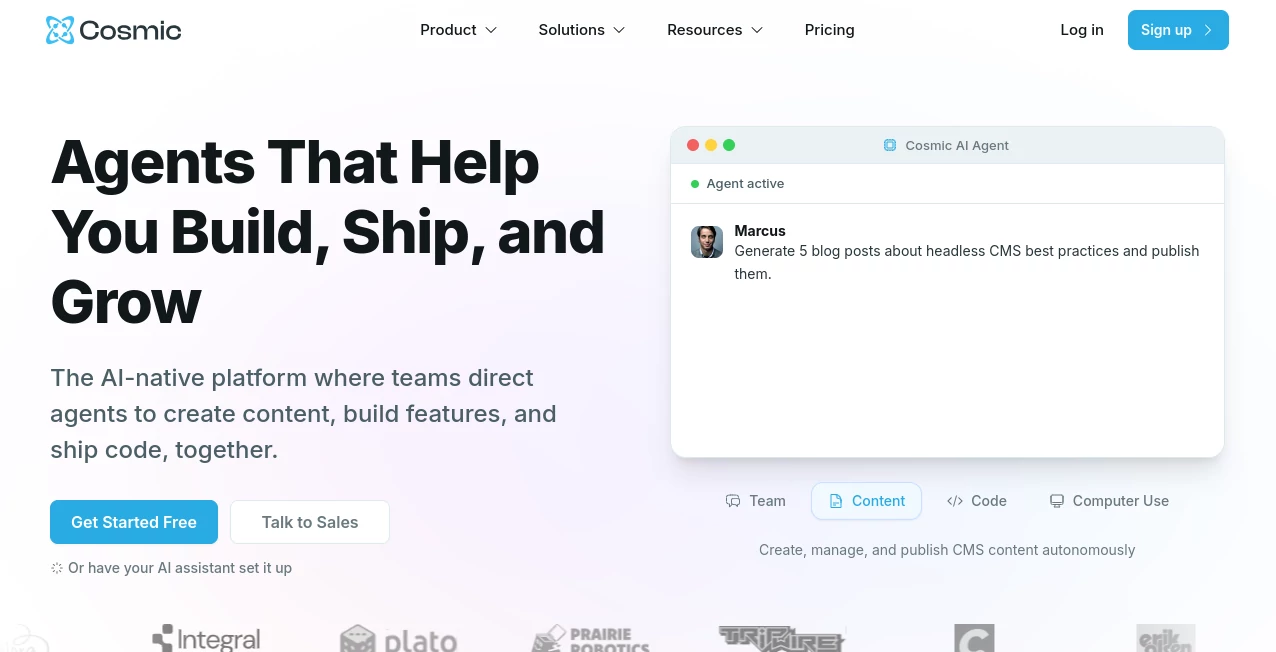
What is Cosmic?
I used to dread the moment a client asked for “just a few changes” to their website content. Updating static files or wrestling with clunky traditional CMS platforms always felt like more trouble than it should be. Then I started using this platform and everything changed. It gives you a clean, powerful content API that works beautifully with any frontend framework while staying out of your way. The first time I shipped a project with it, I finished weeks ahead of schedule because content updates became simple for non-technical team members without breaking my carefully crafted code.
Introduction
Modern websites and applications need content that’s flexible, fast, and easy to manage across multiple platforms. Cosmic delivers exactly that — a headless CMS that focuses on giving developers clean APIs and giving content teams an intuitive editor. It’s not trying to be everything for everyone. Instead, it excels at being a reliable, high-performance content backend that scales with your ambitions. Whether you’re building a marketing site, an e-commerce store, a mobile app, or a complex SaaS dashboard, it handles the content layer so you can focus on what makes your product special.
Key Features
User Interface
The admin dashboard is refreshingly clean and fast. Content editors see a straightforward interface with powerful yet simple editing tools. Developers get clear documentation and SDKs for their favorite frameworks. Switching between projects feels seamless, and the search and organization features make managing hundreds of pieces of content actually manageable. It never feels bloated — just purposeful and pleasant to use.
Accuracy & Performance
Content delivery is lightning fast thanks to a global CDN and smart caching. API responses are consistent and well-structured, which means fewer surprises when building. The system handles high traffic without breaking a sweat, and changes made in the dashboard appear almost instantly across all your connected applications. In real projects, this reliability removes one of the biggest sources of stress during launches and updates.
Capabilities
You get flexible content modeling with objects, components, and rich media support. It works seamlessly with any frontend — React, Next.js, Vue, Nuxt, Svelte, and more. Built-in features include webhooks, image optimization, localization, role-based permissions, and powerful search. The GraphQL and REST APIs give you exactly the data you need without over-fetching. It’s flexible enough for complex enterprise projects yet simple enough for small marketing sites.
Security & Privacy
Enterprise-grade security is built in from the start. Role-based access control, SSL encryption, regular audits, and SOC 2 compliance give teams confidence when handling sensitive content. You control exactly who can edit what, and all data is protected with modern standards. For agencies and larger organizations, this level of control and transparency is a major advantage.
Use Cases
A marketing team manages blog posts and landing pages while developers build beautiful frontends in Next.js without fighting over the CMS. An e-commerce brand updates product information across their website and mobile app from a single place. An agency delivers multiple client websites faster because content management is consistent across projects. A SaaS company powers their documentation, help center, and in-app content with the same reliable backend. It fits naturally into almost any content-heavy digital project.
Pros and Cons
Pros:
- Excellent developer experience with clean APIs and great SDKs.
- Fast, reliable content delivery even under heavy traffic.
- Flexible modeling that adapts to real project needs.
- Strong security and compliance features for serious teams.
- Works beautifully with modern frontend frameworks.
Cons:
- Some advanced enterprise features require higher-tier plans.
- Teams coming from traditional CMS may need a short adjustment period.
Pricing Plans
It offers a generous free tier that’s actually useful for personal projects and small websites. Paid plans scale sensibly as your needs grow, adding more content capacity, team members, advanced features, and higher usage limits. Many teams find the pricing fair for the time and headaches it saves compared to self-hosting or using heavier platforms.
How to Use Cosmic
Sign up and create a new bucket for your project. Define your content models (or use starters), then invite your team to start adding content. Connect your frontend using their JavaScript SDK or GraphQL API. Make changes in the dashboard and watch them appear instantly on your site. Set up webhooks for advanced automations if needed. The whole process feels natural whether you’re launching your first site or managing a large content ecosystem.
Comparison with Similar Tools
While some headless CMS platforms feel overly complex or limited in features, Cosmic strikes an excellent balance between power and simplicity. It offers better developer experience than many traditional options and more flexibility than some newer lightweight tools. The combination of speed, reliability, and thoughtful features makes it stand out for teams that want to move fast without cutting corners.
Conclusion
Great products need great content infrastructure. This platform delivers exactly that — a modern, reliable headless CMS that respects both developers and content creators. It removes unnecessary complexity so you can focus on building experiences that matter. Whether you’re launching something new or scaling what already exists, it gives you the foundation to move faster and with more confidence. In a crowded space, it’s one of those tools that quietly becomes essential once you start using it.
Frequently Asked Questions (FAQ)
How fast is content delivery?
Extremely fast thanks to global CDN caching and optimized APIs.
Do I need to be a developer to use it?
Content teams can manage everything easily while developers enjoy powerful APIs.
What frameworks does it work with?
Any — it provides clean APIs and official SDKs for the most popular ones.
Is it suitable for large projects?
Yes — many enterprise teams use it successfully for complex content needs.
AI Website Builder , AI No-Code & Low-Code , AI Developer Docs , AI Developer Tools .
These classifications represent its core capabilities and areas of application. For related tools, explore the linked categories above.

Cosmic Alternatives Product

Project Mela

Website Clon…

TutuoAI

Scillus

Textomap

ChatFlowchart

Blackbox AI

FigForm

PromptCoder