
Evalyy
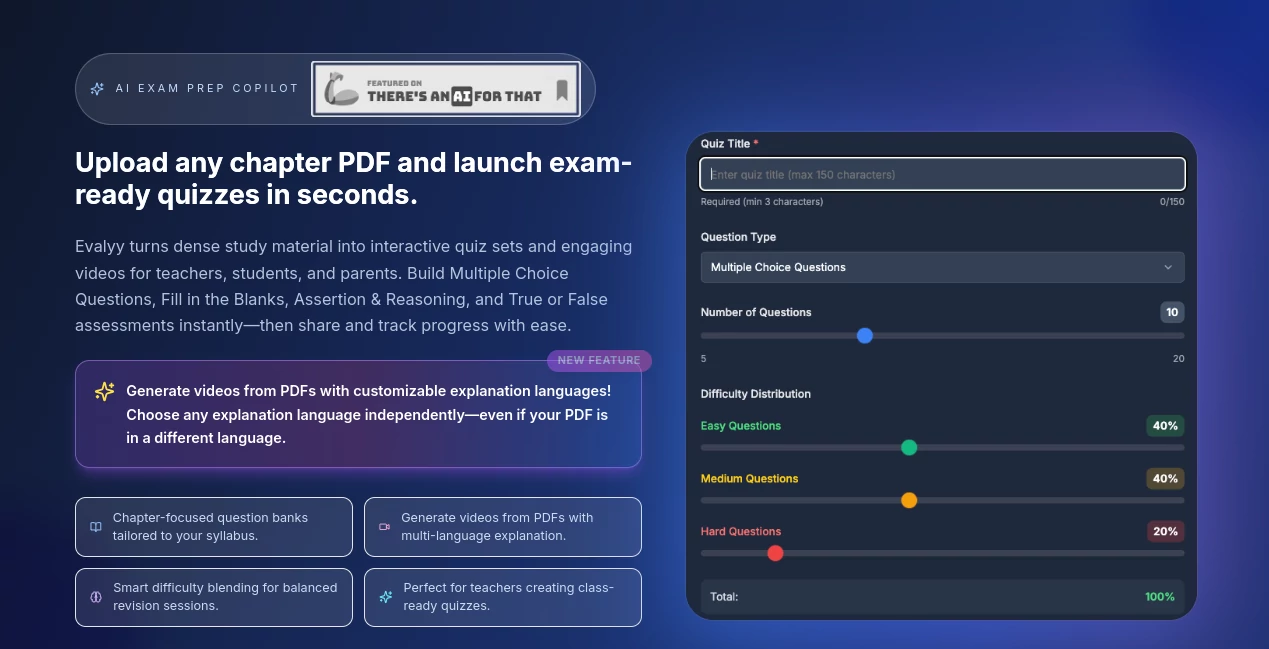
What is Evalyy?
In today’s fast-moving AI ecosystem, building a model or application is only half the journey. The real challenge begins when you need to understand how well it actually performs in real-world conditions. This is where a modern evaluation platform becomes essential.
This tool is designed to help teams test, measure, and improve AI-driven systems with clarity and confidence. Instead of relying on guesswork or scattered feedback, it brings structure into the evaluation process, allowing developers, product teams, and researchers to make data-backed decisions. The experience feels smooth and focused, especially for those who want reliable insights without unnecessary complexity.
Key Features
User Interface
The interface is clean, minimal, and built for speed. Users can quickly set up evaluation workflows without needing a steep learning curve. Everything is organized in a way that reduces friction and keeps attention on results rather than configuration.
Accuracy & Performance
The platform is designed to deliver consistent and repeatable evaluation outcomes. It helps teams compare outputs, track improvements, and identify weaknesses in AI systems with a structured approach that reduces ambiguity.
Capabilities
- AI model evaluation and benchmarking
- Performance comparison across multiple outputs
- Structured testing workflows for AI applications
- Insight generation for optimization decisions
- Support for iterative improvement cycles
Security & Privacy
Data handling is treated with care, ensuring that evaluation inputs and outputs remain protected during processing. The system is built with modern privacy expectations in mind, making it suitable for both individual developers and teams working on sensitive projects.
Use Cases
- Testing AI chatbots before deployment
- Evaluating machine learning model responses
- Comparing different prompt engineering strategies
- Quality assurance for AI-powered applications
- Research experiments in AI performance optimization
Pros and Cons
Pros
- Simple and intuitive workflow design
- Helps improve AI output quality systematically
- Suitable for both beginners and advanced teams
- Reduces time spent on manual testing
Cons
- Advanced users may want deeper customization options
- Requires initial setup to define evaluation criteria
Pricing Plans
The platform typically follows a flexible pricing structure, often including free access for basic usage and premium plans for advanced features, team collaboration, and larger-scale evaluation needs. This makes it accessible for solo developers as well as growing companies.
How to Use This Tool
Getting started is straightforward. After creating an account, users can define an evaluation project, input test cases, and select the type of AI output they want to analyze. From there, the system processes the data and presents structured insights that help guide improvements.
Most users begin with small test sets, gradually expanding as they become familiar with the workflow. Over time, it becomes a central part of their AI development cycle.
Comparison with Similar Tools
Compared to other evaluation platforms, this solution focuses heavily on usability and structured insight generation. While some tools prioritize raw metrics or require complex setup, this one aims to simplify the process without sacrificing depth. It strikes a balance between accessibility and professional-grade evaluation capabilities.
Conclusion
For anyone building or improving AI systems, having a reliable evaluation layer is no longer optional—it’s essential. This platform offers a practical and efficient way to understand how models behave, where they succeed, and where they need refinement. It fits naturally into modern AI workflows and helps teams move faster with greater confidence.
Frequently Asked Questions (FAQ)
What is this platform used for?
It is used to evaluate and test AI models, applications, and outputs in a structured way.
Do I need technical experience to use it?
No, the platform is designed to be accessible for both beginners and advanced users.
Can it be used for chatbot testing?
Yes, it is commonly used for evaluating chatbot responses and conversational AI systems.
Is it suitable for teams?
Yes, it supports collaborative workflows for teams working on AI projects.
Does it support iterative improvement?
Yes, it is designed to help users refine and improve AI outputs over time.
AI Testing & QA , AI Research Tool , AI Analytics Assistant , AI Developer Tools .
These classifications represent its core capabilities and areas of application. For related tools, explore the linked categories above.

Evalyy Alternatives Product

Serplux

GLM 5

QuickFlip.AI

Debate Tello…

Best of AI

IntoTheBlock

UpMocker

Kol find

DidYouSEO