RecallCheck
What is RecallCheck?
Buying a used car or just checking on the one sitting in your driveway can feel like a gamble. You never really know what hidden issues might be lurking until it’s too late. This platform takes the guesswork out of it by giving you instant, comprehensive access to every safety recall, consumer complaint, and technical detail that matters. I’ve seen friends avoid buying lemons and others discover open recalls on their daily drivers that got fixed for free. It’s the kind of tool that brings real peace of mind because it’s built on official government data and makes it actually usable for normal people.
Introduction
Most of us don’t think about vehicle safety until something goes wrong. RecallCheck changes that by putting the entire history of a vehicle’s safety record at your fingertips. Enter a VIN, make and model, or even just browse by brand, and you get everything: open recalls, past complaints, crash test ratings, technical service bulletins, and more. It covers over 320,000 safety recalls and millions of consumer complaints. What makes it valuable is how it turns dense government data into something clear and actionable. No more digging through confusing PDFs or hoping your mechanic is honest—it puts the power directly in your hands before you buy, sell, or repair.
Key Features
User Interface
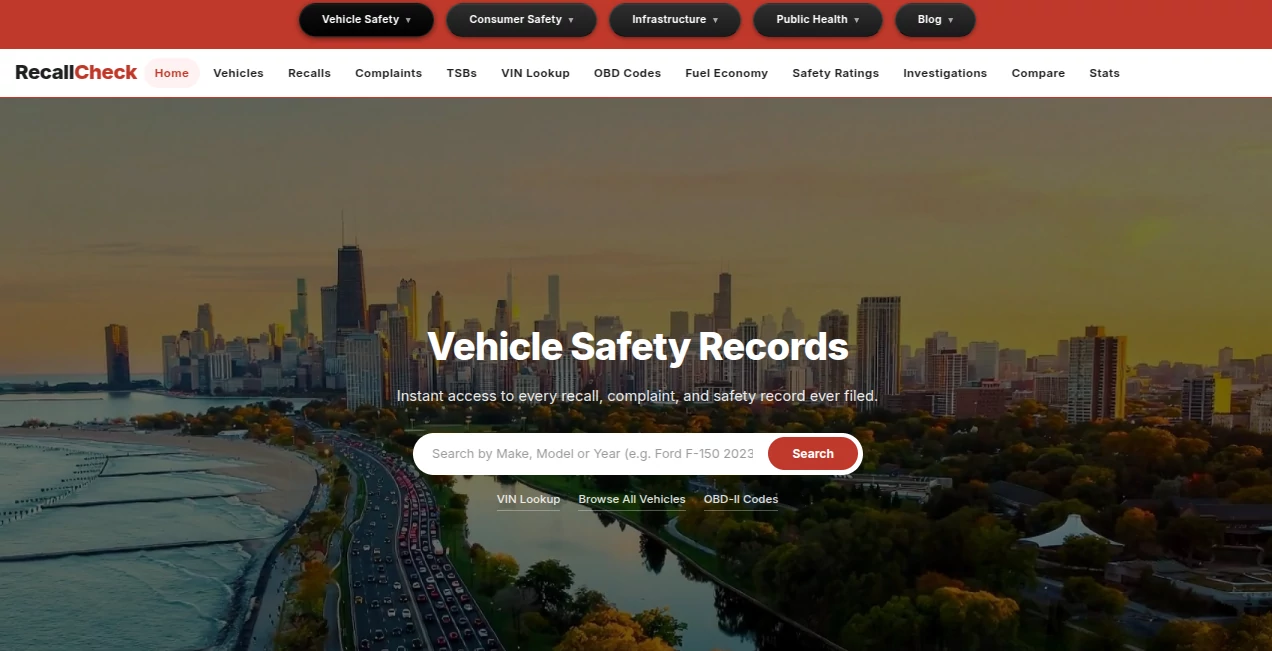
The site is straightforward and fast. A prominent search bar at the top lets you jump in with a VIN, make/model/year, or keyword. Results load cleanly with tabs for recalls, complaints, ratings, and more. Everything is organized so you don’t have to hunt. Whether you’re on mobile at a dealership or on desktop doing research, it feels intuitive and doesn’t waste your time with unnecessary clutter.
Accuracy & Performance
Because it pulls directly from NHTSA and other official sources, the information is as current and accurate as it gets. New recalls appear quickly, and the database covers decades of data. Searches are lightning fast even when checking complex histories. The reliability means you can trust what you’re seeing—whether it’s confirming a free repair is available or understanding why a particular model year has more complaints than others.
Capabilities
Beyond basic recall checks, you get deep insights: full complaint histories with crash and fire data, technical service bulletins that mechanics use, safety ratings, defect investigations, fuel economy info, and OBD trouble code explanations. It also extends to product recalls, food safety, pet safety, and even infrastructure like bridges and dams. VIN decoding is instant and thorough. You can browse by make or search across categories, making it a one-stop safety research hub.
Security & Privacy
Your searches aren’t tracked or stored in a way that links back to you personally. The platform uses official public data, so there’s no risk of sharing sensitive vehicle information beyond what you choose to look up. It’s designed for everyday drivers who just want honest answers without handing over more data than necessary.
Use Cases
A parent shopping for a family SUV runs a VIN check and discovers an open airbag recall before signing the papers. A used car seller runs checks on inventory to be transparent with buyers and build trust. A mechanic uses the TSB database to diagnose an issue faster and save the customer money. Someone researching a specific model year reads real complaint patterns to make an informed purchase decision. It’s useful whether you’re buying once every few years or managing a fleet.
Pros and Cons
Pros:
- Extremely comprehensive—covers recalls, complaints, ratings, and technical data in one place.
- Fast, accurate searches that work on any device.
- Free to use for basic checks with no login required.
- Helps you make safer, more informed decisions about vehicles.
- Extends beyond cars to broader safety information.
Cons:
- Some advanced analytics and bulk tools may require premium access.
- Focuses primarily on U.S. data, though coverage is excellent there.
Pricing Plans
Most essential features are completely free, which is refreshing for a tool this useful. Premium options exist for power users or businesses needing bulk lookups, detailed reports, or API access. The free tier already gives everyday drivers everything they need to stay safe and informed.
How to Use RecallCheck
Go to the homepage and enter your vehicle’s VIN, make and model, or year in the search bar. Review the results across the different tabs—recalls first for any open safety issues, then complaints for real-world problems, and ratings for crash performance. For deeper research, explore technical bulletins or related investigations. Bookmark important vehicles or export data if needed. It’s simple enough for one-time checks but powerful enough for ongoing research.
Comparison with Similar Tools
Many recall checkers only show basic open recalls and stop there. This one goes much deeper with complaints, TSBs, investigations, and broader safety context. It’s cleaner and more user-friendly than government sites while being more comprehensive than most third-party checkers. The combination of breadth, speed, and clarity makes it the go-to choice for serious research.
Conclusion
Vehicle safety shouldn’t be a mystery. This platform brings transparency and confidence to every car-related decision by making official safety data accessible and understandable. Whether you’re buying, selling, maintaining, or just being a responsible owner, it gives you the facts you need without the hassle. In a world where vehicles are complex and safety matters deeply, having this kind of clear, reliable information at your fingertips is genuinely valuable.
Frequently Asked Questions (FAQ)
How do I check for open recalls on my car?
Enter your VIN or make/model/year. The site shows all recalls, including whether they’re still open.
Are recall repairs really free?
Yes—federal law requires manufacturers to fix safety recalls at no cost, regardless of age or mileage.
What if my car has complaints but no recall?
Complaints can signal emerging issues. The data helps you monitor patterns and decide if extra caution or maintenance is needed.
Does it work for any vehicle?
It covers virtually every vehicle sold in the U.S., with extensive historical data.
Is the information up to date?
Yes—it pulls from official sources and updates regularly as new recalls and data become available.
Other .
These classifications represent its core capabilities and areas of application. For related tools, explore the linked categories above.

RecallCheck Alternatives Product

AiToolsObser…

Wafler

Clean Paste

The Audio St…

pixel flow g…

Pokemon Frie…

BSA calculat…

MBTI Compati…

ColoringWell