
ServiceGraph
What is ServiceGraph?
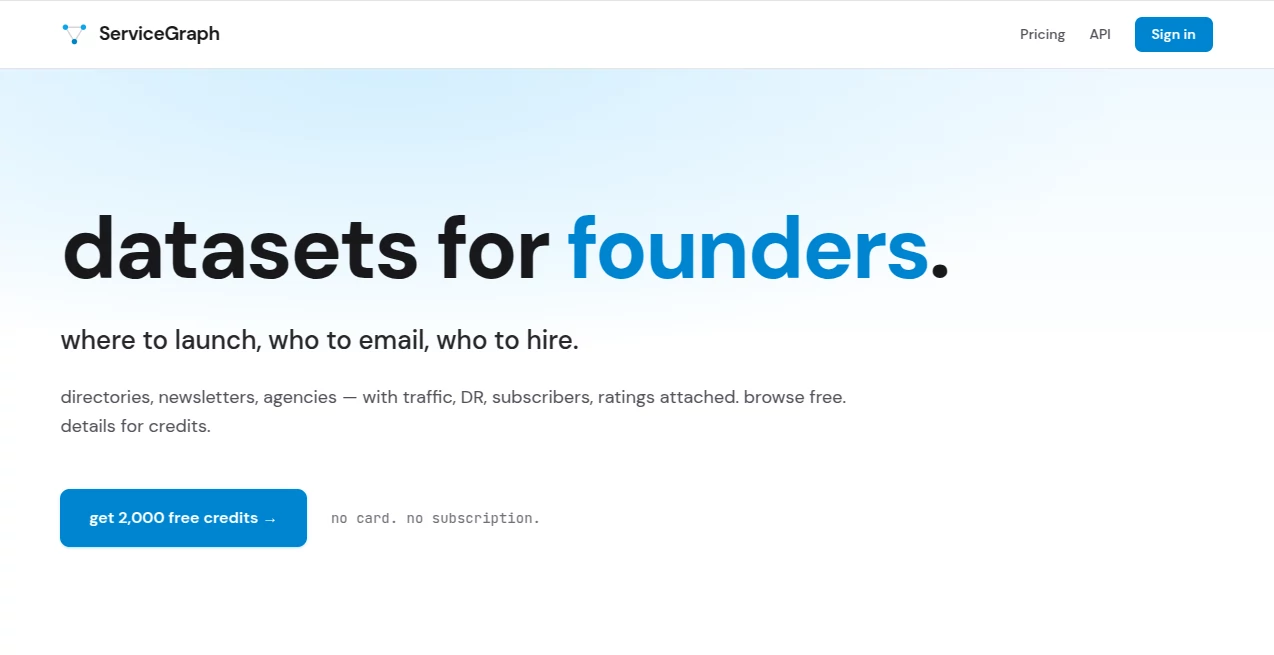
Launching a product, hunting for backlinks, or looking for the right agency shouldn’t feel like searching for a needle in a haystack of outdated lists. This platform cuts through the noise by offering fresh, well-organized datasets packed with real metrics—traffic numbers, domain ratings, subscriber counts, and more. Founders I’ve spoken with say it’s become their secret weapon for smarter launches and outreach. Instead of guessing which directories are worth submitting to or which newsletters actually get read, you get the numbers upfront. It turns guesswork into strategy, and that shift feels incredibly empowering.
Introduction
Most “best directories” lists on the internet are outdated, filled with dead links, or missing key details like actual traffic or submission policies. ServiceGraph was built to fix that frustration. It curates and maintains datasets covering product directories, business directories, newsletters, and agencies—all with verified metrics attached. Whether you’re preparing a product launch, building SEO backlinks, or hunting for outreach partners, you get current, filterable, exportable data that actually helps you make decisions. The free credits on signup let you dive in immediately and see the difference. It’s the kind of practical resource that makes early-stage work feel less chaotic and more intentional.
Key Features
User Interface
The experience is refreshingly straightforward. Browse datasets with clear cards showing what’s inside, then use strong filters to narrow by niche, traffic, domain rating, subscriber count, or location. Unlocking a row gives you full details instantly. No bloated dashboards or confusing navigation—just clean tables and smart search that get you to useful information fast. It feels built by founders who understand how precious time is.
Accuracy & Performance
The data stays fresh through regular updates, so you’re not chasing 404 errors or outdated subscriber numbers. Metrics like traffic, DR, and engagement feel reliable because they’re actively maintained. Loading is quick even when filtering large sets, and exports happen smoothly. Users appreciate that they can trust the numbers instead of second-guessing every entry.
Capabilities
Over 250 product directories with submission policies and traffic data, thousands of business directories segmented by industry, 50k+ newsletters with subscriber counts and topics, and over 110k agencies with services, size, location, and ratings. Everything is searchable, sortable, and exportable to CSV. Coming datasets include subreddits and influencers. It’s not just lists—it’s actionable intelligence for launch, SEO, outreach, and hiring decisions.
Security & Privacy
You can browse most of the directory for free without creating an account. When you do sign up for credits, the process is lightweight. Your usage and unlocked rows stay private, and the focus remains on delivering value rather than collecting unnecessary data. It’s the kind of clean, respectful approach that builds trust with independent builders.
Use Cases
A SaaS founder filters product directories by traffic and DR, submits only to the ones that matter, and sees meaningful early sign-ups. A marketer builds a backlink strategy using accurate domain metrics instead of hoping for the best. An agency owner discovers new client opportunities by filtering other agencies or newsletters in their niche. A hiring manager shortlists design or dev agencies based on size, location, and real ratings. The common thread is saving hours of research while making better, data-backed moves.
Pros and Cons
Pros:
- Regularly updated data that actually reflects current reality.
- Powerful filters and exports that turn raw lists into strategies.
- Free starting credits let you test value immediately.
- Covers the exact resources founders and marketers need most.
- Simple, no-nonsense interface that respects your time.
Cons:
- Some advanced or larger datasets require credits to unlock.
- Still growing—certain categories (like influencers) are coming soon.
Pricing Plans
You start with 2,000 free credits—no card, no subscription. That’s enough to unlock around 200 rows and get a real feel for the platform. Additional credits are available via pay-as-you-go or larger packs at reasonable rates. Credits don’t expire, and you only pay for the rows you actually need. It’s flexible enough for occasional use or heavy ongoing research.
How to Use ServiceGraph
Head to the site and browse the available datasets for free. When you find one you like (newsletters, directories, agencies), use the filters to narrow it down. Unlock individual rows or batches with your credits to see full details and contact info. Export to CSV for your own spreadsheets if needed. For launches, filter high-traffic directories with open submissions. For outreach, sort newsletters by subscriber count and topic relevance. The workflow is intuitive and fast once you get the hang of the filters.
Comparison with Similar Tools
Random Twitter threads and old Notion lists go stale quickly and lack proper filtering. Generic directories often have poor data quality or dead links. This platform stands out by focusing specifically on founder-friendly datasets with verified metrics, regular updates, and easy export options. It’s less hype, more substance—exactly what busy builders actually need.
Conclusion
Good data quietly compounds into better decisions. ServiceGraph turns the painful process of finding launch partners, outreach targets, or hiring options into something systematic and reliable. For indie founders, marketers, and small teams, having fresh, filterable intelligence on directories, newsletters, and agencies removes a major headache and creates real momentum. If you’re tired of outdated lists and guesswork, this is the kind of tool that feels like it was built just for you.
Frequently Asked Questions (FAQ)
How fresh is the data?
Updated regularly—cadence varies by dataset type, but the goal is current, usable information.
Can I export the data?
Yes—CSV exports are available after unlocking rows.
Do credits expire?
No, your credits stay available until you use them.
Is there a free way to try it?
Absolutely—2,000 credits on signup with no card required.
What kind of details come with each row?
Name, URL, key metrics (traffic, DR, subscribers, ratings, etc.), and contact info where available.
These classifications represent its core capabilities and areas of application. For related tools, explore the linked categories above.

ServiceGraph Alternatives Product

Sourcetable

AI Pastor

MacroMicro

AI Graph Mak…