
VERITAS SOURCE
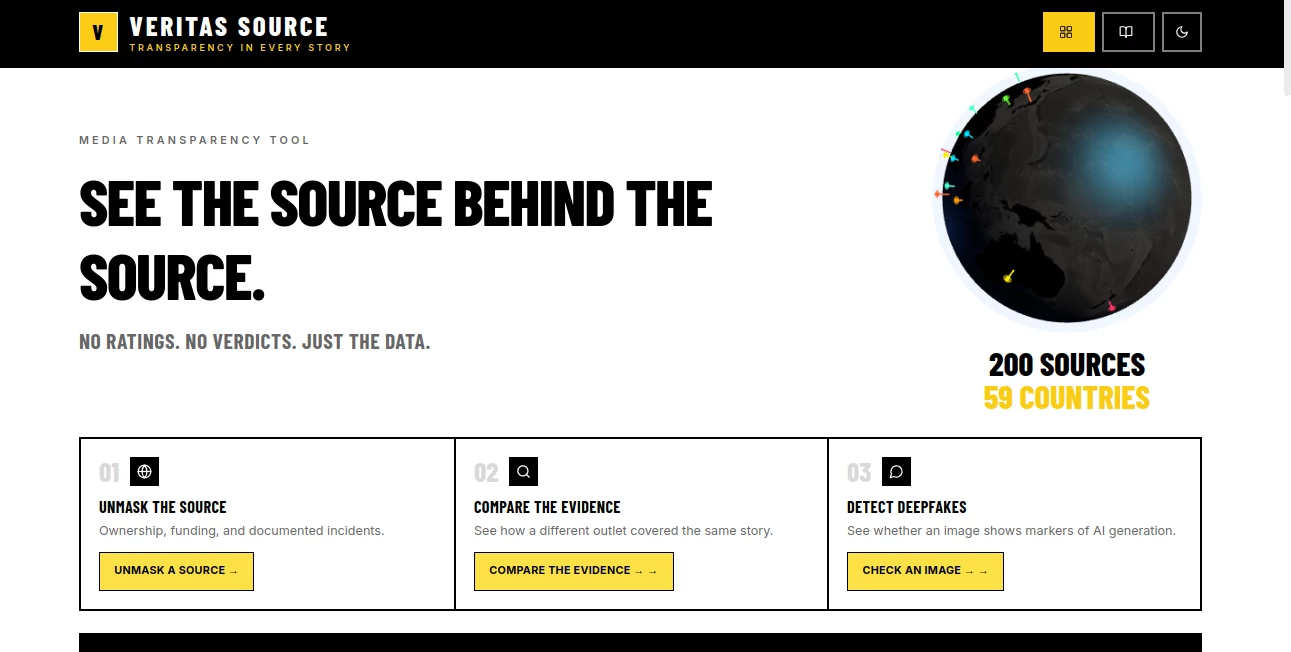
What is VERITAS SOURCE?
I’ve always been skeptical when reading the news. One outlet says one thing, another spins it completely differently, and figuring out who to trust feels exhausting. This platform cuts through that noise in a smart, practical way. You search for any news source, and it gives you a clear, balanced overview of their background, track record, ownership, and biases. It’s like having a knowledgeable friend who’s done the homework for you before you read an article. I’ve started using it regularly, and it’s genuinely changed how I consume information.
Introduction
In today’s media landscape, transparency is hard to find. Veritas Source makes it easier by organizing and presenting key information about news outlets in one clean place. Whether you’re a casual reader trying to stay informed, a researcher digging deeper, or a journalist checking competitors, it helps you understand the context behind the stories. It tracks multiple data types around news sources and brings everything together so you can make more informed decisions about what to read and believe. The best part? It feels neutral and useful rather than preachy or agenda-driven.
Key Features
User Interface
The design is straightforward and calming. A prominent search bar lets you look up any news source instantly, and results appear with clear sections for ownership, history, editorial stance, and reliability signals. Everything is well-organized with tabs and summaries that let you go as deep as you want without feeling overwhelmed. It’s the kind of interface you can use daily without friction — clean, fast, and actually helpful.
Accuracy & Performance
The information feels well-researched and regularly updated. Instead of vague opinions, you get concrete details backed by data points that help paint a fuller picture. Searches are quick, pages load fast, and the platform stays responsive even when exploring multiple sources. In practice, it gives consistent, reliable context that matches what I’ve seen from independent checks, which builds real trust over time.
Capabilities
You can track and compare different news sources, organize your own research, and share findings easily with teams or colleagues. It manages various data types around media organizations, helping you see patterns in coverage, ownership structures, and potential biases. Solo users love the personal organization features, while teams appreciate the collaboration aspects. It turns scattered media research into something structured and actionable.
Security & Privacy
Your searches and saved collections stay private. The platform focuses on delivering transparency about news sources without compromising user privacy. No heavy tracking or data selling — just a clean tool that respects your research process.
Use Cases
A journalist quickly checks the background of a new source before citing them in a story. A student researching current events builds a balanced view by comparing multiple outlets side-by-side. A concerned citizen verifies claims they see circulating on social media by understanding who’s behind the coverage. A communications team monitors how different outlets frame their industry. It fits naturally into anyone’s information workflow who wants to be more thoughtful about what they read and share.
Pros and Cons
Pros:
- Gives clear, organized context about news sources without bias.
- Fast and easy to use for both quick checks and deeper research.
- Helps build better media literacy in a polarized information environment.
- Useful for solo users and teams alike with strong organization tools.
- Focuses on transparency in a space that desperately needs it.
Cons:
- Still growing its database, so some smaller or newer sources may have limited information.
- Advanced team collaboration features may require upgrades.
Pricing Plans
The core experience is free and already very useful for personal use. Paid plans unlock more advanced features, larger saved collections, team workspaces, and priority updates. Pricing stays reasonable, making it accessible for individuals while offering clear value for power users and organizations.
How to Use Veritas Source
Go to the search bar and type the name of any news outlet. Browse the organized profile that appears with key facts, ownership details, and coverage patterns. Save sources you check often to personal collections. For team projects, invite colleagues to shared workspaces. Use it as part of your regular reading routine — check a source before diving into their articles to get better context. It becomes a natural habit surprisingly quickly.
Comparison with Similar Tools
While some media bias charts feel overly simplistic or politically charged, this platform aims for balanced, factual context with practical organization tools. It goes beyond static ratings by letting you track and compare sources over time. The combination of clean design, useful features, and genuine focus on transparency sets it apart from noisier or more agenda-driven alternatives.
Conclusion
In an era where information overload is constant, having a reliable way to understand the sources behind the stories is incredibly valuable. This platform delivers that with clarity, simplicity, and respect for your time. It won’t tell you what to think, but it gives you the context to think more clearly. For anyone who wants to be a more informed reader, researcher, or citizen, it’s a tool worth keeping close.
Frequently Asked Questions (FAQ)
Is the information unbiased?
It aims for factual transparency based on available data rather than pushing any political viewpoint.
How often is data updated?
The platform works to keep information current, with regular reviews of major sources.
Can teams use it together?
Yes, paid plans offer shared workspaces and collaboration features.
Do I need an account to search?
Basic searches work without an account, but saving collections requires one.
What kind of sources does it cover?
It focuses on news outlets and media organizations across different regions and types.
These classifications represent its core capabilities and areas of application. For related tools, explore the linked categories above.

VERITAS SOURCE Alternatives Product
Robux Tax Ca…

CoinIQ
TrueSource AI

Greek Numero…
DiRe-RAPIDS

SciSpace

Weekly Brief
Skillselion

TutuoAI