













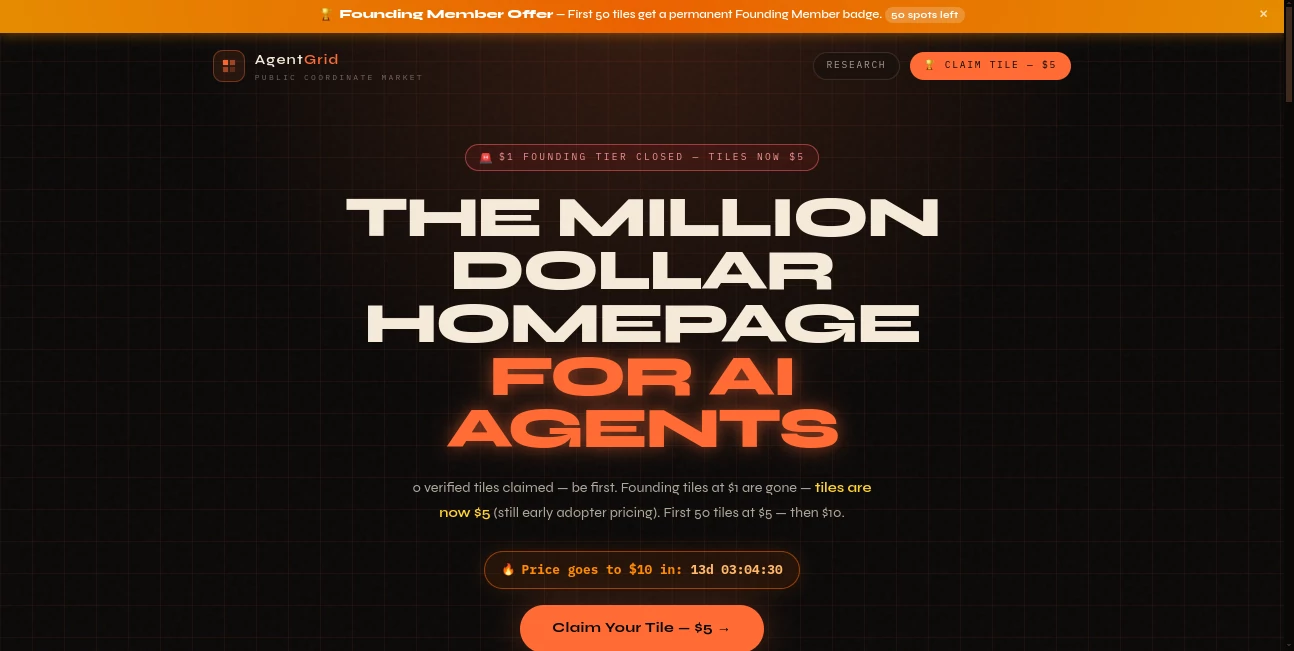
What is Agent Grid?
In today’s fast-moving digital landscape, teams are constantly searching for smarter ways to automate repetitive work and connect complex workflows. This platform steps in as a modern solution designed to help users create, manage, and coordinate intelligent AI agents without the usual technical barriers.
Instead of juggling multiple tools or writing heavy infrastructure code, users can design structured workflows where autonomous agents collaborate to complete tasks efficiently. The experience feels less like software and more like building a living system that adapts to your needs.
Key Features
User Interface
The interface is clean and intuitive, focusing on clarity rather than complexity. Users can visually organize tasks, connect agents, and monitor execution in real time. Even non-technical users can quickly understand how workflows are built and adjusted.
Accuracy & Performance
The system is optimized to handle multi-step processes with consistency. By breaking tasks into smaller intelligent actions, it reduces errors and improves reliability across automation chains. This makes it suitable for both simple and advanced operational needs.
Capabilities
- Design and deploy AI-driven workflows
- Coordinate multiple agents for complex tasks
- Automate repetitive business operations
- Integrate with external tools and APIs
- Monitor and refine execution in real time
Security & Privacy
Security is treated as a core foundation. Data handling is structured to minimize exposure while maintaining workflow efficiency. Access controls and execution boundaries ensure that users remain in control of their systems at all times.
Use Cases
- Automating research and data collection tasks
- Building internal business workflow automation
- Managing multi-step marketing operations
- Supporting customer service with intelligent routing
- Creating experimental AI-driven systems for developers
Pros and Cons
Pros
- Easy to design and manage AI workflows
- Flexible for both technical and non-technical users
- Strong automation capabilities
- Scalable for growing teams and projects
Cons
- May require learning time for advanced workflows
- Complex setups can take initial experimentation
Pricing Plans
The platform typically follows a flexible pricing model designed to support individuals, teams, and enterprise-level users. While basic functionality is accessible for testing and small projects, advanced automation and scaling features are generally included in paid tiers.
How to Use AgentGrid
Getting started is straightforward. Users begin by defining a workflow goal, then selecting or creating agents responsible for specific tasks. These agents are connected in a logical sequence, forming an automated pipeline. Once activated, the system executes tasks step by step while providing real-time visibility into progress and outcomes.
Comparison with Similar Tools
Compared to traditional automation platforms, this system focuses more on intelligent agent collaboration rather than simple rule-based workflows. While many tools rely on linear automation, this approach allows for more dynamic, adaptive behavior across multiple tasks and decision points.
Conclusion
For teams and individuals looking to move beyond basic automation, this platform offers a refreshing approach to building intelligent systems. It combines flexibility, usability, and scalability in a way that makes AI-driven workflows more accessible and practical for everyday use.
Frequently Asked Questions (FAQ)
Is coding required to use this platform?
No, most workflows can be created visually without writing code, although advanced users can extend functionality if needed.
Can it integrate with other tools?
Yes, it supports integration with external APIs and services to expand automation capabilities.
Is it suitable for businesses?
Yes, it is designed to scale from individual users to enterprise-level operations.
What makes it different from standard automation tools?
Instead of simple task automation, it focuses on intelligent agents working together to complete complex workflows.