

















AI Entity
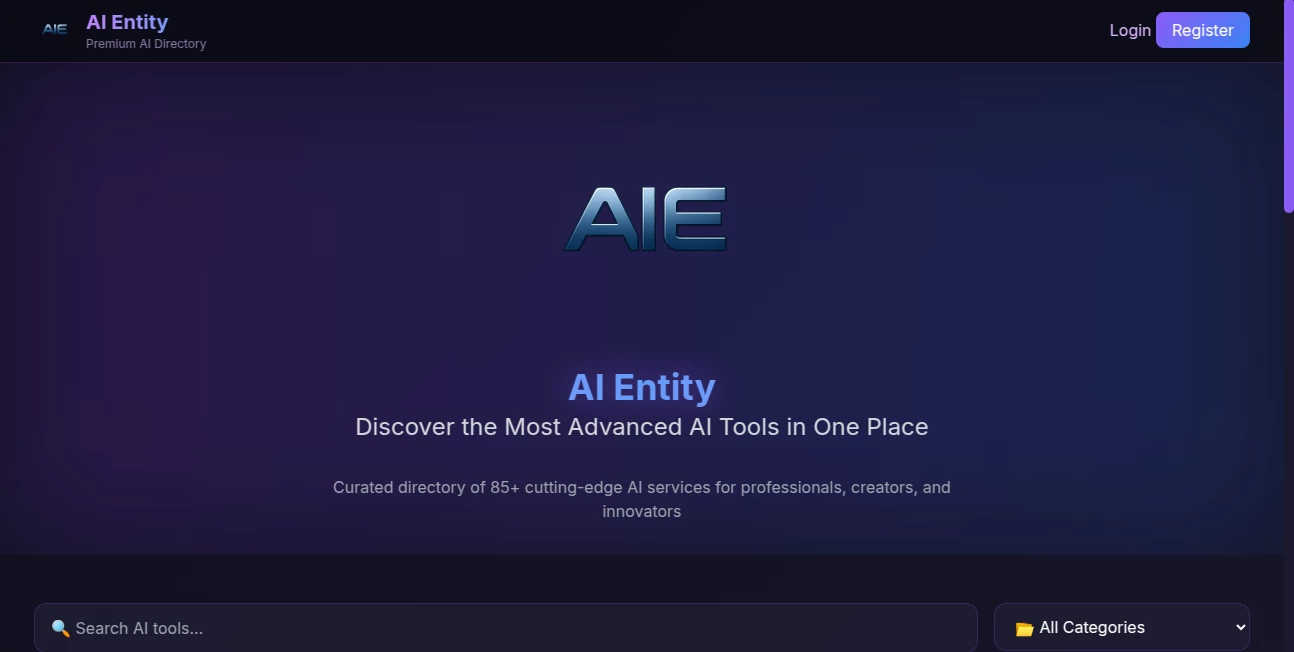
What is AI Entity?
In today’s fast-moving digital world, information is everywhere, but turning it into something structured and useful is the real challenge. This tool is designed to help users and businesses simplify that process by focusing on intelligent entity extraction and data organization. Instead of manually sorting through content, users can rely on automated systems that identify key elements, relationships, and insights in seconds.
It feels like having a research assistant that never gets tired—always scanning, always organizing, and always ready to turn raw data into something meaningful. Whether you're working on content, research, or digital products, it helps bring clarity where there is usually complexity.
Key Features
User Interface
The interface is designed with simplicity in mind. Even users who are not technically advanced can navigate easily. Clean layouts, minimal distractions, and intuitive controls make it accessible for everyday use as well as professional workflows.
Accuracy & Performance
One of the strongest aspects is its ability to detect and organize information with a high level of precision. It reduces noise and focuses on meaningful entities, which helps improve productivity and decision-making in content-heavy environments.
Capabilities
The platform goes beyond basic text processing. It is capable of identifying structured data points, categorizing information, and supporting workflows that rely on knowledge extraction. This makes it useful for research, content creation, and data-driven projects.
Security & Privacy
Data handling is treated with care, ensuring that user inputs are processed securely. The system is built to support professional environments where privacy and data protection are important considerations.
Use Cases
- Organizing research data into structured formats
- Assisting content creators with topic extraction
- Supporting SEO teams in identifying key entities and topics
- Helping developers and analysts process unstructured text
- Improving knowledge management systems for businesses
Pros and Cons
Pros:
- Simplifies complex data processing tasks
- Easy to use interface suitable for all levels
- Improves productivity in research and writing workflows
- Helps structure unorganized information efficiently
Cons:
- May require learning time for advanced features
- Performance depends on input data quality
- Some features may feel technical for beginners
Pricing Plans
Pricing details typically depend on usage level and required features. Many users start with basic access to explore core functionality before moving into more advanced or enterprise-level plans that offer higher processing capacity and additional tools.
How to Use This Tool
Getting started is straightforward. Users typically begin by entering text or data they want to analyze. The system then processes the input and highlights key entities, relationships, and structured insights. From there, results can be reviewed, exported, or integrated into other workflows depending on the user's needs.
For best results, it is recommended to work with clear input data and gradually explore more advanced features as you become familiar with the platform.
Comparison with Similar Tools
Compared to traditional text analysis or manual research methods, this solution offers a more automated and structured approach. While some tools focus only on summarization or keyword extraction, this platform emphasizes deeper entity-level understanding, which provides richer and more actionable insights.
It stands out by balancing simplicity with functionality, making it suitable for both individual users and teams who need scalable information processing.
Conclusion
Overall, this tool offers a practical and modern approach to handling unstructured data. It bridges the gap between raw information and usable knowledge, making it valuable for researchers, marketers, writers, and developers alike. Its balance of usability and intelligent processing makes it a strong option in the growing AI tools ecosystem.
Frequently Asked Questions (FAQ)
What is this tool mainly used for?
It is primarily used for extracting and organizing structured information from unstructured text.
Is it suitable for beginners?
Yes, the interface is designed to be user-friendly, even for those without technical experience.
Can it be used for SEO work?
Yes, it can help identify key topics and entities that are useful for SEO optimization.
Does it support business use?
Absolutely. It can be integrated into research, content, and data workflows across different industries.
Is coding required?
No coding is necessary for basic use, though advanced users may integrate it into technical systems.