


















Arka
What is Arka?
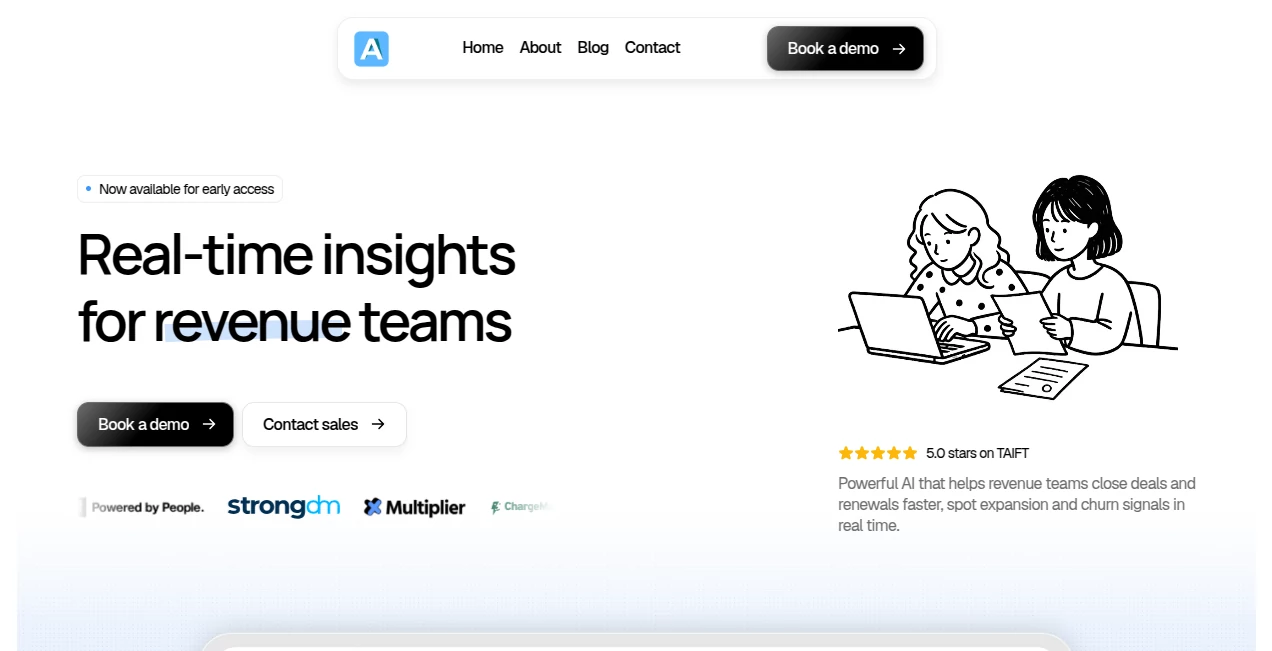
Modern organizations generate data from dozens of platforms every day. Sales teams rely on CRM systems, marketers work across analytics platforms, product teams monitor user behavior, and executives need reliable insights to make critical decisions. Yet finding answers often requires switching between dashboards, spreadsheets, reports, and conversations.
This platform approaches the problem differently. Instead of forcing teams to navigate complex business intelligence tools, it connects data from multiple sources and delivers answers in plain English. The result is a faster, more intuitive way to access business intelligence without requiring advanced technical expertise.
Designed for modern data-driven organizations, the platform helps companies uncover insights, automate reporting workflows, and transform fragmented information into actionable knowledge. Whether a team needs revenue forecasting, customer analysis, or operational reporting, it simplifies the process and dramatically reduces the time required to reach meaningful conclusions.
Key Features
User Interface
The interface is clean, intuitive, and designed for non-technical users as well as experienced data professionals. Instead of navigating complicated dashboards, users can ask questions naturally and receive understandable answers, visual reports, and interactive charts.
The workspace emphasizes clarity, allowing teams to focus on decisions rather than spending time learning complex software. Information is presented in an organized way, making it easier to identify trends, opportunities, and potential risks.
Accuracy & Performance
One of the strongest aspects of the platform is its ability to provide trusted answers from multiple connected data sources. By bringing information together from different systems, it reduces the risk of incomplete analysis and enables more reliable business decisions.
Fast response times allow users to move from question to insight within seconds. This speed becomes especially valuable for revenue operations, customer success teams, and business leaders who need immediate visibility into performance metrics.
Capabilities
- Natural language analytics and reporting.
- Integration with a wide range of business tools and data sources.
- Automated dashboard generation.
- AI-powered forecasting and predictive analytics.
- Real-time business intelligence insights.
- Revenue performance monitoring.
- Customer churn and expansion signal detection.
- Automated workflow and reporting automation.
- Interactive charts and visualizations.
- Cross-platform data unification.
Security & Privacy
Security is clearly a priority. The platform supports enterprise-grade access controls, role-based permissions, auditability features, and secure integrations. Organizations can confidently manage sensitive business information while maintaining visibility into data access and activity.
For companies operating in regulated industries or handling large volumes of customer data, these safeguards provide an additional layer of trust and operational confidence.
Use Cases
- Revenue teams tracking renewals, churn risks, and growth opportunities.
- Executives seeking instant answers without waiting for analysts.
- Marketing teams evaluating campaign performance across multiple channels.
- Sales organizations monitoring pipeline health and forecasting revenue.
- Customer success teams identifying accounts requiring attention.
- Data teams automating repetitive reporting tasks.
- Organizations centralizing insights from multiple business applications.
Pros and Cons
Pros
- Natural language queries eliminate the need for complex SQL.
- Connects with numerous business tools and data sources.
- Fast generation of dashboards and reports.
- Strong forecasting and predictive analytics capabilities.
- User-friendly experience for both technical and non-technical teams.
- Enterprise-focused security and access controls.
Cons
- Some advanced features may require onboarding and setup.
- Organizations with highly customized data environments may need configuration time.
- Early-stage features may continue evolving as the platform expands.
Pricing Plans
The platform primarily operates through a business-focused model with customized access options. Organizations can request demonstrations, explore early access opportunities, and discuss implementation requirements with the team.
Pricing may vary depending on company size, data volume, integrations, and operational requirements. Interested businesses should contact the vendor directly for the most accurate and up-to-date pricing information.
How to Use Arka
Getting started is straightforward. First, connect the business systems that contain important operational data. These may include CRM platforms, analytics tools, support systems, databases, and collaboration software.
Once connected, users can begin asking questions in natural language. The platform processes information across available sources and returns insights through reports, dashboards, charts, and summaries.
Teams can then automate recurring reporting workflows, monitor important metrics, and use predictive intelligence to support strategic planning and decision-making.
Comparison with Similar Tools
Traditional business intelligence platforms often require significant setup, technical expertise, and dashboard maintenance. While they provide powerful reporting capabilities, they frequently create bottlenecks between business users and data teams.
This platform takes a more conversational approach. Instead of expecting users to understand data structures or build complex reports, it focuses on answering business questions directly. The combination of AI-powered analytics, cross-platform connectivity, forecasting, and workflow automation creates a more accessible experience for modern organizations.
Compared with notebook-based analytics environments, it prioritizes business usability and self-service insights, making advanced analytics available to a broader range of stakeholders.
Conclusion
For organizations struggling with fragmented information, slow reporting cycles, and growing data complexity, this platform offers a compelling alternative. By combining natural language intelligence, predictive analytics, automated reporting, and broad integration capabilities, it helps teams access insights faster and make better-informed decisions.
Its focus on usability, security, and business outcomes makes it particularly attractive for revenue operations, customer success, marketing, sales, and executive leadership teams. As companies continue generating larger volumes of data, solutions that simplify access to intelligence will become increasingly valuable, and this platform is positioned to play an important role in that transformation.
Frequently Asked Questions (FAQ)
What is this platform used for?
It is used for AI-powered analytics, reporting, forecasting, and business intelligence across multiple connected data sources.
Does it require SQL knowledge?
No. Users can ask questions in natural language and receive answers without writing SQL queries.
Who benefits most from using it?
Revenue teams, sales organizations, customer success departments, executives, analysts, and data teams can all benefit from faster access to insights.
Can it connect with multiple business tools?
Yes. The platform is designed to integrate with a large number of business applications, databases, and operational systems.
Does it support forecasting and predictive analytics?
Yes. Forecasting, trend analysis, and predictive insights are among its key capabilities.
AI Productivity Tools , AI Research Tool , AI Analytics Assistant .
These classifications represent its core capabilities and areas of application. For related tools, explore the linked categories above.

Arka Alternatives Product

Greek Numero…

UseWok

Receipt AI
GPT Image 2 …

AiDisco

Airtable AI …

DidYouSEO

wigoo

Black Screen
