


















Astelia
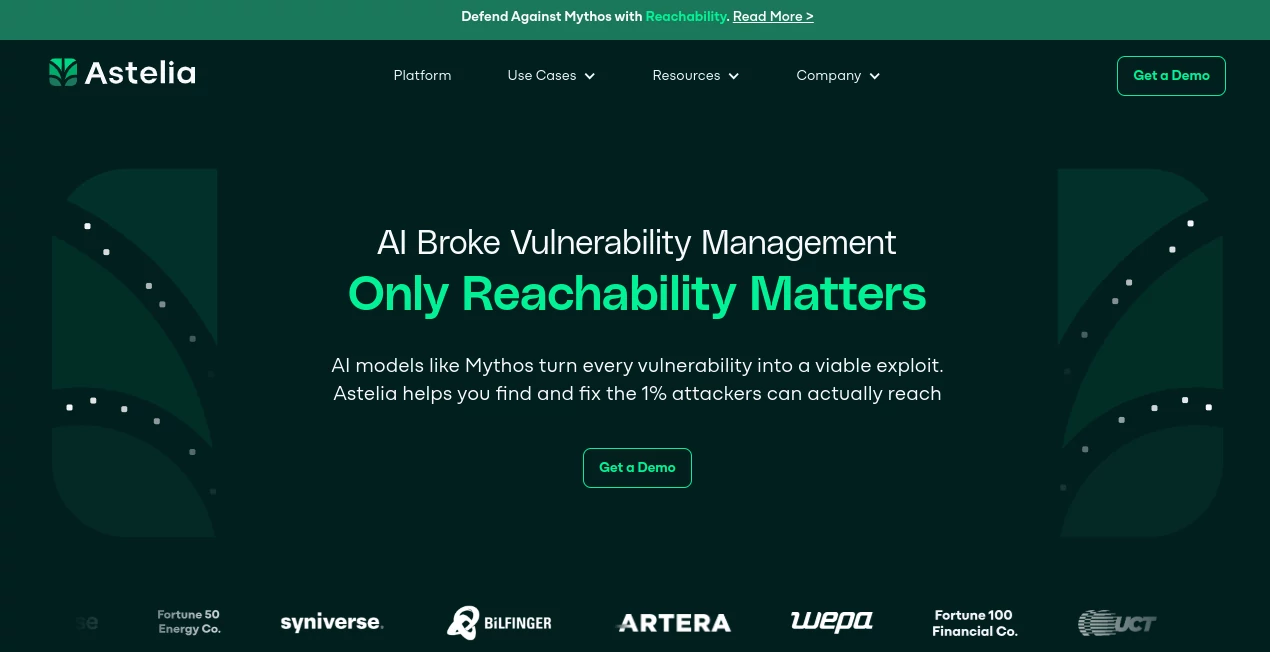
What is Astelia?
Modern cybersecurity teams face an overwhelming challenge: thousands of vulnerabilities, endless alerts, and limited resources to investigate what truly matters. Traditional vulnerability management solutions often prioritize issues based on severity scores alone, leaving security professionals drowning in noise and struggling to identify real threats.
This platform takes a different approach. Instead of treating every vulnerability as equally dangerous, it focuses on actual exposure by analyzing network reachability, exploitability, and attack paths. By combining advanced AI-driven analysis with deep network visibility, organizations can identify which vulnerabilities attackers can realistically exploit and which ones pose little practical risk.
Designed for enterprises that need evidence-based security decisions, the platform helps security and IT teams align their efforts, reduce remediation fatigue, and focus on vulnerabilities that could genuinely impact business operations.
Key Features
User Interface
The dashboard presents complex security information in a surprisingly accessible format. Attack paths, exposure levels, network relationships, and remediation recommendations are displayed in a clear and visual manner, making it easier for both security analysts and IT teams to understand risk without spending hours reviewing raw data.
Interactive visualizations help users explore how vulnerabilities connect to critical assets, creating a practical understanding of potential attack scenarios.
Accuracy & Performance
One of the strongest aspects of the platform is its emphasis on evidence rather than assumptions. Instead of relying solely on vulnerability scores or external threat intelligence, it evaluates whether a vulnerability is actually reachable within a specific environment.
This methodology dramatically reduces false priorities and helps organizations focus on the small percentage of vulnerabilities that present genuine risk. The result is faster decision-making, improved remediation efficiency, and more confident security operations.
Capabilities
- Network topology mapping across infrastructure environments.
- AI-powered vulnerability analysis using exploitability requirements.
- Reachability assessment to identify true exposure.
- Attack path visualization for critical assets.
- Evidence-based remediation recommendations.
- Coverage gap discovery and asset visibility analysis.
- Identification of unscanned systems and hidden risks.
- Support for compensating controls beyond traditional patching.
Security & Privacy
Security is built into the foundation of the platform. Read-only integrations allow organizations to analyze infrastructure without introducing unnecessary operational risk. The platform focuses on collecting the context required for exposure analysis while helping enterprises maintain visibility into segmented environments, third-party access points, and internet-facing assets.
Its evidence-driven approach also improves audit readiness by providing clear justification for remediation priorities and risk decisions.
Use Cases
- Prioritizing vulnerabilities based on real-world exposure.
- Visualizing attack paths that could lead to critical systems.
- Reducing vulnerability backlogs by eliminating low-priority findings.
- Identifying hidden assets and security coverage gaps.
- Supporting security operations centers with actionable intelligence.
- Improving collaboration between security and IT departments.
- Accelerating remediation workflows with contextual guidance.
- Strengthening enterprise exposure management programs.
Pros and Cons
Pros
- Focuses on vulnerabilities that truly matter.
- Provides strong contextual analysis and network visibility.
- Reduces alert fatigue and remediation overload.
- Offers detailed attack path visualization.
- Delivers practical remediation recommendations beyond patching.
- Improves communication between security and operational teams.
Cons
- Primarily designed for enterprise environments.
- May require infrastructure integrations for maximum effectiveness.
- Pricing information is not publicly available.
- Advanced capabilities may exceed the needs of small organizations.
Pricing Plans
The platform follows a custom enterprise pricing model. Organizations interested in implementation can request a personalized demonstration and pricing consultation based on infrastructure size, security requirements, and deployment scope.
This approach allows enterprises to receive tailored recommendations and licensing options aligned with their operational needs.
How to Use Astelia
Begin by connecting infrastructure, network, and security data sources through supported integrations. Once connected, the platform automatically maps network topology and gathers the context required for exposure analysis.
Next, review vulnerability findings and exposure classifications generated through AI-driven reachability assessment. Security teams can then investigate attack paths, evaluate critical assets, and prioritize remediation activities based on actual risk.
Finally, apply the recommended remediation actions, monitor exposure changes, and continuously validate that attack paths have been eliminated or reduced.
Comparison with Similar Tools
Many vulnerability management platforms rely heavily on severity ratings, threat intelligence feeds, or generic risk scoring models. While these methods provide useful information, they often generate large numbers of high-priority findings that are not realistically exploitable.
What differentiates this solution is its emphasis on proof-based exposure analysis. By combining network context, exploitability requirements, and reachability validation, it helps organizations identify the vulnerabilities that attackers can actually leverage.
This evidence-first approach allows security teams to focus on meaningful risk reduction instead of chasing theoretical threats.
Conclusion
For organizations struggling with vulnerability overload, this platform offers a refreshing and highly practical alternative. Rather than adding another layer of risk scoring, it delivers clarity through real-world exposure analysis and actionable intelligence.
The combination of AI-powered vulnerability research, network mapping, attack path visualization, and remediation guidance makes it a compelling solution for modern enterprise security programs. Teams looking to reduce noise, improve prioritization, and strengthen their cybersecurity posture will find significant value in its evidence-based methodology.
Frequently Asked Questions (FAQ)
What is the primary purpose of this platform?
It helps organizations identify vulnerabilities that are genuinely reachable and exploitable within their environment, enabling smarter remediation prioritization.
Who is the platform designed for?
It is primarily intended for enterprise security teams, vulnerability management programs, and organizations with complex infrastructure environments.
Does it only recommend patching?
No. It also provides alternative remediation strategies such as network controls, access restrictions, and compensating security measures.
Can it identify hidden or unscanned assets?
Yes. The platform includes coverage gap analysis capabilities that help reveal overlooked systems, external-facing assets, and configuration issues.
Is pricing publicly available?
No. Pricing is provided through customized enterprise consultations and demonstrations.
AI Monitor & Report Builder , AI Research Tool , AI Analytics Assistant .
These classifications represent its core capabilities and areas of application. For related tools, explore the linked categories above.

Astelia Alternatives Product

Domain Rank …

ForexCoupons

DidYouSEO

Candidate Sc…

Zloth

SEO Tools Hu…

Yorph AI

Roipad

Pips Hint
