
















What is ATSScores?
Most people spend hours tailoring their resume for every job, only to get ghosted. The frustration is real — you know your experience matches, but the system never sees it. This tool cuts through that noise. Paste a job description and your resume, and in seconds it shows exactly which keywords you're missing and gives precise, targeted suggestions for your bullet points. No generic fluff, no rewriting your entire history — just smart, surgical edits that actually move the needle. I've watched friends go from "applying to everything and hearing nothing" to landing interviews after one focused round with this.
Introduction
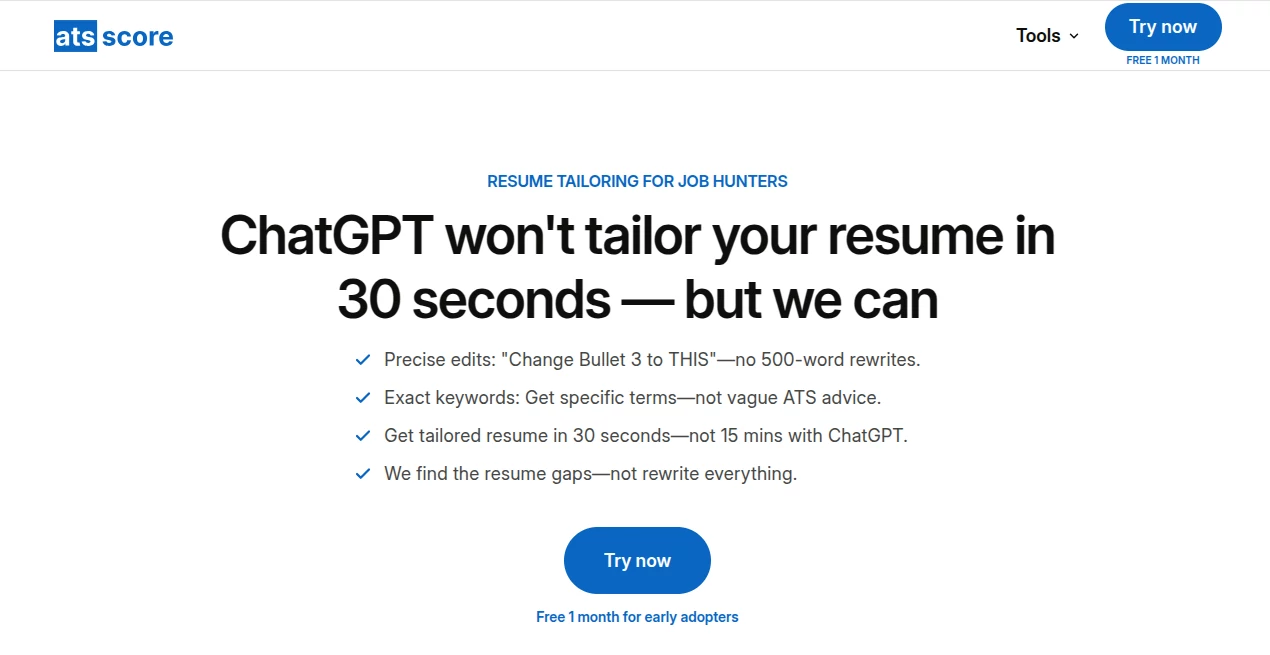
Applicant Tracking Systems (ATS) are ruthless gatekeepers. They scan for specific keywords and patterns, and if your resume doesn't speak their language, it gets buried no matter how qualified you are. This platform was built by people who understand that pain. It doesn't promise magic — it delivers practical, fast help that bridges the gap between your real experience and what the job description is actually looking for. The difference is noticeable: instead of spending 15 minutes per application fighting with ChatGPT or Word, you get clear guidance in under 30 seconds. For job seekers tired of the black hole, it's a breath of fresh air.
Key Features
User Interface
The interface is refreshingly straightforward. Upload your resume once (PDF or Word both work fine), paste a job description, and the analysis appears almost instantly with highlighted missing keywords and suggested bullet improvements. Side-by-side comparisons make it easy to see the before and after. No complicated dashboards or steep learning curves — just a clean, focused experience that respects your time when you're already stressed about the job hunt.
Accuracy & Performance
It doesn't just throw generic keywords at you. It scans the actual job description deeply and matches them against your existing experience, then suggests precise edits tied to bullets you've already written. The score improvements are realistic and noticeable — many users report jumping from the 50s to the high 80s quickly. Processing is fast even with longer resumes, and the suggestions feel grounded rather than hallucinated.
Capabilities
Beyond basic keyword matching, it identifies gaps in your experience narrative and offers specific bullet point rewrites that keep your authentic voice while improving ATS compatibility. You can iterate quickly — tweak one section, re-analyze, and see the score update. It works especially well for technical roles where exact terms like "React," "Figma," or "UX Research" make or break an application. The output stays clean and ATS-friendly, avoiding the formatting disasters that hurt visibility.
Security & Privacy
Your resume data is handled with care — processed securely and not stored longer than needed for the analysis. No unnecessary data collection, and you stay in control throughout. For job seekers sharing sensitive career history, that respect for privacy builds real confidence in the tool.
Use Cases
A software engineer applies to 20 roles a week and uses this to quickly tailor each application, boosting response rates noticeably. A career changer highlights transferable skills more effectively after seeing exactly which keywords to emphasize. A recent graduate with limited experience gets targeted advice on how to frame internships and projects. Even seasoned professionals use it before big applications to make sure they're not missing subtle terms that recruiters and systems prioritize.
Pros and Cons
Pros:
- Lightning-fast tailoring that actually feels useful instead of generic.
- Precise bullet suggestions that keep your real experience intact.
- Clear ATS scoring that shows real improvement potential.
- No need to rewrite everything from scratch every time.
- Generous free access for early users to test the difference.
Cons:
- Still in active development — some advanced features are coming soon.
- Best results come when your base resume is already solid.
Pricing Plans
It offers a strong free tier and a generous one-month free period for early adopters, making it easy to try without risk. Paid plans unlock unlimited tailoring, advanced analytics, and priority features as your job search intensifies. The pricing stays reasonable because the real value is in the time saved and interviews gained — many users say it pays for itself after just a few successful applications.
How to Use ATS Scores
Upload your current resume once. Paste the job description you're targeting. Review the keyword gaps and suggested bullet improvements. Accept or tweak the recommendations, then download your optimized version. Repeat for each new role — the process gets faster with every use. The whole cycle from upload to tailored resume often takes under a minute, freeing you to focus on actually applying rather than formatting.
Comparison with Similar Tools
Generic AI tools like ChatGPT often rewrite too much and hallucinate details, while basic ATS checkers only flag keywords without helpful suggestions. This one sits in the sweet spot: surgical edits tied to your actual experience, fast processing, and practical scoring that translates directly into better applications. It's less about automation theater and more about giving you a genuine edge in a tough market.
Conclusion
Job hunting is exhausting enough without fighting invisible systems. This tool levels the playing field by making ATS optimization fast, smart, and actually helpful. It doesn't guarantee interviews, but it removes one major barrier so your real qualifications have a better chance to shine. For anyone serious about their next move, that kind of practical help is worth its weight in gold.
Frequently Asked Questions (FAQ)
How accurate is the ATS score?
It's based on real patterns from modern ATS systems and provides a realistic estimate of how well your resume will parse.
Do I need to rewrite my entire resume each time?
No — it focuses on targeted improvements to your existing bullets rather than full rewrites.
Is my data safe?
Yes, processing is secure and private with no unnecessary storage of your documents.
Can I use it for multiple applications in one day?
Absolutely — the free tier and early access give you plenty of room to tailor several applications quickly.
Does it work with LinkedIn resumes?
Yes — it handles exports from LinkedIn and most common resume formats effectively.