
Bloodhound.law
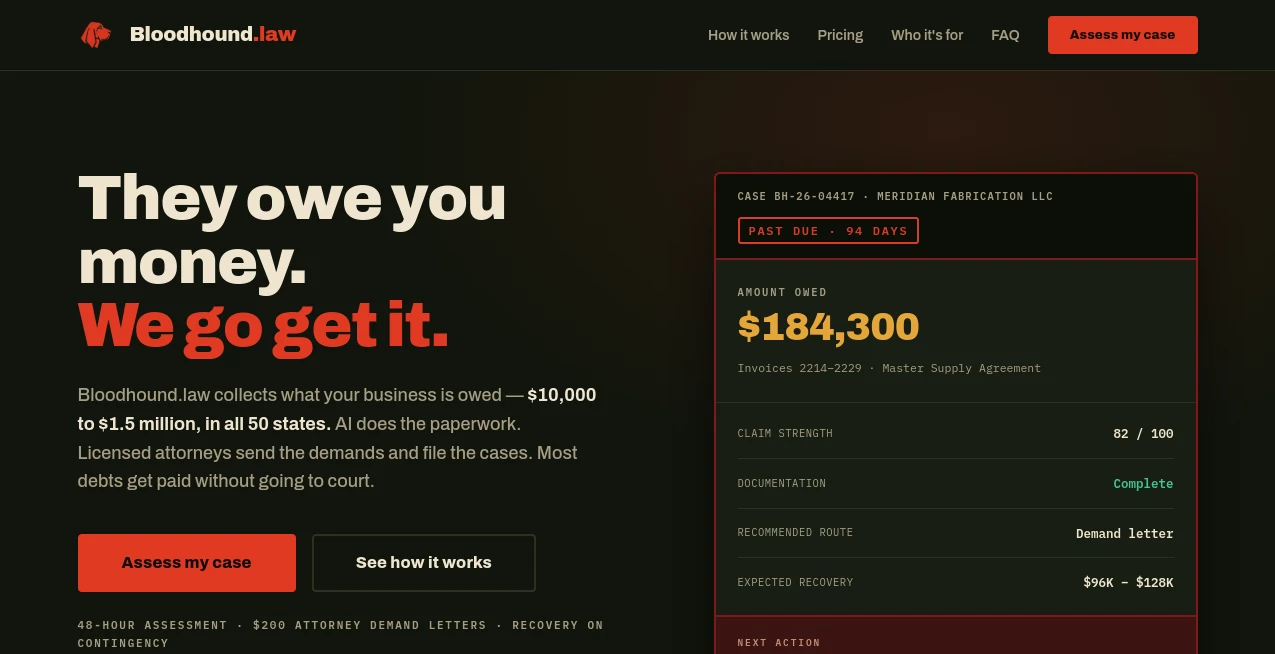
What is Bloodhound.law?
Modern litigation generates enormous volumes of documents, making it increasingly difficult for legal professionals to identify the facts that truly matter. This platform was created to solve that challenge by transforming lengthy legal files into structured, citation-backed intelligence that attorneys can trust throughout the litigation process.
Rather than producing generic AI summaries, the platform focuses on evidence-driven analysis. Every important finding is connected to its original source, allowing lawyers to verify information instantly instead of spending hours searching through contracts, pleadings, depositions, witness statements, or discovery materials. This approach dramatically reduces manual review while preserving the confidence required in legal practice.
Whether preparing for trial, organizing evidence, or reviewing complex case files, legal teams gain a structured understanding of facts, timelines, contradictions, and supporting citations. The result is a faster, more organized workflow that helps firms spend less time searching for information and more time building winning legal strategies.
Key Features
User Interface
The interface is designed for legal professionals rather than technical users. Documents can be uploaded and analyzed through an organized workspace that presents findings in a logical format. Instead of overwhelming users with raw AI output, the platform highlights evidence, organizes facts, and provides clear navigation between insights and supporting documentation.
Accuracy & Performance
One of the strongest aspects of the platform is its evidence-locked methodology. Findings remain connected to their original citations, making verification simple and reducing the risk of unsupported conclusions. This creates a more dependable research experience than traditional AI systems that often generate uncited responses.
Capabilities
- Transforms legal documents into structured findings of fact.
- Generates citation-linked legal intelligence.
- Organizes complex evidence into understandable summaries.
- Supports litigation preparation.
- Identifies relationships between documents and evidence.
- Helps uncover contradictions within legal materials.
- Improves document review efficiency.
- Creates strategic insights for legal teams.
- Works with large collections of legal documents.
- Supports collaborative legal workflows.
Security & Privacy
Because legal matters involve highly confidential information, security is a fundamental part of the platform's design. Sensitive legal documents remain protected while users maintain control over their case materials. This focus on privacy makes the platform suitable for professional legal environments where confidentiality is essential.
Use Cases
- Preparing litigation strategies.
- Reviewing discovery documents.
- Analyzing contracts and legal agreements.
- Organizing evidence before trial.
- Building findings of fact for legal cases.
- Reviewing witness statements.
- Supporting legal research with cited information.
- Helping law firms manage complex document collections.
- Accelerating due diligence projects.
- Reducing manual legal document review.
Pros and Cons
Pros
- Evidence-backed findings improve confidence in legal analysis.
- Citation-linked intelligence makes verification simple.
- Designed specifically for law firms instead of general AI users.
- Handles large legal document collections efficiently.
- Reduces time spent reviewing lengthy files.
- Creates structured legal insights rather than simple summaries.
Cons
- Primarily intended for legal professionals.
- Advanced legal workflows may require an initial learning period.
- Less suitable for users outside the legal industry.
Pricing Plans
Pricing information is not publicly listed. Interested law firms can contact the sales team to request a demonstration and receive pricing based on their requirements.
How to Use Bloodhound
Begin by uploading legal documents such as contracts, pleadings, depositions, or evidence files. After processing, the platform extracts key findings, organizes important facts, and connects every insight to supporting citations. Users can then review evidence, explore relationships between documents, verify references, and use the generated intelligence to strengthen litigation preparation and legal decision-making.
Comparison with Similar Tools
Many AI legal assistants focus on drafting documents or answering legal questions in conversational form. This platform takes a different approach by emphasizing evidence-based intelligence. Instead of providing uncited responses, it builds structured findings directly connected to source materials, making it particularly valuable for litigation teams that require transparency and verifiable legal analysis. Firms handling document-intensive cases may find this workflow significantly more reliable than traditional AI chat assistants.
Conclusion
For legal professionals dealing with large volumes of evidence, speed alone is never enough—accuracy and traceability matter just as much. This platform successfully combines AI-powered analysis with citation-backed verification, allowing lawyers to work more efficiently without sacrificing confidence in their findings. By converting complex legal documents into organized intelligence, it helps law firms focus on strategy instead of repetitive document review, making it a valuable addition to modern litigation workflows.
Frequently Asked Questions (FAQ)
What type of users is this platform designed for?
It is primarily built for law firms, litigators, legal researchers, and professionals who regularly analyze complex legal documents.
Can it analyze large legal document collections?
Yes. The platform is designed to process extensive legal files and organize them into structured findings with supporting citations.
Does it provide citation-backed results?
Yes. One of its defining features is linking findings directly to their supporting evidence, allowing users to verify information quickly.
Is it suitable for litigation preparation?
Absolutely. It helps organize evidence, identify important facts, detect contradictions, and support litigation strategy.
AI Document Extraction , AI Documents Assistant , AI Research Tool , AI Legal Assistant .
These classifications represent its core capabilities and areas of application. For related tools, explore the linked categories above.

Bloodhound.law Alternatives Product

Schema Synth

JSON to TOON…

AI Entity

Serplux

IntoTheBlock

Image Descri…

Rename files…

Sourcetable

LongTerMemory