


















CitoAPI
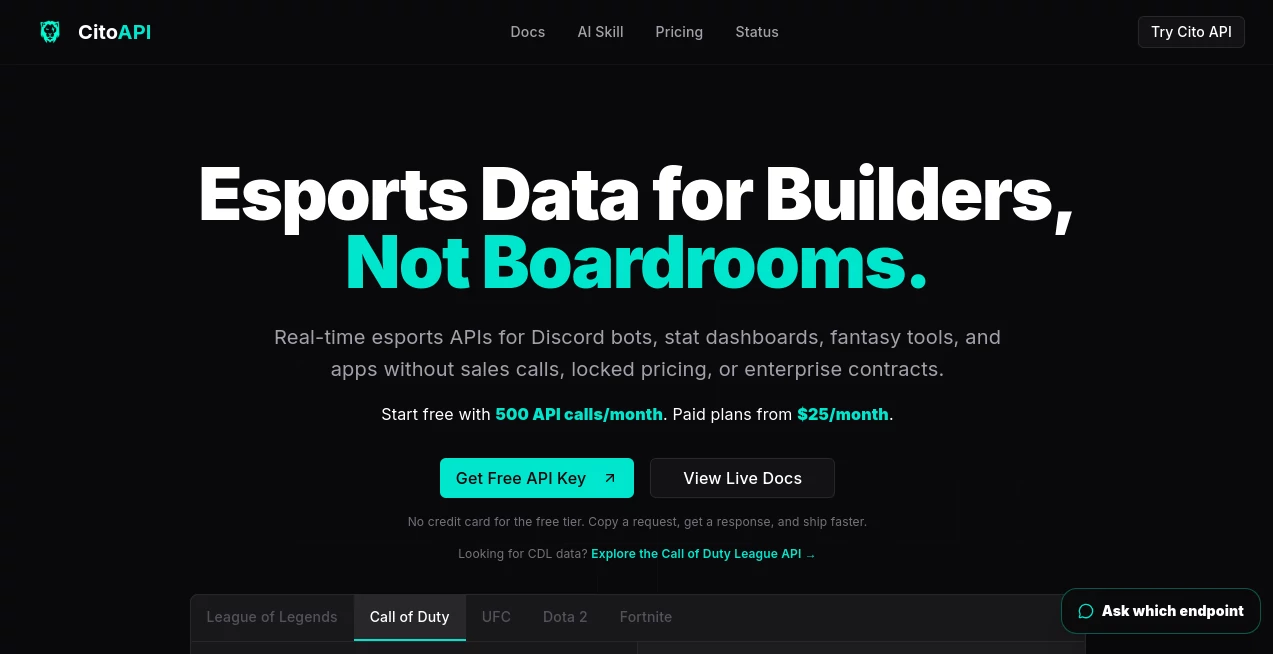
What is CitoAPI?
Building intelligent applications today requires more than just access to models—it demands stability, speed, and a flexible infrastructure that can scale with real-world needs. This platform is designed to simplify how developers and businesses connect with powerful AI capabilities through a single, unified layer.
Instead of juggling multiple providers, authentication systems, and inconsistent responses, users get a streamlined experience that focuses on reliability and ease of integration. It feels less like managing APIs and more like plugging intelligence directly into your product.
Key Features
User Interface
The platform provides a clean and developer-friendly dashboard where users can quickly manage keys, monitor usage, and test requests. Everything is structured to reduce friction, making onboarding smooth even for teams new to AI infrastructure.
Accuracy & Performance
Requests are optimized for fast response times and stable performance under load. The system is built to handle production-level traffic, ensuring consistent outputs even during peak usage periods.
Capabilities
It supports a wide range of AI functionalities, allowing developers to integrate language processing, automation workflows, and intelligent data handling into their applications without complex setup.
- Unified API access for multiple AI functions
- Scalable architecture for enterprise use
- Simple authentication and key management
- Flexible integration for web and mobile apps
- Real-time response handling
Security & Privacy
Security is treated as a core layer rather than an afterthought. Requests are protected through secure authentication methods, and data handling practices are designed to maintain user trust and system integrity.
Use Cases
- Building AI-powered SaaS products
- Automating customer support systems
- Enhancing content generation platforms
- Integrating AI into business workflows
Pros and Cons
Pros:
- Easy integration for developers
- Centralized AI access
- Scalable for both startups and enterprises
- Fast and reliable responses
Cons:
- Advanced configurations may require technical knowledge
- Depends on external AI model availability
Pricing Plans
The pricing structure is typically designed to support different stages of growth. From individual developers testing ideas to companies deploying large-scale systems, flexible tiers make it easier to start small and scale as needed.
How to Use the API Platform
Getting started is straightforward. After creating an account, users generate an API key from the dashboard. This key is then used to authenticate requests from their application.
- Create an account and access the dashboard
- Generate a secure API key
- Integrate endpoints into your application
- Send requests and handle responses in real time
- Monitor usage and optimize performance
Comparison with Similar Tools
Compared to fragmented AI service providers, this platform focuses on consolidation and simplicity. Instead of managing multiple APIs separately, developers can rely on a single integration point, reducing maintenance overhead and speeding up development cycles.
Conclusion
For developers and companies aiming to build AI-driven products without the complexity of managing multiple systems, this platform offers a practical and efficient solution. It combines accessibility with performance, making it suitable for both experimentation and production-grade applications.
Frequently Asked Questions (FAQ)
What is this platform used for?
It is used to integrate AI capabilities into applications through a single, unified API system.
Is it suitable for beginners?
Yes, the documentation and dashboard are designed to be simple enough for new developers while still powerful for advanced users.
Can it be used in production?
Yes, it is built to support scalable and production-level workloads.
Does it support multiple AI features?
Yes, it provides access to a variety of AI-driven functionalities through one integration layer.
AI Code Assistant , AI API Design , Large Language Models (LLMs) , AI Developer Tools .
These classifications represent its core capabilities and areas of application. For related tools, explore the linked categories above.

CitoAPI Alternatives Product

Workik

Website Clon…

ModelsLab

Defapi

Chatref

You.bot

ShipAhead

Interview Co…

Jasper
