
CoachLingo
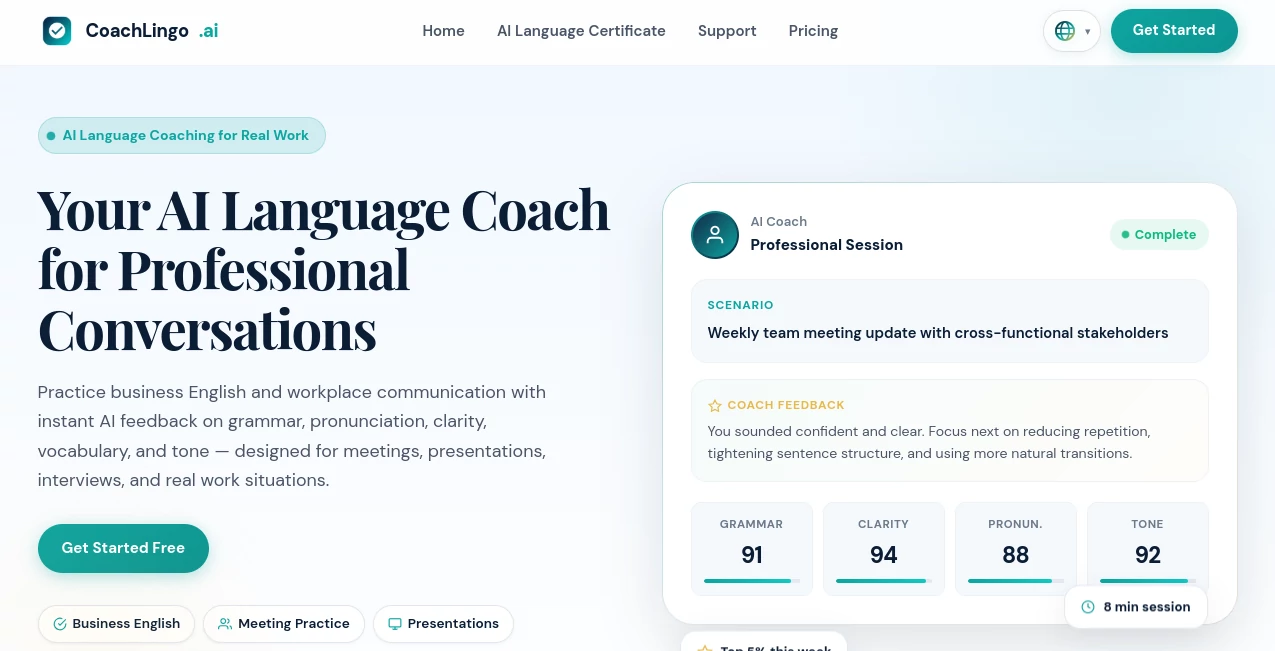
What is CoachLingo?
CoachLingo is a language coaching platform designed to connect learners with qualified language coaches for personalized, one-to-one support. Instead of relying only on self-study materials or generic lessons, learners can work directly with a coach who understands their goals, challenges, and preferred way of learning.
The platform is particularly appealing to people who want to become more confident using a language in real situations. Whether the goal is improving fluency, preparing for travel, developing professional communication skills, or simply becoming more comfortable in conversation, the coaching approach puts practical communication at the center of the experience.
One useful aspect is the ability to explore coaches based on their language skills and profiles, then arrange an initial consultation before committing to regular sessions. This makes the experience feel more personal than simply choosing a course and hoping it matches your needs.
Key Features
- One-to-one language coaching with individual tutors.
- Access to coaches with different native and additional language skills.
- Coach profiles that provide information about experience, languages, and teaching approach.
- Free initial consultations with coaches.
- Flexible session scheduling based on coach availability.
- Real-time video sessions for remote language practice.
- Support for practical conversation and confidence building.
- Language coaching tailored to individual learning objectives.
- Options for professional and business-focused language preparation.
- A marketplace-style environment where learners can discover and compare coaches.
User Interface
The platform keeps the process relatively straightforward: learners can browse available coaches, review their profiles, check language information, and move toward booking a session. Coach profiles can include details such as native language, other languages spoken, teaching experience, biography, ratings, and session pricing.
This profile-based approach is helpful because choosing a language coach is often about personality and teaching style as much as qualifications. Being able to read about a coach before arranging a session gives learners a better idea of who they may be working with.
Accuracy & Performance
Because the service focuses on human-led coaching rather than automated language generation, the quality of the learning experience depends largely on the individual coach and the learner's goals. That can actually be an advantage for situations where context, pronunciation, cultural details, and conversational nuance matter.
For example, someone preparing for an international business meeting may need more than vocabulary. They may need to rehearse introductions, practice industry-specific conversations, understand cultural expectations, and receive feedback on how naturally they communicate. A personal coach can adapt the session around those requirements.
Capabilities
The platform is built around flexible language development rather than a single fixed curriculum. Learners can work on fluency, pronunciation, conversational confidence, exam preparation, travel communication, or professional language skills depending on the coach they choose.
Its business-oriented use cases are particularly interesting. Language coaching can include role-playing realistic workplace situations, practicing presentations or meetings, and preparing for interactions with international clients or partners. This makes the service relevant not only to students but also to professionals who need to use another language confidently at work.
Security & Privacy
Users should review the platform's current privacy policy and terms before sharing personal information or arranging paid sessions. The service requires account information for registration and uses its platform to facilitate communication and transactions between learners and coaches. Payment information is not provided directly to coaches according to the published terms.
Use Cases
- Conversation practice: Build confidence through regular one-to-one speaking sessions.
- Travel preparation: Learn useful language and conversational habits before visiting another country.
- Business communication: Prepare for meetings, presentations, negotiations, and professional conversations.
- Pronunciation improvement: Work with a coach on speaking clearly and naturally.
- Exam preparation: Practice language skills with a coach around a specific academic objective.
- Fluency development: Move beyond textbook exercises and spend more time actively communicating.
- Cultural preparation: Understand communication habits and social expectations that may differ between countries.
- Confidence building: Get personalized feedback and practice in a supportive environment.
Pros and Cons
Pros
- Personalized one-to-one language coaching.
- Wide range of coach profiles and language backgrounds.
- Free initial consultations can help learners find a suitable match.
- Useful for practical, real-world communication.
- Suitable for both personal and professional language goals.
- Flexible scheduling makes remote coaching convenient.
Cons
- The learning experience can vary depending on the coach selected.
- Regular coaching can cost more than self-paced language-learning resources.
- Users need to compare individual coach profiles to find the right fit.
- It is primarily designed around coaching rather than completely self-directed learning.
Pricing Plans
Pricing is coach-dependent rather than based on a single universal subscription. Individual coaches set their own session prices, allowing learners to compare options according to experience, language, and budget. Published coach profiles show different hourly rates, so the final cost depends on the professional selected and the number of sessions booked.
This model can work well for learners who prefer paying for targeted instruction rather than committing to a large course upfront. A free initial consultation also provides an opportunity to determine whether a particular coach is a good match before investing in further sessions.
How to Use CoachLingo
- Create an account and access the coaching marketplace.
- Browse available language coaches.
- Review profiles, languages, experience, pricing, and other available information.
- Choose a coach whose background matches your learning objectives.
- Arrange an initial consultation where available.
- Discuss your goals and the areas you want to improve.
- Book suitable coaching sessions through the platform.
- Use each session for focused practice and personalized feedback.
Comparison with Similar Tools
Traditional language-learning apps are often excellent for vocabulary drills, structured exercises, and independent practice. Language coaching takes a different route. Instead of asking the learner to follow the same predefined path as everyone else, the experience can be shaped around individual weaknesses and goals.
This makes personalized coaching especially useful when a learner already understands the basics but struggles to speak naturally. It can also be valuable for professionals who need targeted preparation for a particular situation rather than a general language course.
The biggest distinction is the human element. A coach can notice hesitation, adjust the conversation, explain why a phrase sounds unnatural, and introduce cultural context that may be difficult to capture through automated exercises alone.
Conclusion
For learners who want more than vocabulary lists and repetitive exercises, CoachLingo offers a practical route toward stronger communication skills through personalized coaching. Its coach marketplace, individual profiles, flexible sessions, and focus on real-world communication make it suitable for students, travelers, professionals, and anyone who wants more confidence speaking another language.
The strongest reason to consider this approach is simple: language becomes useful when you can actually use it. Working with the right coach can turn passive knowledge into active communication, whether that means handling a business meeting, navigating a trip abroad, preparing for an exam, or simply having a relaxed conversation without constantly searching for the right words.
Frequently Asked Questions (FAQ)
What is CoachLingo?
It is a language coaching platform that connects learners with individual language coaches for personalized sessions and practical communication practice.
Can I choose my own language coach?
Yes. Learners can browse coach profiles and compare information such as languages, experience, biographies, ratings where available, and session prices before selecting a coach.
Are language coaching sessions one-to-one?
The service is centered around individual coaching sessions, allowing the coach to focus on the learner's specific objectives and areas for improvement.
Can it help with business language?
Yes. Language coaching can be used to prepare for professional situations such as meetings, presentations, international travel, client conversations, and industry-specific communication.
Is there a free consultation?
Coaches can offer a free initial consultation, giving learners an opportunity to discuss their goals and determine whether the coaching relationship is a good fit.
Education , AI Education Assistant , AI Coaching .
These classifications represent its core capabilities and areas of application. For related tools, explore the linked categories above.

CoachLingo Alternatives Product

Gochu

Translate a …

AI Palm Read…

Classroom Sc…

Japanese Nam…

aipen.ink

AI Math Solv…

Casper Pract…

Futurwise