













Semantic SEO Analyzer
What is Semantic SEO Analyzer?
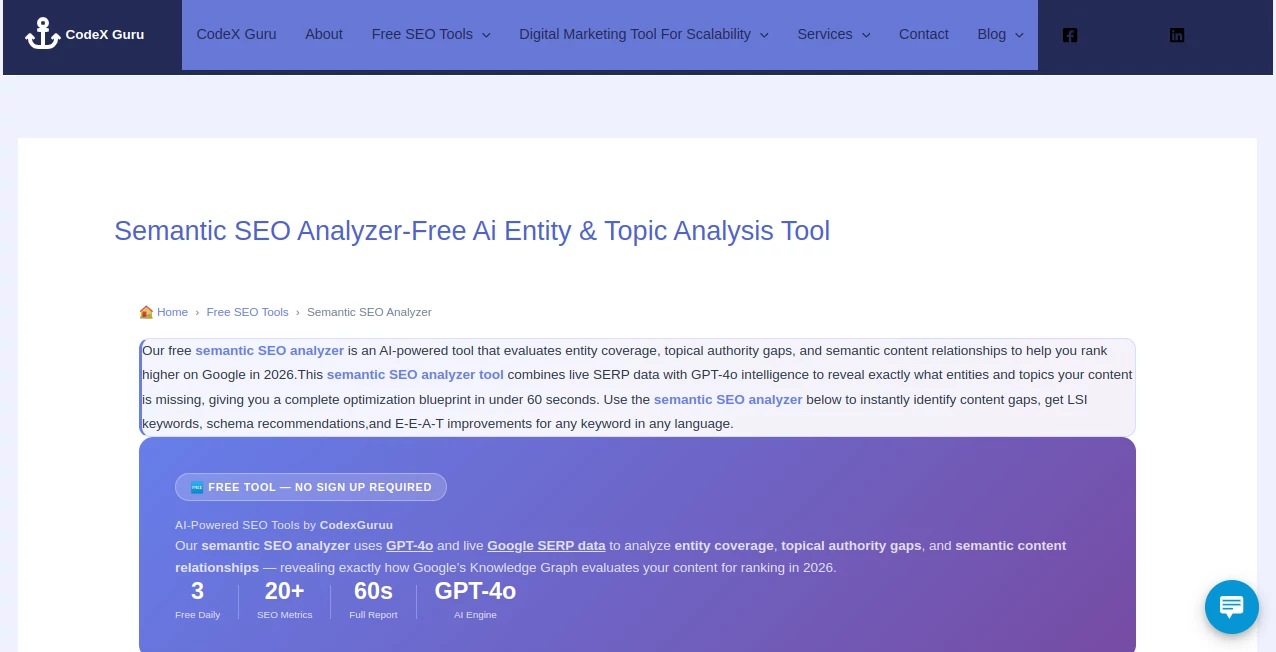
I used to write what I thought was solid content only to watch it sit on page 3 with no movement. The missing piece was usually something I couldn’t see — the right entities, deeper topical coverage, or subtle connections Google’s algorithms were looking for. This free tool changed how I approach every new piece. You enter a keyword, and in under a minute it shows you exactly what’s missing compared to the pages currently ranking. It’s like having a sharp-eyed editor who understands how modern search really works.
Introduction
Traditional keyword tools tell you volume and difficulty, but they don’t show you why certain pages outrank others. This semantic SEO analyzer goes deeper by combining live Google SERP data with strong AI to map entities, topical clusters, and content gaps. It reveals what Google’s Knowledge Graph expects for your topic and gives you a clear, actionable blueprint. Whether you’re a blogger trying to break into competitive niches, an agency delivering client results, or an SEO who wants to stay ahead, it turns guesswork into strategy. Best of all, you can run three full analyses per day completely free with no sign-up.
Key Features
User Interface
The design is refreshingly straightforward. Just enter your main keyword, optionally add a URL for gap analysis, choose language and country, and hit analyze. Everything happens in one clean screen with a progress breakdown so you know it’s working. The final report is well-organized with scores, missing entities, recommended topics, and quick wins clearly highlighted. No clutter, no unnecessary steps — just focused, useful output.
Accuracy & Performance
It pulls real-time search results rather than outdated data, then runs GPT-4o analysis to identify entity gaps and topical weaknesses with impressive precision. Reports load quickly (usually 30–60 seconds) and the recommendations feel grounded in how search actually works today. I’ve tested it on several competitive keywords and found the entity suggestions consistently matched what top-ranking pages included.
Capabilities
The tool delivers an Entity Coverage Score, Topical Authority Score, content gap detection against top 10 results, semantic triple mapping, schema markup recommendations, E-E-A-T guidance, and a prioritized quick-wins list. It also generates optimized title and meta suggestions plus LSI keywords. It works in multiple languages and supports both new content planning and auditing existing pages.
Security & Privacy
Your searches and URLs are processed privately and not stored long-term. No account is required for basic use, so there’s minimal data collection. Each analysis runs independently and is deleted after delivery. That clean, no-strings approach makes it comfortable to test sensitive or client-related keywords.
Use Cases
A blogger researching a competitive topic gets a clear list of missing entities and builds content that ranks faster than before. An agency audits a client’s cornerstone page and discovers high-impact gaps they quickly fill for better results. A content strategist plans an entire cluster by running multiple related keywords and mapping topical opportunities. Even solo entrepreneurs use it to punch above their weight against bigger sites by covering topics more comprehensively. It fits naturally into research, writing, and optimization workflows.
Pros and Cons
Pros:
- Free daily analyses with no sign-up required.
- Combines live SERP data with strong AI for practical insights.
- Clear, actionable recommendations instead of vague advice.
- Fast processing and well-organized reports.
- Works across languages and content types.
Cons:
- Free tier limited to three analyses per day.
- Very broad or vague keywords produce less precise results.
- Advanced bulk features require a paid upgrade.
Pricing Plans
The free version is genuinely useful with three full analyses daily. For heavier use, agencies and power users can upgrade for unlimited checks, bulk processing, and additional features. The paid tiers remain reasonably priced for the time and ranking potential they unlock.
How to Use Semantic SEO Analyzer
Go to the tool, type your target keyword (be specific for best results), and optionally paste an existing URL if you want a gap analysis. Select your target language and country, then click analyze. Wait 30–60 seconds for the full report. Review the entity gaps, topical suggestions, and quick wins. Use the findings to guide your content structure, headings, schema, and additional sections. Export or copy the insights into your writing process. It’s simple enough for quick checks yet deep enough for serious optimization.
Comparison with Similar Tools
Many keyword tools stop at volume and competition. Others offer surface-level content scores without real entity or topical depth. This analyzer stands out by focusing specifically on semantic relationships and Knowledge Graph alignment — the factors increasingly driving rankings. It’s faster and more actionable than most paid alternatives while remaining free to try, making it one of the smartest starting points for modern SEO work.
Conclusion
SEO has evolved from simple keywords to rich, entity-driven content that demonstrates real topical authority. This tool makes that shift practical and approachable. It gives you the missing pieces without the overwhelm, helping your content compete more intelligently. Whether you publish once a week or manage large sites, having this kind of insight available at no initial cost is a genuine advantage. The pages that win tomorrow will be the ones that understand context — this helps you build exactly those pages today.
Frequently Asked Questions (FAQ)
How many free analyses can I run?
You get three full reports per day with no sign-up required.
Do I need to add a URL?
No — you can analyze any keyword alone, but adding a URL gives deeper gap analysis against your existing content.
Is the data real-time?
Yes, it pulls live SERP results for accurate, current recommendations.
Can I use it for non-English keywords?
Yes, it supports multiple languages including localized search results.
What makes this different from regular SEO tools?
It focuses on entities, topical authority, and semantic relationships rather than just keywords and backlinks.
AI SEO Assistant , AI Content Generator , AI Research Tool , AI Marketing Plan Generator .
These classifications represent its core capabilities and areas of application. For related tools, explore the linked categories above.
Semantic SEO Analyzer details
Pricing
- Free
Apps
- Web App
Categories

Semantic SEO Analyzer Alternatives Product

Adscriptly

Alai

labgen

Reddit Campa…

Geoleaper

Bold Pilot

Rate My Prof…

Distro

Serplux