
CraftStory
What is CraftStory?
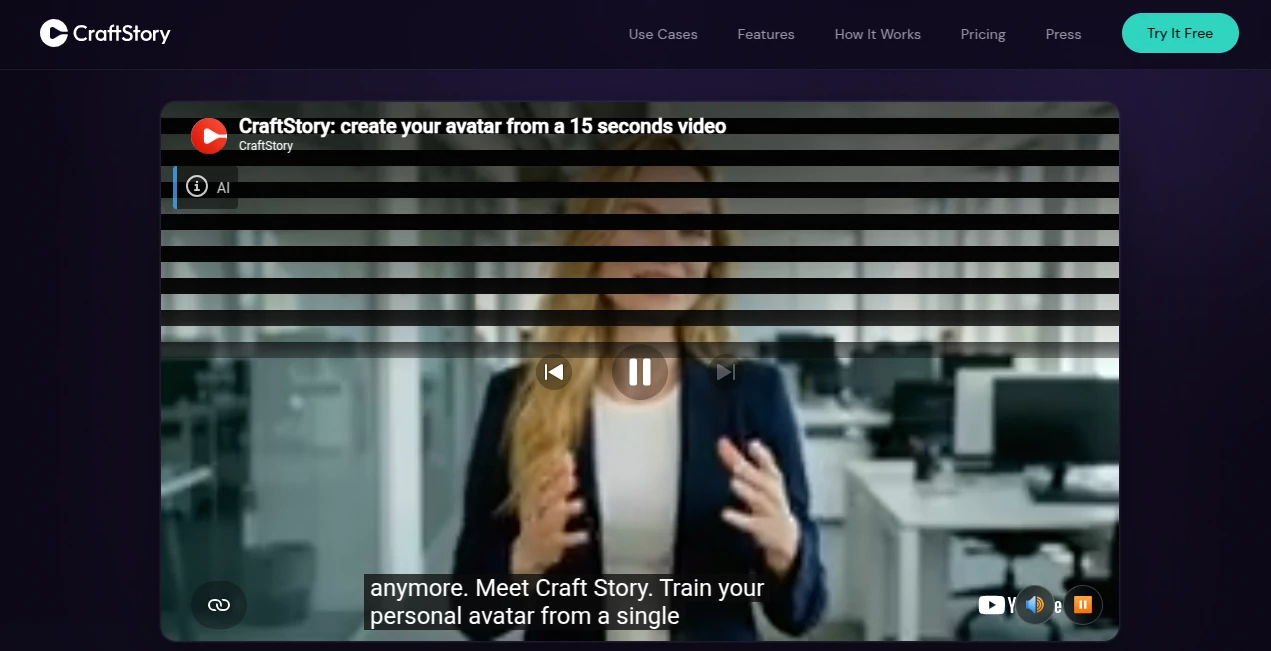
CraftStory is an AI video platform built around a simple but powerful idea: start with a single photo and turn it into a realistic talking video. Instead of arranging a camera, presenter, studio, and editing workflow, users can upload an image, add a script or audio, choose a voice and language, and generate a finished video.
The platform is particularly interesting for creators and businesses that need presenter-led content at scale. Its AI characters can maintain a consistent identity across videos, while support for more than 30 languages makes localization considerably easier. Videos can also reach up to 30 minutes, which puts the platform beyond the short-clips-only approach common in AI video creation.
Key Features
- Convert a single photo into a realistic talking video.
- Choose from more than 100 ready-made AI actors and scenes.
- Create custom avatars from a short video.
- Generate videos up to 30 minutes long.
- Accurate lip-sync with expressive facial movements and natural gestures.
- Support for more than 30 languages.
- Use a written script or upload your own audio.
- Generate UGC-style advertising videos and multiple creative variations.
- 1080p export is available on paid plans without a watermark.
- A Video Agent can handle scripting, b-roll, infographics, subtitles, and avatar selection.
User Interface
The workflow is refreshingly straightforward. A typical project starts with choosing a photo or an AI actor, followed by adding a script and selecting a voice and language. The result can then be generated without having to work through a traditional video-editing timeline.
This approach is useful for people who know what they want to say but do not necessarily have video production experience. For example, a small company could prepare a product announcement in the morning, change the wording after reviewing it, and regenerate the video without scheduling another recording session.
Accuracy & Performance
The strongest part of the platform is its focus on identity consistency and realistic human movement. The underlying Model 2.0 is designed to preserve the appearance of the person throughout longer videos while producing synchronized mouth movements, facial expressions, and gestures.
The ability to generate videos lasting up to 30 minutes is especially useful for training, presentations, tutorials, and detailed product explanations. Support for more than 30 languages also makes the same concept practical for international audiences.
Capabilities
The platform covers several stages of AI video production rather than focusing only on basic image animation. Users can create talking-avatar videos, presenter-led explainers, product demonstrations, training material, social content, and UGC-style advertisements.
The Video Agent adds another layer of automation. Instead of preparing every element manually, users can describe the desired video and let the agent create the script, select supporting visuals, add subtitles and infographics, and cast an avatar. Changes can also be requested through natural-language instructions.
For developers and companies building their own workflows, an API is available as well. This makes the technology more suitable for applications where video generation needs to become part of an existing product or automated process.
Security & Privacy
Responsible AI is an explicit part of the platform's offering. Generated videos include embedded C2PA Content Credentials, providing machine-readable information that identifies AI-generated content. This is particularly useful for organizations that want greater transparency around synthetic media.
Users should still review the platform's privacy and terms documentation before uploading sensitive personal or business material. As with any service that processes photographs, voices, scripts, and generated media, understanding how submitted content is handled is an important step before using it for confidential projects.
Use Cases
Marketing and advertising: Brands can create spokesperson videos, social advertisements, product promotions, and UGC-style creative variations without arranging repeated shoots.
Product demonstrations: A consistent AI presenter can explain features, walk customers through a product, or introduce updates. When the messaging changes, the script can simply be revised and regenerated.
Training and onboarding: Companies can turn handbooks, SOPs, and internal learning material into presenter-led lessons. Long videos of up to 30 minutes are useful when a subject cannot realistically be covered in a short clip.
Social media: Creators can transform scripts, captions, or ideas into talking-head videos for short-form platforms. Multiple versions can be produced for testing different hooks or messages.
Multilingual content: A single script can be adapted into more than 30 languages, allowing businesses to produce localized presenter videos without recording the same material repeatedly.
Faceless content: Users who do not want to appear on camera can select an AI actor and build presenter-led content around that character.
Pros and Cons
- Pros: Highly realistic talking videos, strong identity consistency, videos up to 30 minutes, more than 30 languages, 100+ AI actors, no traditional editing timeline, UGC generation, and an automated Video Agent.
- Pros: A free plan makes it possible to test the workflow before committing to a paid subscription.
- Pros: Paid plans include 1080p export and remove the watermark.
- Cons: The most advanced production features require a paid plan.
- Cons: Video generation consumes credits, so users producing large volumes of content need to monitor their monthly allowance.
- Cons: The platform is primarily designed around presenter and human-avatar video rather than every type of cinematic AI video generation.
Pricing Plans
The platform offers a Free plan at $0 per month, making it possible to experiment without a credit card. The Free plan includes three AI Actor videos per month, 720p export, more than 100 scenes, and videos up to three minutes long.
The Indie plan costs $19 per month when billed monthly and includes 900 credits, unlimited AI Actor videos, 1080p export, videos up to 30 minutes, no watermark, and expedited processing. Annual billing reduces the effective monthly price.
The Producer plan costs $34 per month when billed monthly and includes 2,400 credits, the Video Agent, multi-user projects, roles and permissions, a brand kit, and the other major paid features.
Enterprise pricing is customized for larger teams. Additional credit packs are also available, including 150 credits for $5, 1,000 credits for $25, and 3,000 credits for $50. Credits can be purchased separately without changing the subscription.
How to Use the Tool
- Upload a suitable face photo or select one of the available AI actors.
- Add a written script or upload your own audio.
- Choose the desired voice and language.
- Select the appropriate scene and presentation style.
- Generate the video and review the result.
- If the wording needs changing, edit the script and generate a new version.
- Export the finished video in the resolution available with your plan.
For automated production, users can also describe the desired result to the Video Agent and let it assist with scripting, b-roll, subtitles, infographics, and avatar selection.
Comparison with Similar Tools
Many AI avatar platforms are optimized for short presenter clips, corporate training, or simple text-to-video workflows. This platform takes a more specific approach by combining photorealistic talking characters with longer video generation and consistent identity.
Its ability to generate videos up to 30 minutes from a single image is one of its more notable differences. The combination of AI actors, custom avatars, multilingual output, UGC production, and automated video planning also makes it useful beyond a conventional talking-head generator.
For a creator who only needs very short social clips, a simpler service may be enough. But for businesses producing recurring presenters, training courses, product explainers, localized campaigns, or multiple advertising variations, the longer format and character consistency can make this workflow considerably more practical.
Conclusion
This platform makes AI video creation feel closer to writing than traditional production. The biggest advantage is not simply turning an image into a moving face; it is the ability to maintain a recognizable presenter across longer videos while combining scripts, voices, languages, scenes, and supporting visuals.
The free plan is a sensible starting point for anyone curious about the workflow, while the paid tiers provide the credits and production features needed for regular commercial use. Whether the goal is a product explainer, training lesson, multilingual campaign, social advertisement, or recurring digital presenter, it offers a convincing alternative to organizing a new filming session every time the message changes.
Frequently Asked Questions (FAQ)
Can I create a talking video from one photo?
Yes. A single suitable photo can be used to create a talking video with synchronized speech, facial expressions, and natural gestures.
How long can generated videos be?
Videos can be generated for up to 30 minutes, depending on the plan and generation requirements.
Does it support multiple languages?
Yes. The platform supports more than 30 languages with synchronized lip movements, making it suitable for multilingual content.
Can I create my own AI avatar?
Yes. Users can create a reusable custom avatar from a short video of approximately 15 seconds. A single photo can also be used for photo-based talking avatars.
Are there ready-made AI actors?
Yes. More than 100 AI actors and scenes are available, giving users a range of presenters without requiring their own footage.
Can I use my own voice?
Yes. Users can upload their own audio, and voice cloning is also supported for suitable avatar workflows.
Is there a free plan?
Yes. The Free plan costs $0 per month and does not require a credit card. It includes three AI Actor videos per month with videos up to three minutes and 720p export.
Can the platform create UGC advertisements?
Yes. It can generate creator-style UGC videos and multiple variations from a photo or selected AI actor, making it useful for testing advertising concepts across social platforms.
Does it offer an API?
Yes. An API is available for developers and businesses that want to integrate AI video generation into their own applications or automated workflows.
Are generated videos identified as AI-generated?
Yes. Generated videos include embedded C2PA Content Credentials, providing machine-readable information about their AI-generated origin.
AI Image to Video , AI Personalized Video Generator , AI Video Generator , AI UGC Video Generator .
These classifications represent its core capabilities and areas of application. For related tools, explore the linked categories above.

CraftStory Alternatives Product

Lyria 3
VideoFlux

Sora 2 AI

Seedance 2.0…

ImagineToVid…
Seedance 2.0…

Faceless vid…

Seedance 4.0

UniVideo