DemandLetter
What is DemandLetter?
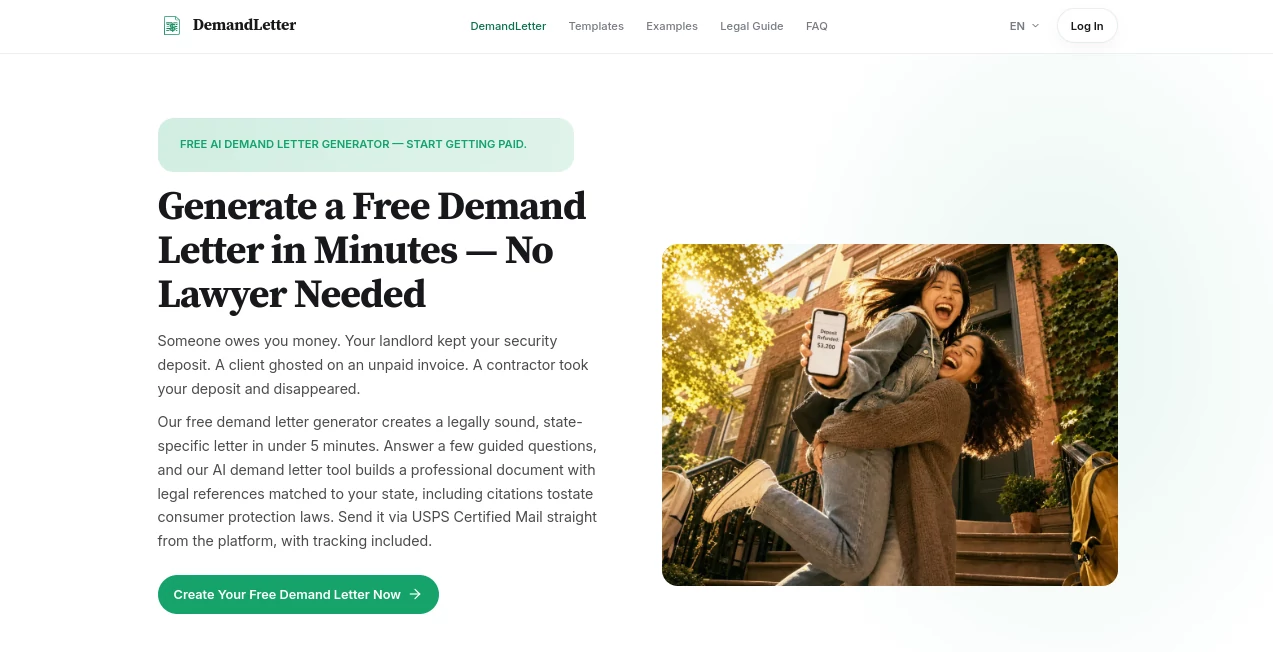
When someone owes you money, sending another text message or making another phone call is not always enough. A formal demand letter can turn a frustrating dispute into a clear, documented request for payment. DemandLetter.ai helps people create professional demand letters without needing to understand legal drafting or spend hundreds of dollars on an attorney.
The platform uses AI to turn the details of a dispute into a structured letter based on the user's situation and state. Instead of starting with a blank document or trying to adapt a generic template, users answer guided questions about what happened, how much is owed, what resolution they want, and when they expect payment.
The service is completely free to use, does not require an account or credit card, and says a letter can be generated in under five minutes. It also supports USPS Certified Mail with tracking, giving users a practical way to document that the demand was sent and received.
Key Features
- AI-generated demand letters tailored to individual disputes
- State-specific legal references and relevant statutes
- Free letter generation without a subscription
- No account or credit card required
- Guided questions that help users provide the right information
- Support for security deposit disputes
- Support for unpaid wages and overtime claims
- Personal loan repayment letters
- Bounced check recovery letters
- Stopped-payment disputes
- Contractor and unfinished-work disputes
- Auto repair and consumer disputes
- Moving company damage claims
- USPS Certified Mail with tracking
- Letters designed to provide useful documentation before possible court action
User Interface
The experience is built around a guided question-and-answer process rather than a complicated legal form. Users select the type of dispute and then provide the important facts of their situation. The conversational approach makes the process approachable even for someone who has never written a demand letter before.
That simplicity is one of the strongest parts of the product. Instead of wondering what information belongs in a formal letter, users are prompted for details such as the amount owed, what happened, relevant dates, and the resolution they are requesting. Once the information is collected, the system organizes it into a professional document.
Accuracy & Performance
The platform is designed to do more than insert names and numbers into a standard template. Its AI considers the circumstances described by the user and matches the situation with relevant state-specific legal references. This can make the final document much more useful than a generic demand letter downloaded from the internet.
Speed is another major advantage. The company states that letters can be generated in less than five minutes. For someone dealing with an unpaid invoice, withheld deposit, or personal loan, being able to move from a description of the problem to a formal written demand in a few minutes can save considerable time.
Legal accuracy still deserves attention, particularly because laws and filing requirements differ between states and situations. The service itself explains that it provides templates and information rather than legal advice, so complicated disputes may still require professional legal guidance.
Capabilities
The platform covers a useful range of everyday disputes. A tenant dealing with an improperly withheld security deposit can create a letter referencing applicable state rules. A freelancer waiting on an unpaid invoice can document the amount owed and establish a payment deadline. Someone trying to recover a personal loan can create a formal request without turning the situation into an emotional exchange.
Other supported situations include contractor disputes, auto repair overcharges, unpaid wages and overtime, bounced checks, stopped payments, and damage caused by moving companies. The system can incorporate important details such as the amount requested, relevant deadlines, and potential next steps.
For people considering small claims court, this can also be useful as part of the preparation process. In some jurisdictions, a demand letter may be required before filing certain claims, although users should always confirm the specific requirements that apply to their case.
Security & Privacy
Because demand letters can contain personal, financial, employment, tenancy, or dispute-related information, privacy is an important consideration. Users should provide only the information necessary to create their document and review the platform's privacy policy and terms before submitting sensitive details.
The service also makes it clear that it is not a law firm and does not provide legal advice. Its output should therefore be treated as a practical document-generation tool rather than a replacement for an attorney when a case involves significant money, complicated legal questions, or a serious risk of litigation.
Use Cases
- Security Deposit Disputes: Create a formal request when a landlord has withheld a deposit or made questionable deductions.
- Unpaid Freelance Work: Send a professional payment demand after completing work for a client who has not paid.
- Personal Loans: Establish a clear repayment request and deadline when someone has failed to repay borrowed money.
- Contractor Problems: Document unfinished, defective, or abandoned work and clearly state the requested remedy.
- Unpaid Wages: Prepare written documentation concerning unpaid wages, overtime, or a missing final paycheck.
- Bounced Checks: Create a formal notice requesting payment after a check is returned unpaid.
- Auto Repair Disputes: Organize repair details and a refund or compensation request when a repair bill or service becomes disputed.
- Moving Company Claims: Prepare a documented demand concerning damaged belongings or disputed charges.
- Small Claims Preparation: Create a written record showing that an attempt was made to resolve the dispute before escalating the matter.
Pros and Cons
- Pros: Free to use, no account required, no credit card required, fast generation, guided questions, state-specific legal references, multiple dispute types, and Certified Mail support with tracking.
- Cons: It is not a substitute for an attorney, legal requirements can vary between states, and users dealing with complex or high-value disputes should independently verify the applicable laws and procedures.
Pricing Plans
The service is currently presented as a free demand letter generator. According to the website, users can create, preview, and download their letters without signing up, entering a credit card, or paying a subscription fee.
This zero-cost approach is particularly appealing for people dealing with smaller disputes. Paying a lawyer to prepare a single demand letter can be difficult to justify when the amount being recovered is relatively modest. The platform positions itself as a way to create a professionally structured document without that upfront expense.
USPS Certified Mail with tracking is also presented as part of the service's workflow. Users should check the platform's current checkout and sending options for the latest availability of mailing services.
How to Use the Tool
- Describe the dispute: Choose the situation that best matches your problem and answer the guided questions.
- Provide the important facts: Include details such as dates, amounts owed, what happened, the other party's information, and the outcome you are requesting.
- Generate the letter: The AI organizes your information into a structured demand letter and incorporates relevant state-specific legal references where applicable.
- Review the document: Carefully check names, addresses, dates, dollar amounts, deadlines, and factual statements before sending anything.
- Download or send: Finalize the document and use the available mailing options, including Certified Mail with tracking where supported.
Comparison with Similar Tools
Traditional demand letter templates are useful when a dispute closely matches a standard situation, but they often leave the user responsible for deciding what information to include and which legal references may apply. A blank document gives even more flexibility, but it also requires considerably more work.
This platform takes a more guided approach. Rather than simply offering a downloadable template, it asks questions about the dispute and uses those answers to construct the document. The state-specific element is another notable distinction because legal deadlines and requirements can differ considerably from one jurisdiction to another.
Compared with hiring a lawyer solely to draft a straightforward demand letter, the biggest advantage is cost and accessibility. Someone with a relatively simple dispute can create a document quickly and decide whether professional legal advice is necessary afterward. For complicated claims, however, an attorney remains the better choice because an AI-generated document cannot evaluate every legal nuance or represent the user's interests in court.
Conclusion
A good demand letter does not need to be aggressive or filled with complicated legal language. What matters is presenting the facts clearly, identifying the amount or remedy being requested, setting a reasonable deadline, and creating a written record of the attempt to resolve the dispute.
This platform makes that process considerably easier. Its guided AI workflow, state-specific references, broad selection of dispute types, and free pricing make it a practical option for people who want to take the first formal step before considering more expensive or time-consuming legal action.
For a straightforward payment dispute, the ability to turn a messy situation into a structured letter in just a few minutes is the real attraction. Users should still verify applicable laws and seek legal advice when the circumstances are complex, but for everyday disputes, this is a useful starting point.
Frequently Asked Questions (FAQ)
What is a demand letter?
A demand letter is a formal written request asking another person or organization to pay money or take a specific action. It generally explains the facts of the dispute, identifies what is owed or requested, provides a deadline, and explains what may happen if the issue is not resolved.
Is the demand letter generator free?
Yes. The service currently states that its generator is free and does not require an account, credit card, or subscription to create a letter.
Can I use a generated letter before going to small claims court?
Yes. A demand letter can be an important step before small claims litigation, and some jurisdictions require a written demand before certain claims can be filed. However, requirements differ by location, so users should verify the rules for their specific court and type of dispute.
What types of disputes can I create a letter for?
Supported situations include security deposit disputes, unpaid wages, personal loans, bounced checks, stopped payments, contractor disputes, auto repair problems, moving company damage, and other payment-related conflicts.
Does a demand letter provide legal advice?
No. The service provides document templates and information rather than legal advice. If a dispute involves complicated legal issues, a substantial amount of money, or potential litigation, consulting a qualified attorney is advisable.
How long does it take to create a letter?
The service states that a demand letter can be generated in under five minutes. The actual time may vary depending on how complicated the dispute is and how much information the user needs to provide.
Can the letter be sent by certified mail?
Yes. The platform offers USPS Certified Mail with tracking as part of its mailing workflow, allowing users to document delivery of the demand letter.
These classifications represent its core capabilities and areas of application. For related tools, explore the linked categories above.

DemandLetter Alternatives Product

AI Complianc…

Harvey

Referent