















FizzBee
What is FizzBee?
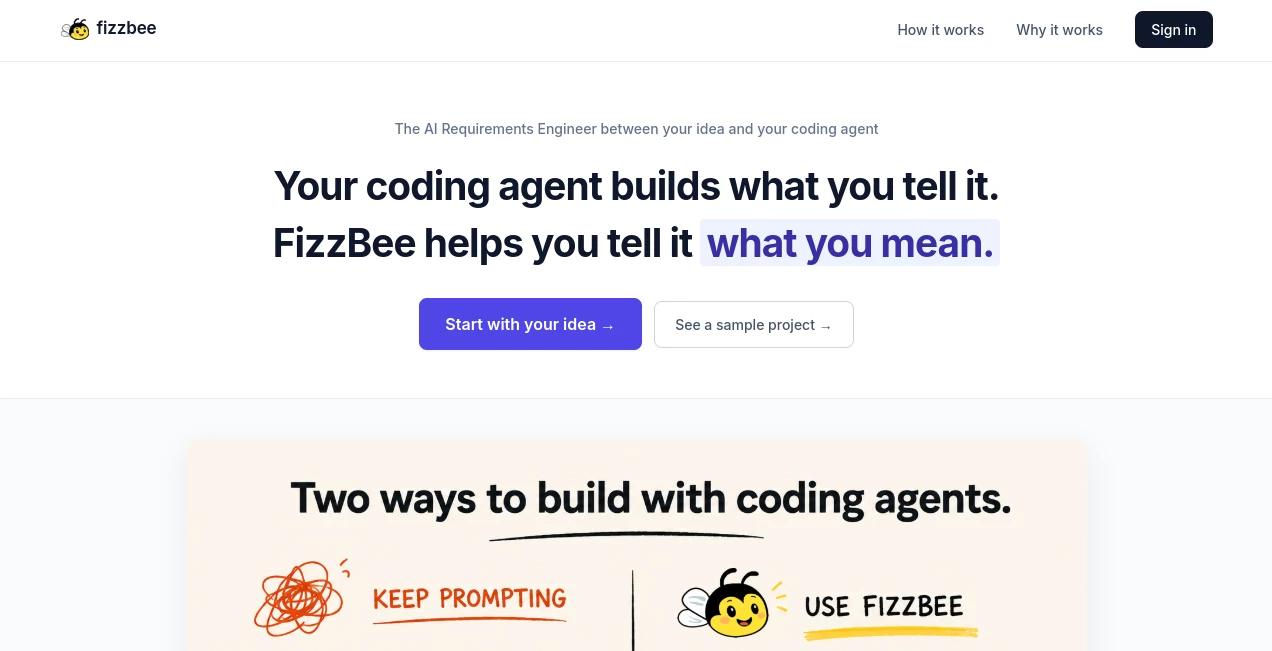
FizzBee is an AI-powered requirements engineering assistant designed to help teams transform ideas into clear, structured instructions that coding agents can understand. While modern coding agents can build software quickly, the quality of the final product depends heavily on how well the requirements are explained. This tool helps bridge the gap between human ideas and machine execution by turning concepts into more precise development guidance.
For founders, product managers, developers, and teams working with AI coding assistants, having a reliable way to communicate intent can save time and reduce misunderstandings. The platform focuses on helping users describe what they actually mean, allowing coding agents to create solutions that better match the original vision.
Key Features
User Interface
The platform provides a straightforward workflow where users can express their product ideas and refine their requirements before sending them to development tools. Its approach is focused on clarity rather than complexity, making it accessible for both technical and non-technical users who need to communicate software requirements.
Accuracy & Performance
Clear requirements are one of the biggest factors affecting software development outcomes. By helping users organize their thoughts and define expectations more accurately, this solution improves communication between people and AI coding systems. Better input leads to fewer revisions, faster iterations, and more predictable results.
Capabilities
The tool helps convert broad ideas into structured requirements that coding agents can follow more effectively. It is useful for planning new applications, improving existing products, defining features, and creating a stronger foundation before development begins.
Security & Privacy
When working with product ideas and software concepts, maintaining control over information is important. Users should review the platform's privacy practices and data policies to understand how their information is handled before sharing sensitive project details.
Use Cases
This solution can support a wide range of development scenarios, including:
- Startup founders turning business ideas into technical requirements
- Product managers preparing clear feature specifications
- Developers improving communication with AI coding assistants
- Teams creating software prototypes faster
- Businesses organizing application requirements before development
For example, a founder may have an idea for a marketplace application but struggle to explain every workflow and feature. Instead of providing a vague description, the tool helps transform that concept into a more detailed direction that an AI coding agent can better interpret.
Pros and Cons
Pros
- Helps improve communication between humans and coding agents
- Makes software ideas easier to explain and organize
- Useful for both technical and non-technical teams
- Can reduce unnecessary development iterations
- Supports a more structured approach to AI-assisted development
Cons
- Users still need to provide clear information about their goals
- Complex enterprise requirements may need additional planning
- Privacy considerations should be reviewed before sharing confidential ideas
Pricing Plans
Pricing details may vary depending on the available plans and future updates. Users should check the official website for the latest information about access options, subscriptions, and available features.
How to Use FizzBee
Using the platform starts with describing an application idea, feature request, or product goal. The system helps organize the information into clearer requirements that can be provided to a coding agent. This creates a smoother workflow where users can focus on their vision while AI tools handle more of the implementation process.
Comparison with Similar Tools
Unlike general AI writing assistants or simple prompt generators, this solution focuses specifically on requirements engineering for software development. Its purpose is not only to generate text, but to help users communicate product intent in a way that improves collaboration with coding agents.
For teams already using AI development tools, adding a requirements-focused layer can create a more reliable process from idea creation to finished application.
Conclusion
Turning an idea into working software requires more than simply describing a concept. Clear requirements help developers and AI systems understand expectations, workflows, and desired outcomes. This tool provides a practical approach for anyone who wants to improve the way they communicate with coding agents and build software with greater confidence.
By helping users explain what they mean instead of only what they say, it creates a stronger connection between creativity, planning, and AI-powered development.
Frequently Asked Questions (FAQ)
What is FizzBee used for?
It helps users create clearer software requirements that can be understood more effectively by AI coding agents.
Who can benefit from using this tool?
Founders, developers, product managers, and teams building software with AI assistance can benefit from a more structured requirements process.
Does it replace developers?
No. It improves communication and planning between users and coding systems, while developers remain responsible for building, reviewing, and maintaining software.
Can non-technical users use it?
Yes. The goal is to help people with ideas communicate their requirements more clearly, even if they do not have deep programming experience.
Is it useful with AI coding assistants?
Yes. It is designed to improve the quality of instructions provided to coding agents.
AI Project Management , AI No-Code & Low-Code , AI Code Assistant , AI Developer Tools .
These classifications represent its core capabilities and areas of application. For related tools, explore the linked categories above.

FizzBee Alternatives Product

Privacy Scru…

Sourcetable

freellm

AI Complianc…
LaunchBoard

langextract.…

Project Mela
GTM API

Project Genie