
GradingPal
What is GradingPal?
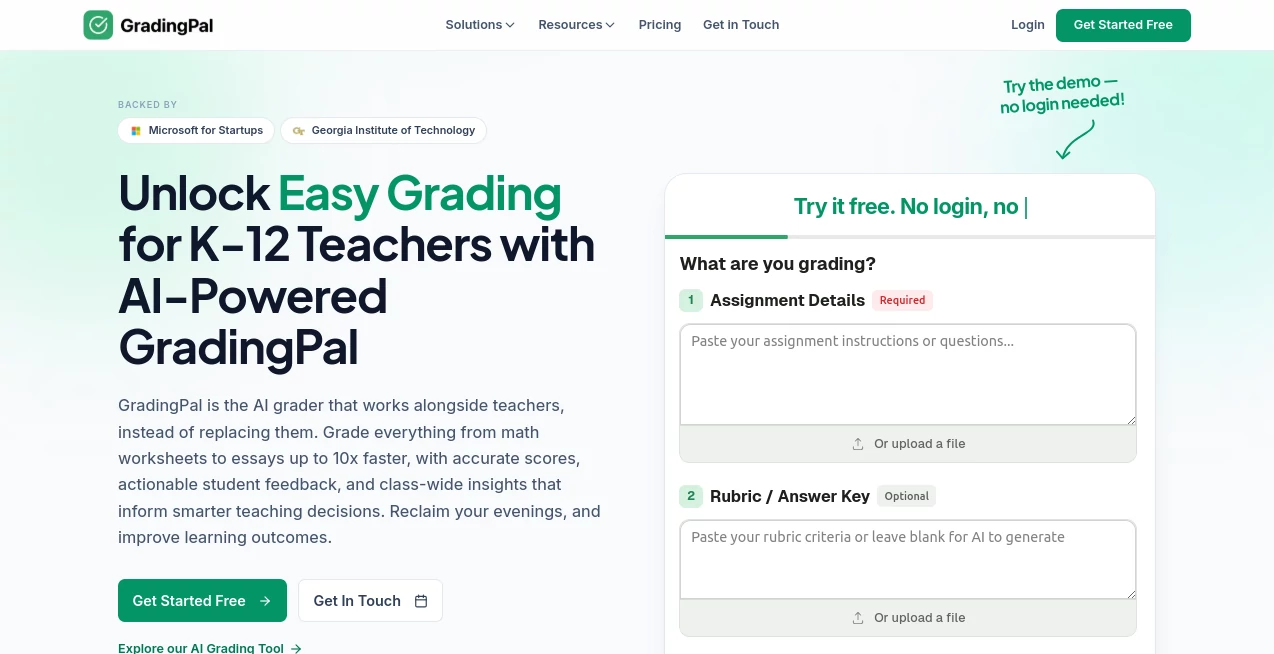
In today’s fast-moving education environment, instructors and tutors often find themselves overwhelmed with the volume of assignments that need careful evaluation. This platform is designed to ease that burden by offering an intelligent, structured, and consistent way to assess student work. Instead of spending countless hours manually reviewing each submission, educators can rely on a streamlined digital assistant that brings clarity, speed, and fairness into the grading process.
What makes it especially appealing is its ability to maintain a natural, human-like evaluation style while still ensuring academic standards are met. It doesn’t feel mechanical or overly rigid; instead, it adapts to the tone and expectations of modern education.
Key Features
User Interface
The interface is clean, distraction-free, and built with educators in mind. Everything is placed intuitively, allowing users to upload assignments, set criteria, and review results without unnecessary complexity. Even first-time users can navigate it comfortably within minutes.
Accuracy & Performance
The system focuses on delivering consistent grading results by analyzing structure, clarity, grammar, and argument strength. It reduces human bias and ensures that every submission is evaluated against the same standards. This creates a more balanced and transparent grading experience.
Capabilities
Beyond simple scoring, the platform can break down feedback into meaningful insights. It highlights strengths, points out weaknesses, and offers constructive suggestions for improvement. This makes it useful not just for grading, but also for helping students learn and grow.
Security & Privacy
Student data protection is treated as a priority. Submissions are handled securely, and privacy-focused design ensures that academic content remains confidential throughout the evaluation process.
Use Cases
- Teachers grading essays and written assignments efficiently
- Tutors providing structured feedback to students
- Online educators managing large groups of learners
- Institutions standardizing grading criteria across multiple instructors
- Students self-evaluating their work before submission
Pros and Cons
Pros:
- Saves significant time in grading workloads
- Provides consistent and structured evaluation
- Offers detailed feedback beyond simple scores
- User-friendly and easy to adopt
Cons:
- May require initial adjustment to grading style preferences
- Advanced customization might be limited for some academic institutions
Pricing Plans
The platform typically follows a flexible pricing model that may include free access for basic use and premium tiers for advanced features such as detailed analytics, bulk grading, or institutional usage. This makes it suitable for both individual educators and larger organizations.
How to Use This Tool
Getting started is straightforward. Users begin by uploading or pasting student assignments into the system. Next, they define grading criteria or rubrics depending on their requirements. Once processed, the system generates scores and feedback automatically. Educators can then review, adjust if needed, and finalize results.
Comparison with Similar Tools
Compared to traditional grading methods, this solution significantly reduces manual workload while improving consistency. While some tools focus only on grammar correction or basic scoring, this platform offers a more holistic academic evaluation experience. It bridges the gap between automation and human-like judgment, which is often missing in simpler alternatives.
Conclusion
For educators looking to modernize their workflow without sacrificing quality, this platform offers a practical and efficient solution. It blends automation with thoughtful evaluation, helping teachers focus more on mentoring students rather than spending hours on repetitive grading tasks. The result is a smoother, faster, and more balanced academic experience.
Frequently Asked Questions (FAQ)
Is it suitable for all academic levels?
Yes, it can be used for school, college, and even professional training environments depending on the grading setup.
Does it replace teachers?
No, it is designed to assist educators by handling repetitive grading tasks while leaving final judgment in human hands.
Can feedback be customized?
Yes, instructors can adjust criteria and refine how feedback is presented to match their teaching style.
Is student data stored safely?
Security measures are in place to ensure submissions remain private and protected throughout the process.
AI Essay Writer , AI Education Assistant , AI Homework Helper , AI Writing Assistants .
These classifications represent its core capabilities and areas of application. For related tools, explore the linked categories above.

GradingPal Alternatives Product

StyleBias

Gizmo

EduSolver: A…

AI Bypass Hub

优秀PTE

Parking Prac…

Quikauthor

Japanese Nam…

GradeProAI