Higgsfield
What is Higgsfield?
There’s a special kind of excitement when an idea in your head turns into moving pictures that actually feel cinematic—smooth camera moves, consistent characters, lighting that tells a story. This platform delivers that feeling more reliably than most I’ve tried. You describe a scene, drop in a reference if you want, and it handles the heavy lifting: choosing the right model, managing motion, keeping faces and style consistent. I’ve watched creators go from rough concepts to shareable clips in minutes, the kind that get real engagement because they look intentional, not accidental. It’s become a favorite for people who want film-like quality without a film crew.
Introduction
Most AI video tools still feel experimental—great for quick experiments but frustrating when you need something that actually looks directed. Higgsfield changes the game by combining powerful models with smart orchestration. You get access to top video and image generators in one place, plus tools like camera controls, viral presets, and an AI agent that can run entire workflows. It’s built for both fast social content and more ambitious storytelling. The difference is noticeable: outputs have better temporal consistency, smarter motion, and a level of polish that makes them feel closer to real production. For indie creators, marketers, and filmmakers testing ideas, it removes a lot of the usual pain points.
Key Features
User Interface
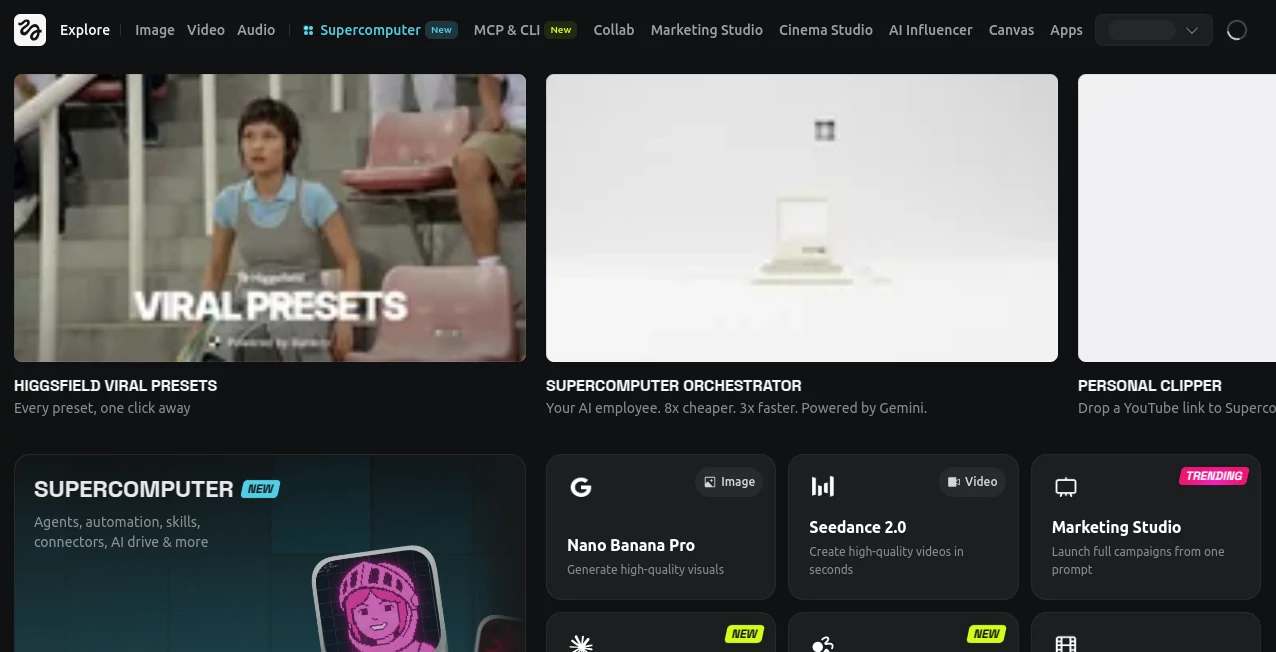
The workspace is clean and focused. A generous prompt area, easy reference uploads, model selector, and clear options for aspect ratio, duration, and style. Previews load reasonably fast, and side-by-side comparisons help you pick the best take without leaving the page. It never feels overwhelming—even when you dive into advanced camera controls or multi-shot setups. Beginners get beautiful results quickly; experienced users appreciate the depth hidden behind the simplicity.
Accuracy & Performance
Character consistency stands out—faces and outfits hold across shots far better than many alternatives. Motion feels natural rather than floaty, and the system handles complex prompts with multiple subjects or specific actions surprisingly well. Generation times are practical, and the platform routes tasks intelligently across models to get the best result. In real use, it reduces the usual trial-and-error loop, so you spend more time creating and less time fixing weird artifacts.
Capabilities
Text-to-video, image-to-video, hybrid workflows, strong camera movement controls, viral presets for quick cinematic effects, multi-shot storytelling, and integration with an AI agent (Supercomputer) that can handle research, scripting, and full campaign generation. It also includes powerful image tools like Nano Banana and Soul models for consistent visuals. You can create everything from short social clips to more ambitious narrative pieces, all while keeping style and characters coherent across the project.
Security & Privacy
Your projects and references stay protected. The platform focuses on delivering great output without unnecessary data collection. For creators working with client briefs or original concepts, that respectful approach builds confidence—you can experiment freely knowing your ideas aren’t being stored or repurposed without permission.
Use Cases
A marketer drops a product photo and prompt to generate a full UGC-style ad campaign in minutes. A filmmaker prototypes key scenes to test tone before full production. A musician creates synced visuals that match the emotion of a new track. A social creator builds consistent character stories across multiple posts without daily shooting. It shines whenever you need high-quality moving visuals fast but still want them to feel crafted rather than generic.
Pros and Cons
Pros:
- Strong cinematic quality with excellent character and motion consistency.
- All-in-one workspace with multiple top models and smart orchestration.
- Powerful camera controls and presets that feel truly film-like.
- Agent capabilities (Supercomputer) for end-to-end workflows.
- Fast iteration that keeps creative momentum alive.
Cons:
- Higher-quality or longer generations require credits/plans.
- Very complex multi-minute stories still benefit from breaking into shots.
- Some ultra-niche styles may need prompt refinement.
Pricing Plans
It offers a generous free tier for testing and light use—enough to fall in love with the quality. Paid plans unlock faster generation, higher resolutions, more credits, and access to premium features like advanced agent workflows. Pricing feels balanced for the creative output and time saved—many creators say the ROI is clear after their first few strong pieces.
How to Use Higgsfield
Head to the generation workspace, write a descriptive prompt (the more vivid, the better), optionally upload reference images or clips, choose your model and settings, and generate. Review the result, tweak the prompt or references if needed, and iterate. For bigger projects, use the Supercomputer agent to handle research, scripting, or multi-step campaigns. Export and share—simple as that. The workflow encourages experimentation while keeping professional results within reach.
Comparison with Similar Tools
While many platforms give you one model and basic controls, this one combines multiple strong generators with thoughtful orchestration and cinematic tools. It stands out in character consistency, camera intelligence, and workflow depth—especially for creators who want more than random clips. It feels less like a toy and more like a serious creative partner.
Conclusion
Higgsfield brings cinematic AI video and image creation closer to real filmmaking intuition. It removes technical barriers without removing creative control, letting ideas move from head to screen faster and better than ever. Whether you’re building a brand, telling stories, or just exploring what’s possible, it delivers results that feel exciting rather than experimental. For anyone serious about visual storytelling in 2026, it’s one of the most compelling options available.
Frequently Asked Questions (FAQ)
How good is the motion quality?
Very strong—smooth, natural movement with good physics and camera work compared to most current tools.
Can I use my own images as reference?
Yes—image-to-video and hybrid modes are excellent for keeping consistent characters and style.
Is it suitable for commercial work?
Absolutely—paid plans support commercial use with high-quality outputs ready for social, ads, and more.
How long are typical clips?
Short-to-medium clips work best; longer narratives are built by combining multiple generations.
Do I need advanced prompt skills?
Not really—good results come from clear, descriptive language. The platform helps guide you.
AI Animated Video , AI Image to Video , AI Video Generator , AI Text to Video .
These classifications represent its core capabilities and areas of application. For related tools, explore the linked categories above.

Higgsfield Alternatives Product

MiniMax H3

seedream vid…

Happy Horse

Nano Banana …

Seedance 2.0

Seedance AI

Aura AI

HappyHorse AI

JoyFlix AI