Modeinspect
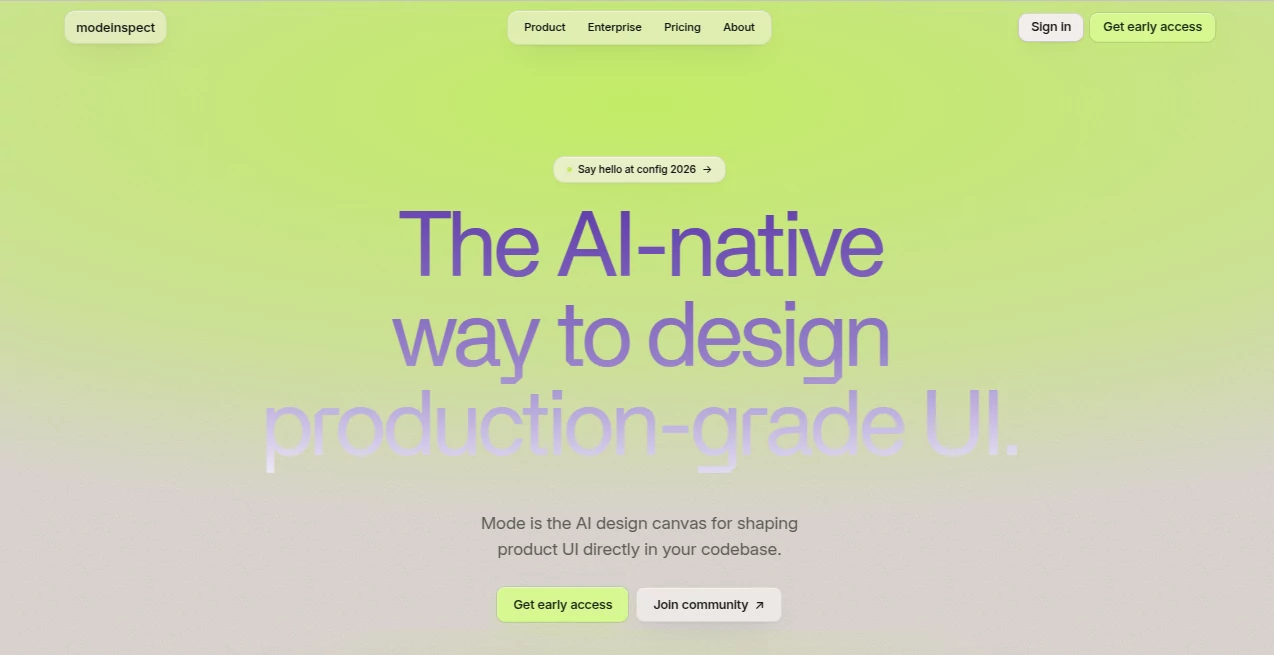
What is Modeinspect?
Modern product teams often struggle with one persistent challenge: turning polished design ideas into production-ready interfaces without endless revisions. This platform approaches that problem from a completely different angle by allowing designers to work directly with live product interfaces instead of relying on static mockups. Rather than creating designs that developers must later interpret, it enables visual changes on real applications while AI translates those changes into production-grade code.
Built for design teams, frontend engineers, and product organizations, the platform connects design systems, existing codebases, and AI-powered automation into a single workflow. Instead of spending days reviewing screenshots, writing design QA comments, or correcting spacing inconsistencies, teams can iterate directly on running products and generate pull requests ready for engineering review.
For organizations managing complex applications, this creates a smoother collaboration process where designers maintain creative control while developers receive code that follows existing conventions, component libraries, and design tokens.
Key Features
User Interface
The interface feels familiar to professional designers. Instead of exposing complex code editors, it provides visual controls for spacing, typography, layouts, colors, and components. Every adjustment happens on the live application, making feedback immediate and realistic across multiple screen sizes.
Accuracy & Performance
One of the strongest aspects is its understanding of existing code rather than generating generic snippets. The AI analyzes project architecture, coding conventions, reusable components, and design systems before producing changes. This significantly reduces manual cleanup and helps maintain consistency throughout large applications.
Capabilities
- Edit production interfaces visually.
- Generate production-ready pull requests.
- Understand existing React components and design systems.
- Work with design tokens automatically.
- Create interactive prototypes from live applications.
- Accelerate design QA.
- Reduce design-to-development handoff.
- Support enterprise product workflows.
- Collaborate between designers and developers.
- Produce AI-assisted frontend modifications.
Security & Privacy
Enterprise security receives considerable attention. Projects remain inside isolated environments while source code stays protected throughout the workflow. The platform also follows SOC 2 security practices and utilizes enterprise AI endpoints designed without retaining customer training data, making it suitable for organizations with strict compliance requirements.
Use Cases
- Large enterprise product teams.
- Frontend development workflows.
- Design QA and interface validation.
- Rapid UI experimentation.
- Updating existing applications instead of rebuilding prototypes.
- Improving collaboration between designers and engineers.
- Maintaining consistent design systems across products.
- Creating production-ready UI improvements faster.
Pros and Cons
Pros
- Works directly with existing production code.
- Generates engineering-ready pull requests.
- Understands design systems and reusable components.
- Reduces repetitive design handoffs.
- Excellent for enterprise collaboration.
- Supports realistic live prototyping.
- Strong security and compliance standards.
Cons
- Primarily targeted at professional product teams.
- Most valuable for projects with established design systems.
- Advanced enterprise workflows may require onboarding.
Pricing Plans
Pricing is available upon request. Organizations can join early access or contact the sales team for customized plans based on team size and enterprise requirements.
How to Use Modeinspect
Connect your existing project and allow the platform to analyze the application structure, components, and design system. Open any interface within the live product, make visual adjustments using familiar design controls, preview changes instantly across different devices, and generate production-ready pull requests for engineering review. This workflow dramatically shortens the traditional design-to-development cycle while preserving coding standards.
Comparison with Similar Tools
Unlike traditional design applications that depend on mockups and manual developer implementation, this solution focuses on designing directly within production environments. Compared to AI coding assistants, it prioritizes designers by providing visual editing instead of requiring programming knowledge. Its understanding of existing component libraries, coding conventions, and design tokens gives it a distinct advantage for organizations managing large-scale software products.
Conclusion
This platform represents a significant evolution in collaborative product development. Instead of treating design and engineering as separate disciplines connected through documentation and revisions, it allows both teams to work around the same production interface. The result is faster releases, fewer visual inconsistencies, reduced QA cycles, and a much more efficient workflow. Companies looking to modernize UI development while preserving quality and consistency will find this approach especially compelling.
Frequently Asked Questions (FAQ)
Who is this platform designed for?
It is built primarily for product designers, frontend engineers, design leaders, and enterprise software teams.
Does it replace traditional design software?
Rather than replacing every design tool, it complements existing workflows by enabling design directly on live products.
Can it work with existing codebases?
Yes. It is specifically designed to understand existing applications, reusable components, and design systems instead of generating isolated UI code.
Is it suitable for enterprise organizations?
Yes. Enterprise security, private environments, and SOC 2 compliance make it well suited for larger organizations.
Does it generate production-ready code?
Yes. Visual changes can be converted into pull requests that engineering teams can review before deployment.
AI Design Assistant , AI Code Assistant , AI Team Collaboration , AI Developer Tools .
These classifications represent its core capabilities and areas of application. For related tools, explore the linked categories above.

Modeinspect Alternatives Product
Defapi
Designmd.fun

Workik
Apprentice

Project Mela
LaunchBoard

Magpie

Emergent
OhNoCode