


















myagenticseo
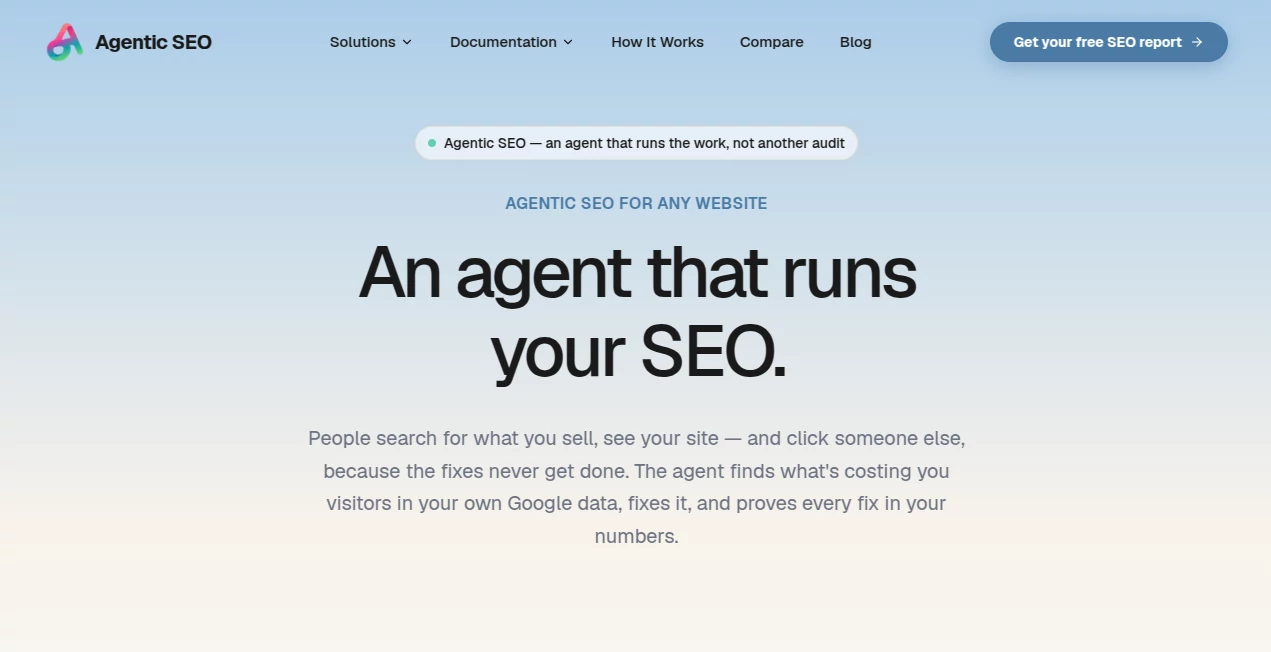
What is myagenticseo?
Search engine optimization has evolved far beyond keyword stuffing and manual guesswork. Today, success belongs to those who can combine strategy, automation, and data-driven decisions. This is where this platform steps in and changes the way SEO work is done.
Instead of juggling multiple tools for keyword research, content creation, and optimization, users get a unified system designed to simplify the entire SEO workflow. It feels less like a traditional software tool and more like having a dedicated SEO strategist working beside you around the clock.
What makes it especially interesting is the focus on agent-based intelligence. Rather than giving static suggestions, it helps guide decisions, adapt to search trends, and continuously refine content strategies for better visibility.
Key Features
User Interface
The interface is designed with clarity in mind. Even users who are not deeply technical can navigate through dashboards, keyword insights, and content recommendations without feeling overwhelmed. Everything is structured to reduce friction and speed up execution.
Accuracy & Performance
The system focuses heavily on producing relevant SEO insights rather than generic advice. It analyzes search intent, competitor patterns, and content structure to help users make decisions that align with real ranking factors.
Capabilities
- AI-driven keyword discovery and clustering
- Content optimization suggestions based on search intent
- SEO content generation with structured guidance
- Competitor analysis and SERP breakdown
- Automated content improvement recommendations
Security & Privacy
User data handling is treated with a privacy-first mindset. Projects, keywords, and content strategies remain isolated to each user workspace, ensuring that sensitive marketing data is not exposed or misused.
Use Cases
This platform is useful across different digital marketing scenarios. Content creators can use it to generate SEO-optimized articles that are ready to rank. Agencies can streamline client workflows by automating research and reporting. Startups can build organic traffic faster without hiring large SEO teams.
- Blog content creation and optimization
- Affiliate marketing strategy development
- eCommerce product page optimization
- SEO audits for existing websites
- Content planning for long-term growth
Pros and Cons
Pros
- Reduces time spent on manual SEO research
- Combines multiple SEO functions in one platform
- Helps improve content structure and ranking potential
- User-friendly even for beginners
- Supports scalable content strategies
Cons
- May require learning time for advanced features
- Depends on AI suggestions, which still need human review
- Advanced SEO professionals may want deeper manual control
Pricing Plans
The pricing structure typically follows a flexible model designed for different user levels. Entry-level users can explore basic SEO features, while advanced users and teams can access expanded capabilities such as deeper analysis, automation, and higher content limits.
A trial or freemium approach is often included to help users experience core features before committing to a paid plan. This makes it easier for individuals and businesses to evaluate value before scaling usage.
How to Use MyAgenticSEO
Getting started is straightforward. After signing in, users usually begin by entering a target topic or website. The system then generates keyword suggestions, content ideas, and optimization steps.
- Step 1: Enter your niche or target keyword
- Step 2: Review suggested keyword clusters and topics
- Step 3: Generate or optimize content using AI guidance
- Step 4: Apply recommendations to improve SEO structure
- Step 5: Track performance and refine strategy over time
The workflow is designed to feel iterative rather than one-time. Users are encouraged to continuously refine content based on evolving insights.
Comparison with Similar Tools
Compared to traditional SEO tools that focus mainly on keyword lists or backlink data, this platform takes a more holistic approach. Instead of isolating SEO tasks, it connects research, content creation, and optimization into one continuous process.
While other tools may require switching between dashboards, spreadsheets, and writing assistants, this system aims to unify everything under a single intelligent workflow. This makes it especially appealing for users who want speed without sacrificing strategy.
Conclusion
SEO today is no longer about working harder but working smarter. This platform represents a shift toward automation-driven optimization where content decisions are guided by structured intelligence rather than guesswork.
For marketers, creators, and businesses looking to scale organic traffic efficiently, it offers a practical and modern approach to SEO execution. It does not replace human creativity but enhances it with data-backed direction and consistency.
Frequently Asked Questions (FAQ)
What is this platform used for?
It is used to streamline SEO workflows, including keyword research, content creation, and optimization.
Is it suitable for beginners?
Yes, the interface and workflows are designed to be simple enough for beginners while still offering depth for advanced users.
Does it replace SEO experts?
No, it acts as an assistant that supports decision-making and speeds up execution, but human strategy is still important.
Can it help with content ranking?
Yes, it provides structured optimization suggestions aimed at improving search visibility and content performance.
Is it useful for agencies?
Yes, agencies can use it to scale content production, improve efficiency, and manage multiple SEO projects more effectively.
AI Writing Assistants , AI Content Generator , AI SEO Assistant , AI Marketing Plan Generator .
These classifications represent its core capabilities and areas of application. For related tools, explore the linked categories above.

myagenticseo Alternatives Product

ShipGrowth

genie 4

seedancetwo2…

Ornold
Analyse

GPT Image 2

Hintder AI

RankPeak

SalesPageNow