Our Token
What is Our Token?
Building AI-powered applications often means juggling multiple APIs, billing systems, authentication methods, and model-specific integrations. That complexity can slow development and make scaling expensive. This platform solves that challenge by offering a single, developer-friendly gateway to access multiple leading large language models through one consistent API.
Designed for startups, independent developers, and enterprise engineering teams, it provides a unified interface for popular AI providers while maintaining compatibility with existing OpenAI-style integrations. Instead of rewriting code every time a project requires a different model, developers can switch providers effortlessly, compare pricing, monitor usage, and optimize costs from one centralized dashboard.
One of its strongest advantages is transparent pricing. Developers can compare available models, evaluate token costs before deployment, and select the most suitable option for every workload. Whether the goal is building AI assistants, coding tools, research applications, customer support systems, or intelligent automation, the platform offers flexibility without adding operational complexity.
Key Features
User Interface
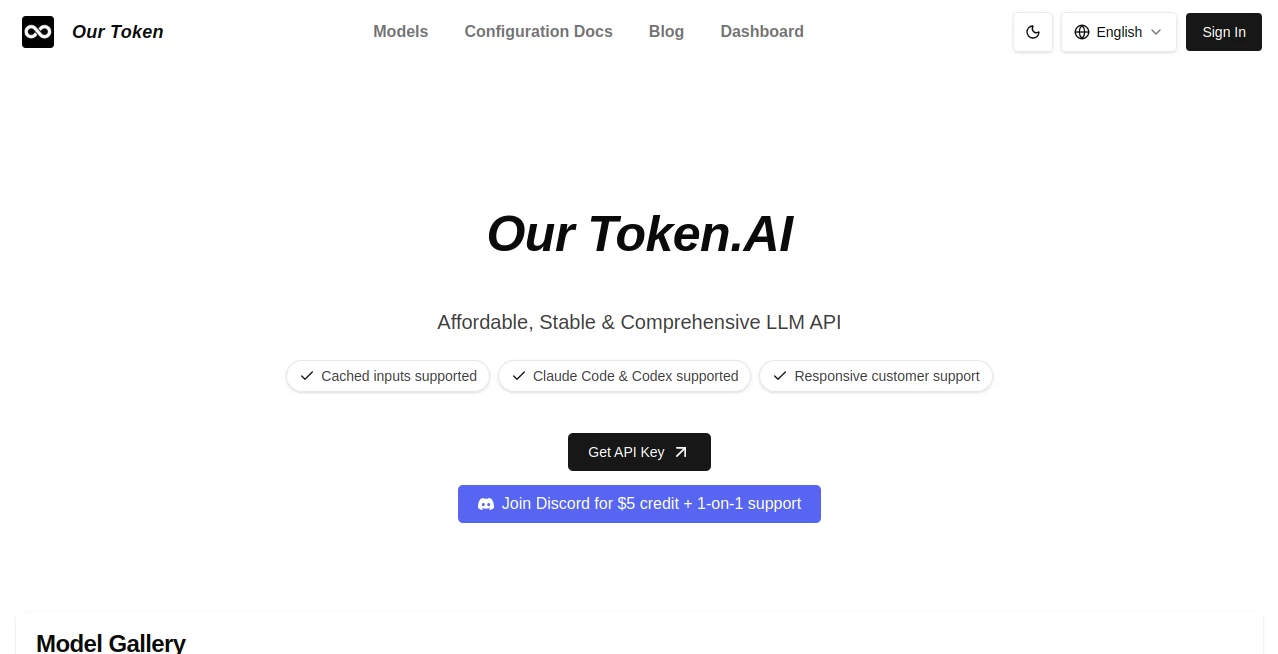
The dashboard is clean and organized, making it easy to generate API keys, monitor requests, review token consumption, and compare supported language models. Navigation feels intuitive even for developers using multiple providers simultaneously.
- Simple API key management
- Centralized usage dashboard
- Model comparison interface
- Request history tracking
- Transparent pricing overview
Accuracy & Performance
Rather than relying on a single AI provider, the platform allows developers to choose the most suitable model depending on reasoning ability, speed, latency, or operating costs. This flexibility helps teams maintain reliable performance while optimizing expenses for different workloads.
- Supports multiple leading LLM providers
- Fast API routing
- Stable production-ready infrastructure
- High availability for enterprise workloads
- OpenAI-compatible API structure
Capabilities
The service acts as a unified gateway to numerous modern language models, allowing developers to build applications without maintaining separate integrations for every provider. Existing projects can continue using familiar request formats while gaining access to additional AI models whenever needed.
- Unified LLM API
- Single integration for multiple providers
- Model comparison by capability and price
- Prompt routing across supported models
- Usage analytics and token monitoring
- Developer-friendly documentation
- OpenAI-compatible endpoints
- Flexible provider switching
Security & Privacy
Applications can be managed from one secure environment instead of maintaining numerous provider accounts. Centralized API key management, usage monitoring, and request tracking simplify operational oversight while reducing administrative overhead.
- Centralized API management
- Usage visibility
- Request logging
- Production-ready infrastructure
- Reliable account management
Use Cases
- Building AI chatbots with multiple LLM providers.
- Developing coding assistants using different reasoning models.
- Creating AI-powered SaaS applications.
- Running prompt comparison experiments.
- Reducing infrastructure costs for AI startups.
- Managing enterprise AI workloads.
- Researching model performance before deployment.
- Scaling production AI services through one API.
Pros and Cons
Pros
- Single API for numerous leading language models.
- OpenAI-compatible integration minimizes migration effort.
- Transparent pricing comparison.
- Cost optimization for high-volume applications.
- Usage monitoring and analytics in one dashboard.
- Easy provider switching without rebuilding applications.
Cons
- Designed primarily for developers rather than casual users.
- Requires API knowledge for integration.
- Advanced functionality depends on supported provider capabilities.
Pricing Plans
The platform follows a pay-as-you-go pricing model. There are no mandatory upfront commitments, allowing developers to pay only for the tokens they consume. Pricing varies depending on the selected AI model, with many supported models offered at significantly lower rates than their official provider pricing. Free credits may also be available for new users during onboarding.
How to Use OurToken
Getting started is straightforward.
- Create an account.
- Generate an API key.
- Select the preferred language model.
- Integrate using the OpenAI-compatible API endpoint.
- Monitor requests, token usage, and costs from the dashboard.
- Switch models whenever project requirements change.
Comparison with Similar Tools
Unlike traditional AI API providers that focus on a single model family, this solution emphasizes flexibility. Developers can access multiple leading language models through one consistent integration while comparing pricing, monitoring token consumption, and changing providers without rewriting application logic.
For engineering teams building scalable AI products, this approach reduces maintenance effort, simplifies billing, and provides greater freedom when selecting the right model for each task.
Conclusion
For developers looking to simplify AI infrastructure, this platform delivers an impressive balance of flexibility, affordability, and reliability. Instead of maintaining separate integrations for every model provider, teams gain one unified API capable of supporting a wide variety of production workloads.
The combination of transparent pricing, centralized monitoring, straightforward integration, and access to multiple leading language models makes it an excellent choice for startups, SaaS businesses, AI researchers, and enterprise development teams that want to build faster while keeping operational costs under control.
Frequently Asked Questions (FAQ)
Can I access multiple AI providers with one integration?
Yes. A single API allows developers to work with multiple supported language model providers without maintaining separate integrations.
Is the API compatible with existing OpenAI applications?
Yes. The platform is designed with OpenAI-compatible endpoints, making migration considerably easier.
Who is this platform best suited for?
It is ideal for software developers, AI startups, enterprise engineering teams, and companies building production AI applications.
Can I compare model pricing before deployment?
Yes. Developers can compare available models, pricing, and usage to select the most cost-effective option for each workload.
Does it support production environments?
Yes. The platform is built for scalable production applications with usage tracking, centralized management, and stable API routing.
AI Code Assistant , AI API Design , Large Language Models (LLMs) , AI Developer Tools .
These classifications represent its core capabilities and areas of application. For related tools, explore the linked categories above.

Our Token Alternatives Product

AllInOneTools

Luma AI

UpMocker
Schema Synth

Prelight

JSON to TOON…

DDS Gub

Jasper
HostFinder