Realms of Shod
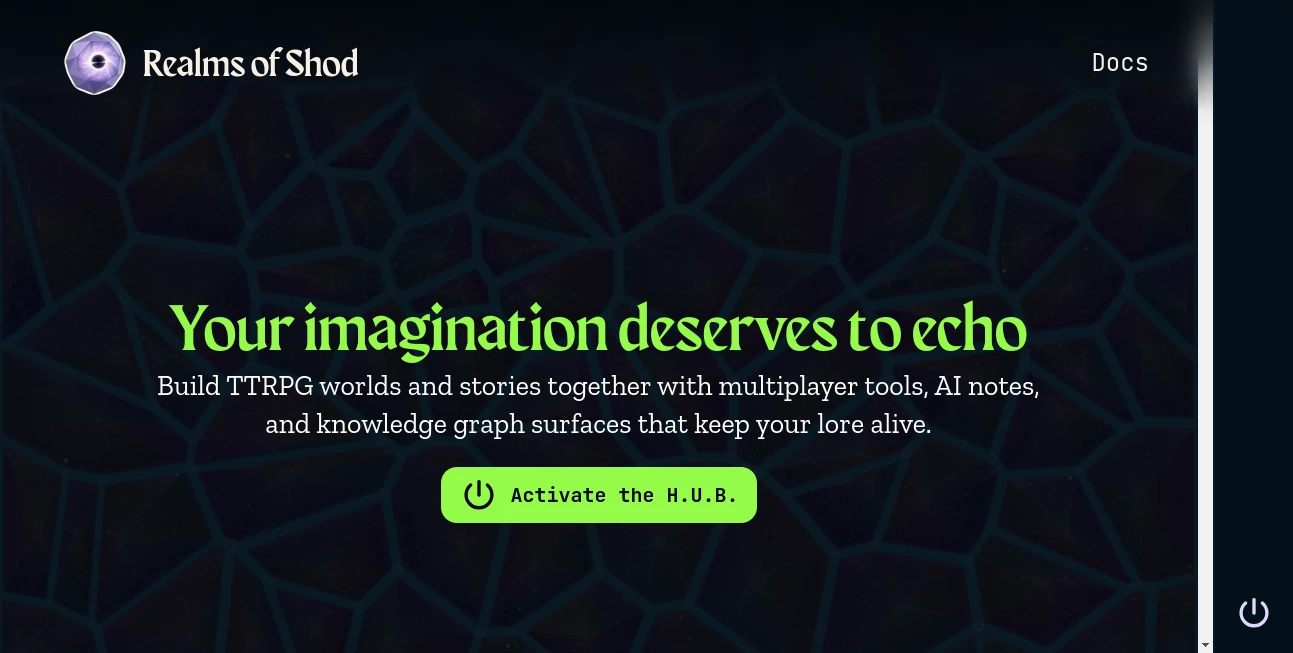
What is Realms of Shod?
Running a long-term TTRPG campaign is one of the most rewarding creative experiences, but keeping track of lore, NPCs, locations, and evolving storylines can become overwhelming. This platform steps in as a true campaign companion. It combines multiplayer collaboration with smart AI tools and a living knowledge graph that remembers everything your group creates. I’ve seen game masters go from scattered notes in multiple apps to a single, organized world that grows with every session. The best part? It feels like an extension of your table rather than another tool you have to fight with.
Introduction
Tabletop role-playing games thrive on shared imagination, but that imagination needs structure to last beyond a few sessions. Realms of Shod was built specifically for this. It gives game masters and players a persistent digital space where worlds don’t just exist — they evolve. AI helps generate consistent lore, notes, and connections, while the knowledge graph automatically links people, places, and events. Whether you’re running a long D&D campaign, a custom homebrew world, or collaborative storytelling, it keeps everything alive and accessible without killing the magic at the table.
Key Features
User Interface
The interface is designed for both deep worldbuilding and quick session prep. A clean central workspace shows your knowledge graph, notes, and maps, while multiplayer rooms let everyone contribute in real time. AI features are easily accessible without feeling intrusive — you can ask for suggestions or let it automatically connect new elements to existing lore. It never gets in the way of the story; it simply makes the background work smoother.
Accuracy & Performance
The AI stays impressively consistent with your established canon. It remembers names, relationships, and past events, helping avoid contradictions that can break immersion. The knowledge graph updates in real time as your group plays, creating automatic connections that spark new ideas. Performance stays smooth even with large, detailed worlds, so you’re never waiting during a session when inspiration strikes.
Capabilities
It supports full world creation with interconnected notes, dynamic maps, character sheets, timeline tracking, and AI-assisted generation that respects your setting. Multiplayer collaboration works seamlessly for live sessions or asynchronous worldbuilding. The platform excels at turning scattered ideas into a coherent, living campaign bible that grows naturally with every adventure. You can export elements or keep everything contained — whatever fits your group’s style.
Security & Privacy
Your campaigns stay private by default. You control who can view or edit each world, with clear permission settings for players versus co-GMs. The platform respects the personal and creative nature of TTRPGs, keeping your stories safe while still allowing the collaboration that makes the hobby special.
Use Cases
A Dungeon Master running a multi-year campaign uses the knowledge graph to instantly recall NPC motivations and past events during sessions. A group of friends building a shared homebrew world collaborates asynchronously, with AI helping fill in details between game nights. A new GM gets intelligent suggestions to keep their first campaign consistent and engaging. Solo players create rich solo RPG experiences with a responsive AI companion that remembers their character’s history. It adapts beautifully to different play styles and group sizes.
Pros and Cons
Pros:
- Knowledge graph that actually grows with your campaign and prevents lore contradictions.
- Seamless multiplayer collaboration for both live and async play.
- AI assistance that supports creativity instead of replacing it.
- Clean, focused interface built specifically for TTRPG needs.
- Persistent worlds that make long-term campaigns much more manageable.
Cons:
- Best results come when the group actively uses the tools together.
- Some very complex homebrew systems may need extra manual organization.
Pricing Plans
It offers a free tier generous enough for small groups and new campaigns to get started comfortably. Paid plans unlock larger worlds, advanced AI features, more collaboration tools, and priority support. The pricing feels fair for the time and creative headaches it saves — many long-term GMs say it quickly becomes essential once campaigns reach a certain size and complexity.
How to Use Realms of Shod
Create a new realm and start adding elements — locations, characters, events, or factions. Use the AI to generate consistent details or connections as you build. Invite your players with appropriate permissions so they can contribute or view lore. During sessions, pull up relevant notes or let the knowledge graph suggest links you might have forgotten. The more you use it, the smarter and more useful the world becomes. It’s designed to grow naturally alongside your story.
Comparison with Similar Tools
Many campaign managers are either too rigid or too chaotic. This one strikes a great balance with its living knowledge graph and supportive AI that enhances rather than overwhelms the human creativity at the table. It feels purpose-built for TTRPGs in a way many general note-taking or worldbuilding tools don’t quite match.
Conclusion
Running great TTRPG campaigns is about storytelling, relationships, and shared discovery — not fighting with scattered notes. This platform handles the organizational heavy lifting so you and your group can focus on what matters most: the adventure itself. For anyone serious about long-term campaigns or collaborative worldbuilding, it’s one of those tools that quietly makes everything better once you bring it to the table.
Frequently Asked Questions (FAQ)
Is it good for solo play?
Yes — many players use it to run rich solo campaigns with AI support.
Does it support any game system?
It’s system-agnostic and works beautifully with D&D, Pathfinder, custom homebrew, and more.
Can players contribute to the world?
Yes — you control exactly what each player can see and edit.
How does the AI assistance work?
It helps generate consistent lore, suggest connections, and fill in details while respecting what you’ve already established.
AI Game , AI Life Assistant , AI Fun Tools , Other .
These classifications represent its core capabilities and areas of application. For related tools, explore the linked categories above.

Realms of Shod Alternatives Product

Greetings Is…

Schengen Cal…

Suno list

TriviaFlow

ZenMako

Myjourney

NYT Sudoku

Wafler

AI Meal Plan…