Recycleye Insights
What is Recycleye Insights?
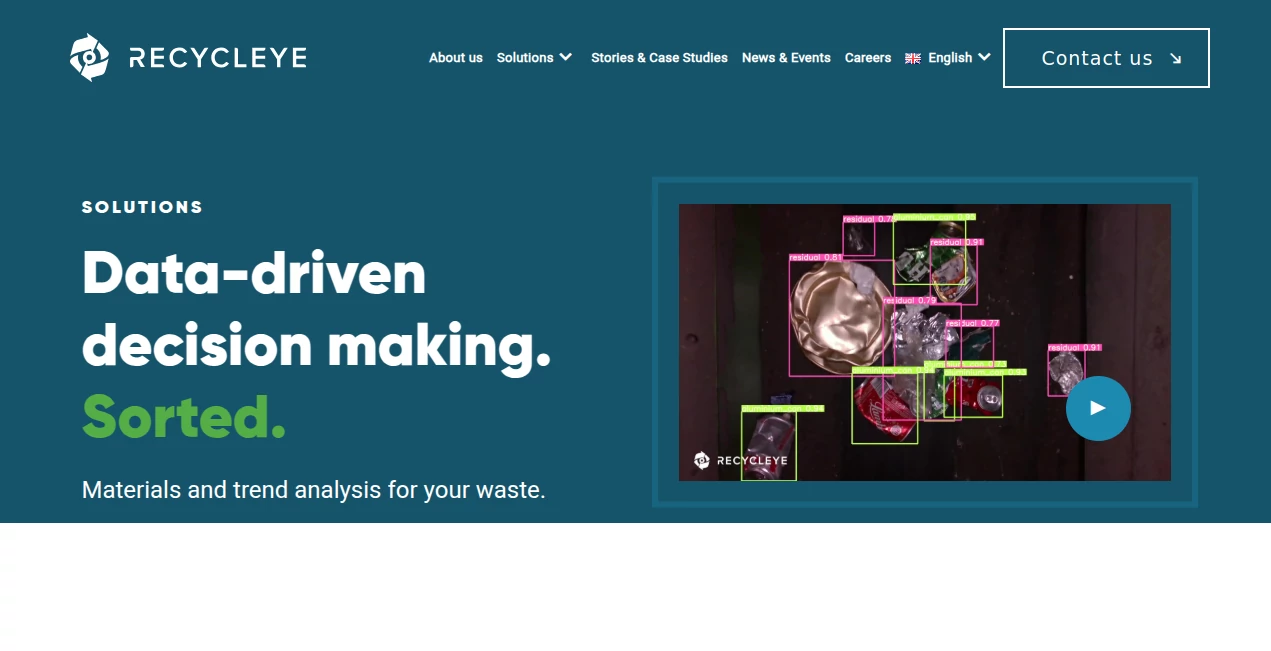
Recycleye Insights is an AI-powered analytics solution designed to help waste management and recycling facilities understand exactly what is moving through their waste streams. Instead of relying only on manual checks or occasional sampling, it turns detections from computer vision systems into clear, usable data.
The platform collects information from items detected as they travel along a conveyor belt and presents the results through straightforward graphical dashboards. This gives plant operators a practical way to see changes in material composition, identify potential issues, and make better decisions based on what is actually happening on the sorting line.
What makes the approach particularly useful is that the information is not limited to a single snapshot. Data can be viewed across different timeframes and groupings, downloaded for additional analysis, and used with email alerts to help teams notice important changes sooner.
Key Features
- AI-generated insights from waste items detected on conveyor belts.
- Graphical dashboards for monitoring waste stream trends.
- Material detection data presented by class and percentage.
- Composition analysis for understanding material purity.
- Performance information for automated robotic picking systems.
- Downloadable data for further analysis and reporting.
- Customisable timeframes and data groupings.
- Email warning alerts for important changes and potential issues.
User Interface
The interface is designed around dashboards and graphical representations rather than complicated data tables. This makes it easier for operational teams to understand what is happening on a sorting line without spending unnecessary time interpreting raw information.
A useful example would be a facility noticing that the percentage of a particular material has changed over several days. Instead of discovering the problem during a later manual review, operators can use the available trend information to investigate the change and decide whether the sorting process needs attention.
Accuracy & Performance
The analytics are built around computer vision data generated as waste passes through the sorting process. The underlying vision technology is supported by a large waste image dataset containing more than three million training images, helping the system recognise waste items at a detailed level.
The solution can provide information about material composition, purity, detections, and automated picking performance. For robotic applications, performance information can include robot uptime and successful picks, giving operators another way to evaluate how automation is performing on the line.
Rather than treating data as a simple reporting feature, the system makes it part of the operational workflow. That can be valuable when small changes in material composition or sorting performance have a direct impact on recovery and output quality.
Capabilities
The platform provides several layers of visibility into a waste stream. Detection data can show the percentage of different material classes, while composition information helps operators understand what is entering and leaving the sorting process.
It can also be used to monitor the effect of automated robotic picking. By connecting detection and performance information, operators can get a clearer picture of whether an automated process is delivering the expected improvement.
Another practical advantage is data flexibility. Users can focus on particular periods or groupings, view information through dashboards, and download detailed data when deeper analysis is required.
Security & Privacy
The service is intended for industrial waste management operations and focuses on material detection, composition, and equipment performance data. The public product information does not provide detailed technical specifications covering encryption, data retention, authentication architecture, or specific compliance certifications.
Businesses considering the platform for operationally sensitive environments should therefore discuss their security, access-control, data-retention, and integration requirements directly with the provider before deployment.
Use Cases
One of the strongest applications is monitoring material composition inside a material recovery facility. Operators can use detection data to understand what percentage of different material classes is moving through the waste stream and identify changes that may otherwise be difficult to spot.
Another use case is purity monitoring. Understanding the composition of material moving onto and off a belt can help facilities investigate contamination and evaluate the quality of recovered materials.
The system can also support robotic sorting operations. Performance information such as uptime and successful picks provides an additional layer of visibility into automated equipment.
For management teams, downloadable information can support reporting, operational reviews, and longer-term decisions about waste flows and sorting processes. This is particularly useful for facilities where decisions need to be supported by measurable evidence rather than occasional manual observations.
Pros and Cons
Pros
- Designed specifically for waste management and recycling operations.
- Turns AI detection data into practical visual insights.
- Provides material composition and purity information.
- Supports trend analysis across different time periods.
- Data can be downloaded for further analysis.
- Email alerts can help teams identify changes more quickly.
- Can provide performance visibility for automated robotic picking.
Cons
- It is a specialised industrial solution rather than a general-purpose AI application.
- Public pricing information is not provided.
- The platform is most useful when integrated with compatible waste detection and sorting technology.
- Businesses may need to contact the provider for detailed technical, security, and deployment information.
Pricing Plans
No public pricing plans or fixed subscription prices are listed for the analytics solution. Because the product is designed for waste management facilities and industrial sorting environments, pricing is likely to depend on the specific operation, equipment, waste stream, and deployment requirements.
Businesses interested in using the platform should contact the provider to discuss their facility, sorting line, required data, and operational objectives. A direct consultation is the most appropriate way to determine which configuration and commercial arrangement fits a particular facility.
How to Use It
Using the platform begins with the installation and operation of compatible AI-based detection technology on a waste sorting line. As items pass along the conveyor belt, the computer vision system detects and classifies them, creating the data used by the analytics layer.
Operators can then review the resulting information through dashboards, focusing on material detections, composition, purity, and relevant performance metrics. Different timeframes and groupings can be selected to investigate specific periods or trends.
For more detailed work, data can be downloaded and analysed outside the dashboard. Email warning alerts can also be configured to help teams respond when notable changes require attention.
Comparison with Similar Tools
Traditional waste monitoring often depends heavily on manual sampling and periodic quality checks. That approach can provide useful information, but it may not capture the same continuous view of a sorting line that computer vision can provide.
General business analytics platforms can visualise operational data, but they normally do not provide the specialised waste detection layer required to understand material classes moving through a recycling facility.
The main distinction here is the combination of AI-based detection with waste-specific analytics. Instead of simply displaying numbers supplied by another system, the solution is connected to the process of identifying objects and materials on the sorting line, making the resulting information much more relevant to recycling operations.
Conclusion
Recycleye Insights takes a practical approach to one of the most important challenges in modern recycling: understanding what is actually happening inside a waste stream. By converting computer vision detections into accessible dashboards, composition information, trend analysis, and performance data, it gives operators a clearer view of their sorting processes.
The solution is especially compelling for facilities looking to move beyond occasional manual checks and make operational decisions using continuously generated data. From monitoring material composition and purity to evaluating automated picking performance, the information can help teams spot problems earlier and understand the results of their processes more clearly.
For waste management businesses already using compatible AI sorting technology, this type of analytics can turn detection data into something far more valuable: actionable operational insight.
Frequently Asked Questions (FAQ)
What is Recycleye Insights?
It is an AI-powered waste analytics solution that presents data collected from detected waste items in graphical dashboards, helping recycling facilities understand material composition, trends, purity, and sorting performance.
What type of data does it provide?
The platform can provide information about material detections, the percentage of different material classes, composition entering and leaving a sorting process, and performance metrics associated with automated robotic picking.
Can the data be downloaded?
Yes. The platform allows users to download detailed data for further analysis, making it possible to work with the information beyond the dashboard.
Can users analyse different time periods?
Yes. Data can be customised around different timeframes and groupings, which makes it easier to investigate trends and compare operational periods.
Does it support alerts?
Yes. Email warning alerts are available to help users identify changes or potential issues that may require attention.
Is pricing publicly available?
No fixed public pricing is listed. Organisations interested in the solution need to contact the provider to discuss their facility and requirements.
Who is this solution designed for?
It is primarily intended for waste management businesses, material recovery facilities, recycling operations, and organisations using AI-powered sorting and robotic technologies.
Can it help monitor robotic sorting?
Yes. Performance information can include measures such as robot uptime and successful picks, allowing operators to evaluate the impact of automated picking on their sorting line.
Does it replace manual quality control completely?
The platform provides AI-generated detection and analytics that can support and improve operational monitoring, but the appropriate role of manual quality control depends on the facility, process, and operational requirements.
AI Data Mining , AI Analytics Assistant , Business .
These classifications represent its core capabilities and areas of application. For related tools, explore the linked categories above.
Recycleye Insights details
Website unavailable — View Alternatives
Pricing
- Freemium
Apps
- Web App
Categories

Recycleye Insights Alternatives Product

MachineTrans…

AyeWatch AI

CitedSpy

Crawlly AI

UseWok

Tritonix AI

Manus

CloudByte PMS

ttanonviewer