ScamCheck Grok
What is ScamCheck Grok?
ScamCheck Grok is an AI-powered scam detection platform built to help people verify suspicious emails, screenshots, letters, invoices, PDFs, and digital documents before they take action. Instead of relying on guesswork, it performs a structured forensic analysis, assigns a risk score, explains warning signs, and provides a clear verdict that makes difficult decisions much easier. The platform is designed for anyone who wants a second opinion when something online doesn't feel quite right.
Online fraud continues to evolve, making phishing emails, fake invoices, impersonation attempts, and financial scams increasingly convincing. This solution combines advanced AI reasoning with document analysis to highlight visual inconsistencies, suspicious language, and common fraud patterns. Rather than returning a simple yes-or-no answer, it explains every detected red flag, allowing users to understand why a message or document appears trustworthy or dangerous.
One of its strongest advantages is accessibility. There is no complicated installation process, and the application works directly in a web browser. Users simply upload an image, screenshot, or PDF, connect their own xAI API key, and receive a detailed forensic report within moments. The result feels more like consulting an experienced fraud analyst than using a basic scanner.
Key Features
User Interface
The interface focuses on speed and simplicity. Uploading files is straightforward, navigation is intuitive, and reports are organized into clear sections that display risk scores, verdicts, visual findings, and detailed explanations. Even first-time users can complete a scan without technical knowledge.
Accuracy & Performance
The platform evaluates multiple signals instead of relying on a single indicator. AI examines document structure, visual elements, suspicious wording, impersonation attempts, and known scam characteristics before producing a comprehensive assessment. Fast processing allows users to review potentially harmful content within seconds while still receiving meaningful insights.
Capabilities
The software supports photos, screenshots, scanned letters, invoices, emails, and PDF documents. It detects phishing attempts, fake government notices, lottery scams, romance fraud, insurance scams, counterfeit invoices, and various impersonation tactics. Every report includes a numerical risk score, an overall verdict, visual observations, and explanations for each identified warning sign.
Security & Privacy
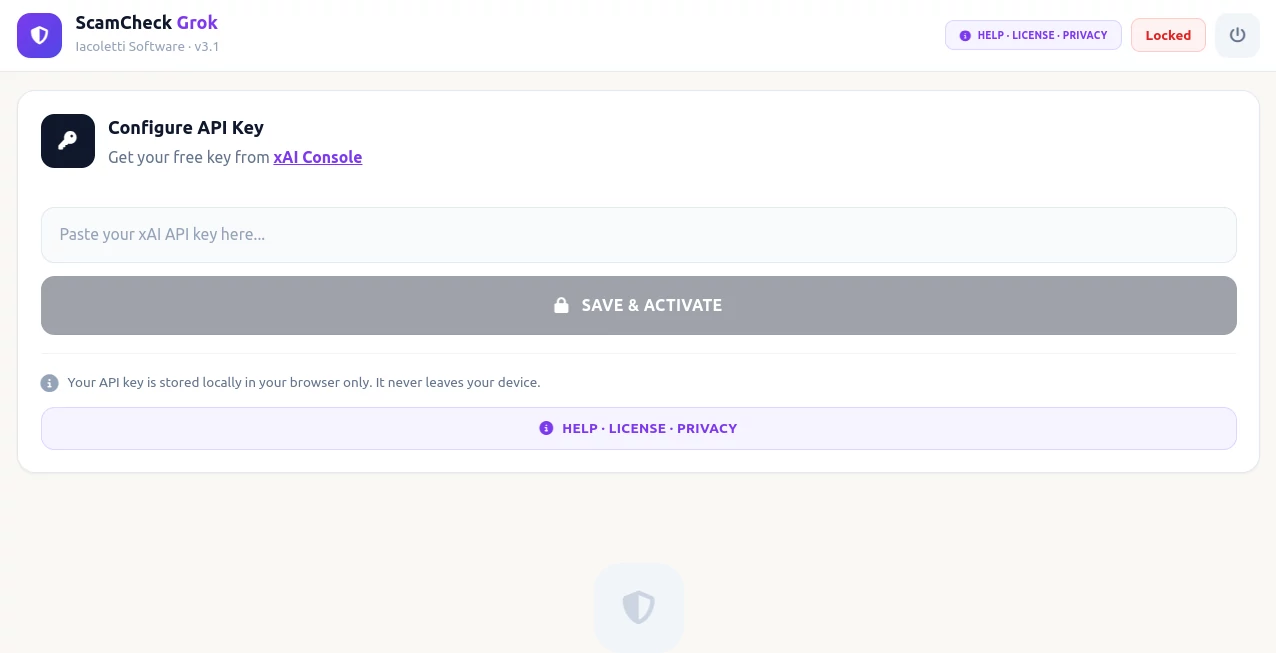
The browser-based design eliminates the need for software installation while allowing users to utilize their own xAI API credentials. Since users provide their own API key, they maintain greater control over AI usage and associated costs. This BYOK approach also offers flexibility for individuals who already work within the xAI ecosystem.
Use Cases
Individuals can verify suspicious emails before clicking dangerous links, confirm whether financial documents appear authentic, inspect questionable online offers, or review unexpected government communications. Businesses may use the platform to help customer support teams evaluate reported scams, while compliance departments can perform quick preliminary document reviews. Freelancers, online sellers, and remote workers also benefit from checking invoices and payment requests before processing transactions.
Pros and Cons
Pros
Detailed forensic reports with understandable explanations.
Supports images, screenshots, and PDF documents.
Fast browser-based workflow with no installation.
Provides structured risk scores and clear verdicts.
Excellent for identifying phishing and impersonation attempts.
Cons
Requires users to supply their own xAI API key.
Image quality may affect analysis accuracy.
Complex fraud investigations may still require professional review.
Pricing Plans
The application follows a free Bring Your Own Key (BYOK) model. Users create an xAI account, add API credits, and pay only for the AI usage generated during each scan. Typical analysis costs remain very low, making it an affordable option for occasional as well as regular verification tasks.
How to Use ScamCheck Grok
Begin by creating an xAI API key and adding it to the configuration page. Upload a suspicious screenshot, image, or PDF document through the browser interface. Start the analysis and wait for the AI to examine the content. Once processing is complete, review the structured report containing the risk score, verdict, visual analysis, and explanation of every detected red flag. Use this information to decide whether the content appears legitimate or potentially fraudulent.
Comparison with Similar Tools
Unlike many scam detectors that simply search existing databases or blacklists, this platform performs AI-driven forensic reasoning on uploaded documents. Instead of only identifying previously reported threats, it analyzes the content itself and explains the evidence behind each conclusion. The structured reporting format, visual inspection, and transparent scoring system make it particularly valuable for users who want understandable results rather than generic warnings.
Conclusion
Digital scams continue to become more sophisticated every year, making reliable verification tools increasingly valuable. This platform delivers an impressive balance of simplicity, transparency, and intelligent analysis. Its detailed reports help users understand potential risks instead of merely presenting a score, making informed decisions easier and reducing the chances of falling victim to fraud. Whether reviewing business documents or checking suspicious personal messages, it provides practical assistance that can save both money and peace of mind.
Frequently Asked Questions (FAQ)
What types of files can be analyzed?
The platform supports screenshots, photos, scanned documents, emails, invoices, and PDF files.
Does it require software installation?
No. Everything works directly inside a web browser.
Is an API key required?
Yes. Users connect their own xAI API key through the BYOK model.
Can it detect phishing emails?
Yes. It is designed to identify phishing attempts, impersonation scams, fraudulent invoices, fake notices, and other deceptive content.
Is the service suitable for businesses?
Yes. Customer support teams, compliance professionals, and organizations can use it to perform preliminary fraud analysis on suspicious documents.
These classifications represent its core capabilities and areas of application. For related tools, explore the linked categories above.

ScamCheck Grok Alternatives Product

GPTZero

AI Bypass Hub

AHelp