

















Seamless Texture Generator
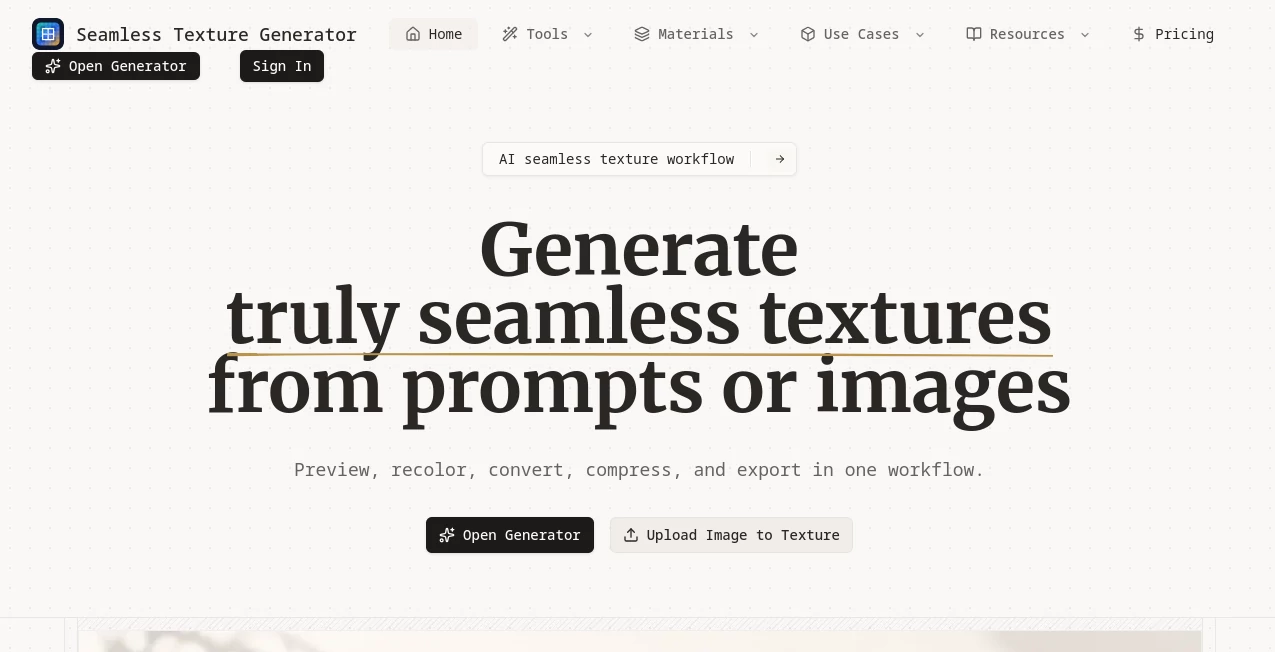
What is Seamless Texture Generator?
In a world where visual communication matters more than ever, creative professionals and teams are constantly searching for a smoother way to turn ideas into structured visuals. This platform introduces a refreshing approach to digital creativity by combining an intuitive canvas experience with intelligent assistance that helps users design, organize, and express ideas effortlessly.
Instead of juggling multiple tools for brainstorming, sketching, and visual structuring, users can work inside a unified environment that feels natural and fluid. The experience is built around simplicity, yet it remains powerful enough to support complex creative workflows.
Key Features
User Interface
The interface is designed to feel like an infinite workspace where ideas can grow freely. Elements can be placed, moved, and connected in a way that mirrors human thinking. Everything feels responsive and minimal, allowing users to focus entirely on creativity rather than technical complexity.
Accuracy & Performance
Performance is smooth even when handling large, layered projects. Interactions remain fast and stable, ensuring that users can build detailed visual structures without lag or interruption. The system is optimized for real-time collaboration and continuous editing.
Capabilities
- Visual brainstorming and idea mapping in a flexible canvas
- Smart layout assistance for organizing complex concepts
- Collaboration features for teams working in real time
- Integration of multimedia elements such as images and notes
- Support for structured workflows and creative planning
Security & Privacy
User data is handled with a focus on privacy and protection. Projects remain secure within the workspace environment, ensuring that creative assets and collaborative work are safeguarded against unauthorized access.
Use Cases
This type of creative workspace is especially useful for designers, product teams, educators, and content creators. It can be used for brainstorming new product ideas, planning user journeys, building mood boards, mapping out complex systems, or simply organizing thoughts visually in a more structured way.
Pros and Cons
Pros
- Highly intuitive visual workspace
- Great for collaboration and team creativity
- Flexible structure for different types of projects
- Clean and distraction-free interface
Cons
- May require time for new users to fully adapt to canvas-based workflows
- Advanced features might feel overwhelming for very simple tasks
Pricing Plans
The platform typically follows a flexible pricing model, which may include free access for basic usage and premium plans for advanced features and team collaboration. Exact pricing details are usually provided within the platform itself and can vary depending on usage needs.
How to Use the Platform
Getting started is straightforward. Users begin by creating a new workspace and then adding elements such as notes, shapes, or visual blocks onto the canvas. From there, ideas can be connected, rearranged, and expanded into structured concepts. Collaboration can be enabled to allow multiple users to work together in real time.
Comparison with Similar Tools
Compared to traditional design or mind-mapping tools, this platform focuses more on fluid thinking and flexible structure. While many tools force users into rigid templates, this approach encourages organic idea development, making it especially appealing for creative teams who prefer freedom over constraints.
Conclusion
For teams and individuals who value creativity, structure, and collaboration in one place, this platform offers a balanced solution. It bridges the gap between brainstorming and execution, helping users turn abstract ideas into clear visual systems without unnecessary complexity.
Frequently Asked Questions (FAQ)
Is this platform suitable for beginners?
Yes, the interface is designed to be intuitive, allowing new users to quickly understand the basic workflow without technical barriers.
Can teams collaborate in real time?
Yes, multiple users can work together on the same canvas, making it suitable for remote teams and group projects.
Does it support complex projects?
Yes, it is capable of handling both simple brainstorming sessions and more advanced structured workflows.
Is it only for designers?
No, it is also useful for educators, marketers, product managers, and anyone who works with ideas and visual planning.
AI Illustration Generator , AI Design Assistant , AI Design Generator , AI Graphic Design .
These classifications represent its core capabilities and areas of application. For related tools, explore the linked categories above.
Seamless Texture Generator details
Website unavailable — View Alternatives
Pricing
- Free
Apps
- Web App
Categories

Seamless Texture Generator Alternatives Product

AI Thumbnail…

Image2GPT
image2ai.art

Nano Banana 2
Ai logo maker

qwen image 2…

lovimg
Maginary

AlpacaBag
