
Speak Pro: Shadowing Lessons
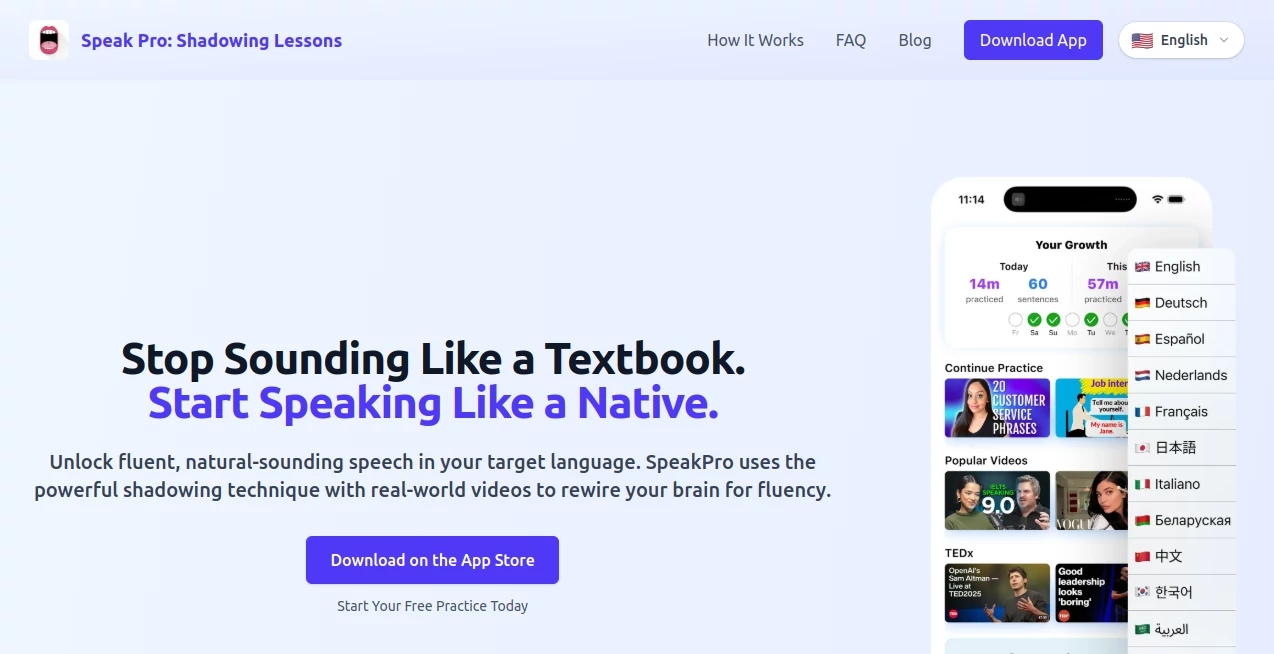
What is Speak Pro: Shadowing Lessons?
Learning a language often reaches a frustrating point. Reading becomes easier, grammar rules start making sense, and understanding videos feels natural. Yet when it's time to speak, confidence disappears. Words hesitate, pronunciation feels awkward, and conversations move faster than expected.
This platform approaches language learning from a different angle. Instead of relying on repetitive textbook exercises, it focuses on real speech, real voices, and practical speaking habits. Using authentic video content combined with AI-assisted feedback, learners can train pronunciation, rhythm, and conversational flow in a way that feels natural rather than forced.
One particularly refreshing aspect is the use of shadowing techniques. Rather than translating in your head or memorizing isolated phrases, users repeat speech alongside native speakers in real time. It feels more like training a skill than studying a lesson.
Key Features
User Interface
The interface is clean and designed around active learning. Lessons are easy to navigate, transcripts stay synchronized with spoken content, and progress tracking is visible without becoming distracting.
Video-based lessons feel smooth and familiar because users practice through recognizable content formats such as interviews, talks, and real-world conversations. Small details like highlighted text and sentence controls reduce friction and keep attention focused.
Accuracy & Performance
Pronunciation analysis performs impressively well. Feedback arrives instantly after recording, helping learners identify weaknesses in timing, stress patterns, and speech rhythm.
Instead of broad comments like "good job" or "try again," feedback becomes more practical. Small corrections often make a noticeable difference, especially for users trying to sound more natural rather than simply understandable.
Capabilities
- Real-world speaking practice through authentic video content
- AI pronunciation analysis and fluency scoring
- Record-and-compare voice functionality
- Support for multiple languages
- Beginner to advanced learning paths
- Progress reports and practice streak tracking
- Transcript synchronization and translation support
- Ability to practice using external video sources
One feature that stands out is the possibility of practicing with content people genuinely enjoy. Someone interested in TED-style talks may learn differently from someone interested in travel videos or interviews.
Security & Privacy
Voice-based platforms naturally raise privacy questions. The service appears to maintain a straightforward approach toward user data while focusing on training functionality rather than unnecessary collection practices.
For learners recording speech samples regularly, having transparency around usage and stored activity contributes to a more comfortable experience.
Use Cases
- Students preparing for international study opportunities
- Professionals improving workplace communication
- Travelers practicing conversational speaking
- Job seekers preparing for interviews
- Language learners reducing accent barriers
- Users preparing for speaking examinations
Imagine someone preparing for a presentation abroad. Instead of repeating scripted textbook phrases, they could practice naturally occurring speech patterns from authentic conversations and develop speaking confidence through repetition.
Pros and Cons
- Pros
- Uses real content rather than artificial exercises
- Interactive voice comparison creates practical improvement
- AI feedback feels immediate and actionable
- Short daily sessions fit busy schedules
- Multiple language options available
- Cons
- Advanced features may require subscription access
- Speech analysis can occasionally miss contextual nuance
- Some learners may need time adapting to shadowing methods
Pricing Plans
A free option is available for new users who want to experience core functionality and begin practicing immediately.
Additional premium options unlock expanded features, deeper analysis, and enhanced learning experiences for users seeking more advanced practice.
How to Use Speak Pro
Start by selecting a language and preferred content style. Choose a lesson or speaking topic, listen carefully to native speech, and begin repeating in real time.
Record your voice, compare it with the original version, review feedback, and repeat difficult sections. Short sessions of ten to fifteen minutes each day can gradually improve speech rhythm and confidence.
The process feels surprisingly natural because progress comes through speaking rather than passive studying.
Comparison with Similar Tools
Many language platforms prioritize vocabulary lists, grammar exercises, or gamified quizzes. While these approaches help build foundations, they often leave speaking confidence behind.
What separates this experience is its practical emphasis on real voices and active repetition. Instead of memorizing isolated sentences, users train speaking patterns through authentic interactions and immediate feedback.
For learners stuck between understanding and speaking, this approach fills a gap many traditional apps rarely solve.
Conclusion
Language learning becomes far more rewarding when progress can actually be heard. Developing natural pronunciation and confidence requires more than grammar rules and endless flashcards.
By combining authentic media, structured shadowing practice, and intelligent feedback, this platform creates a learning experience that feels active and personal. Small daily sessions can evolve into meaningful speaking improvements, especially for learners tired of feeling trapped in passive study habits.
For anyone hoping to sound more natural and speak with confidence, this modern approach offers a refreshing path forward.
Frequently Asked Questions (FAQ)
Is this suitable for beginners?
Yes. Structured lesson levels and adjustable content difficulty make it accessible for both beginners and experienced learners.
How much practice is recommended daily?
Around ten to fifteen minutes each day can create noticeable progress over time.
Does it support multiple languages?
Yes. Users can practice several major languages with additional support expanding over time.
What is shadowing?
Shadowing is a speaking technique where learners repeat native speech immediately as they hear it to develop rhythm, pronunciation, and fluency.
Can users track progress?
Yes. Learning streaks, practice time, and speaking activity metrics help monitor consistency and improvement.
AI Coaching , AI Education Assistant , AI Speech Recognition , AI Voice Assistants .
These classifications represent its core capabilities and areas of application. For related tools, explore the linked categories above.
Speak Pro: Shadowing Lessons details
Website unavailable — View Alternatives
Pricing
- Free
Apps
- Web App
Categories

Speak Pro: Shadowing Lessons Alternatives Product

Mexty AI

AI Palm Read…

PTEcorepract…

Read PDF Alo…

Gpt Realtime

Models by Ha…

Sovi.AI

FluentDictat…

Casper Pract…