
Super Travel AI
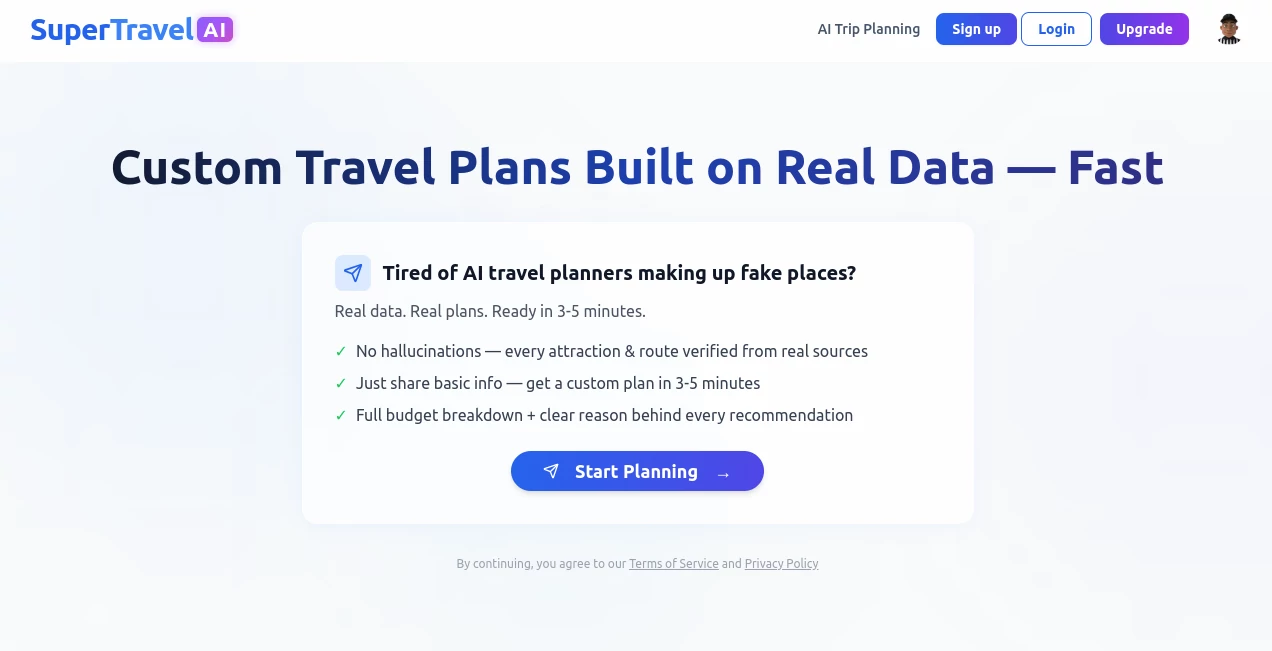
What is Super Travel AI?
Planning a trip often starts with excitement but quickly turns into scattered tabs, endless comparisons, and uncertain decisions. This platform is designed to remove that friction and bring everything into one intelligent flow. Instead of spending hours switching between flight searches, hotel reviews, and itinerary ideas, users get a streamlined experience that feels more like chatting with a knowledgeable travel companion.
What makes it stand out is the way it blends personalization with practicality. It does not just suggest generic destinations; it tries to understand preferences, timing, and travel style to shape a plan that actually feels usable in real life.
Key Features
User Interface
The interface is clean and intentionally simple. Even users who are not comfortable with complex travel platforms can navigate easily. Inputs are conversational, and results are structured in a way that reduces decision fatigue rather than adding to it.
Accuracy & Performance
The system focuses on generating relevant travel suggestions based on context rather than overwhelming lists. Responses feel curated, which helps users quickly move from inspiration to action without second-guessing every step.
Capabilities
- Smart itinerary creation based on preferences and trip duration
- Destination suggestions tailored to budget and season
- Activity recommendations organized by interest
- Flexible planning adjustments when travel details change
- Structured travel breakdowns that are easy to follow
Security & Privacy
User input is treated as personal planning data, and the platform emphasizes a safe environment for storing preferences and travel-related details. It avoids unnecessary data exposure and focuses on keeping planning interactions private and relevant.
Use Cases
This tool works well for a wide range of travelers. Solo travelers can quickly generate structured plans without overthinking. Families benefit from balanced itineraries that mix relaxation and activities. Business travelers can use it to optimize short stays in unfamiliar cities. Even spontaneous weekend planners can get fast suggestions without heavy research.
Pros and Cons
Pros
- Reduces time spent on manual travel research
- Creates personalized and structured itineraries
- Easy to use even for non-technical users
- Helps discover destinations users might overlook
Cons
- May not replace deep human travel expertise for complex trips
- Depends on user input quality for best results
- Some recommendations may still require external verification
Pricing Plans
Pricing is typically structured to support both casual users and frequent travelers. A free or entry-level option is often available for basic planning, while advanced features such as deeper personalization or extended itineraries may be part of premium plans. The value increases significantly for users who travel regularly and want consistent planning support.
How to Use This Tool
Getting started is straightforward. Users begin by sharing basic trip details such as destination ideas, travel dates, and preferences. The system then generates a suggested plan, which can be refined step by step. Adjustments can be made at any time, whether it’s changing pace, swapping activities, or exploring alternative destinations.
The experience feels less like filling out forms and more like having a conversation that gradually shapes a complete travel plan.
Comparison with Similar Tools
Compared to traditional travel planners or booking platforms, this solution focuses more on decision-making than transactions. While other tools often prioritize listings and filters, this one emphasizes context and personalization. It sits somewhere between a travel assistant and a planning companion, rather than just a search engine for flights or hotels.
Conclusion
Travel planning does not need to be overwhelming or fragmented. This platform brings structure, clarity, and a sense of direction to the process. For users who value time, simplicity, and personalized suggestions, it offers a refreshing alternative to traditional travel research methods. It is especially useful for people who want to spend less time planning and more time actually experiencing their trips.
Frequently Asked Questions (FAQ)
Is this tool suitable for complex international trips?
Yes, it can assist with multi-destination or longer international trips, though some users may still prefer to cross-check specific logistics independently.
Do I need travel experience to use it?
No. It is designed to be accessible for beginners while still being useful for experienced travelers.
Can I modify my itinerary after it is generated?
Yes, itineraries are flexible and can be adjusted based on changing preferences or plans.
Does it only suggest destinations or also activities?
It provides both destination ideas and structured activity suggestions based on user interests.
AI Life Assistant , AI Trip Planner .
These classifications represent its core capabilities and areas of application. For related tools, explore the linked categories above.
Super Travel AI details
Website unavailable — View Alternatives
Pricing
- Free
Apps
- Web App
Categories

Super Travel AI Alternatives Product

YouMind

lovetype16

MemoTune

KronoPrompt

QuickPick

Astrology Bot

StarBattle O…

Kakuro Puzzle

Parking Prac…