


















Claro
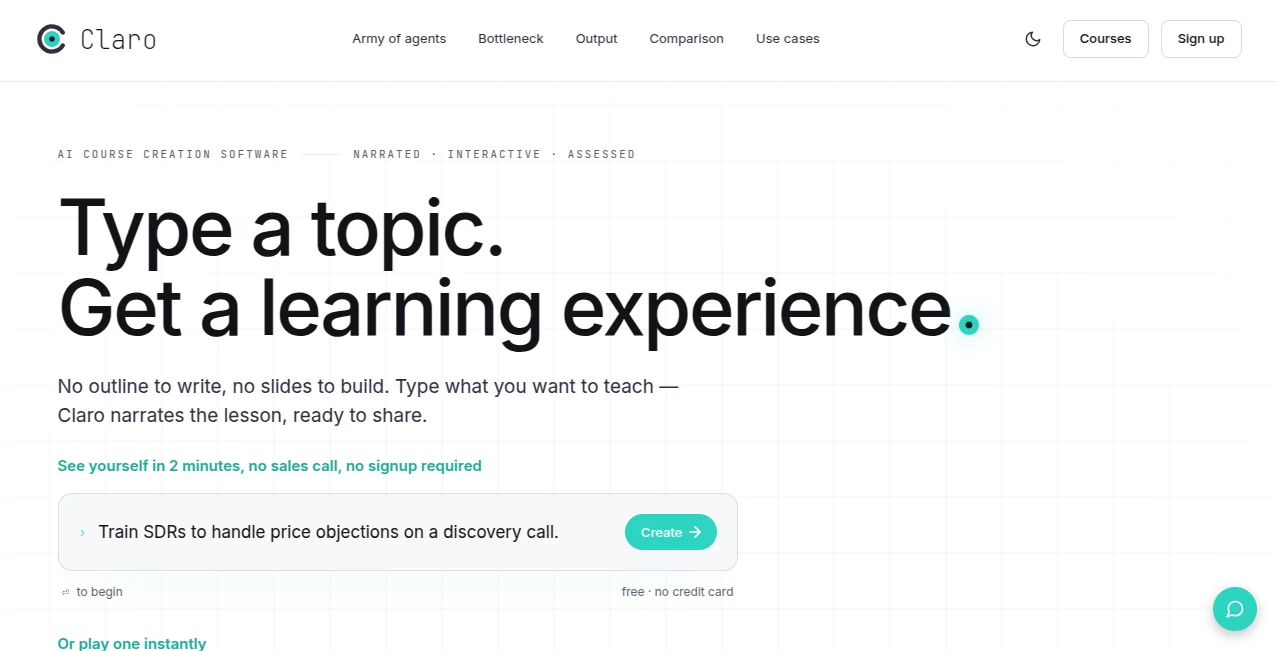
What is Claro?
Managing product information across multiple suppliers can quickly become overwhelming. Different file formats, inconsistent naming conventions, missing specifications, duplicate products, and outdated records often create unnecessary manual work that slows down operations and affects customer experience. This platform was built to eliminate those challenges by transforming fragmented product data into a trusted, continuously improving catalog.
Rather than performing a one-time cleanup, the platform continuously monitors incoming supplier feeds, validates changes, enriches missing information, and synchronizes verified records back into existing business systems. The result is a catalog that becomes more reliable over time instead of gradually losing accuracy.
Designed for manufacturers, distributors, marketplaces, procurement teams, and enterprise organizations, the solution fits naturally into existing ERP, PIM, procurement, and AI workflows without requiring companies to replace their current infrastructure. Every enriched value includes confidence scoring and source references, giving teams greater visibility into the quality of their data while reducing manual verification.
Key Features
User Interface
The platform offers a clean workspace that simplifies complex catalog management. Users can import spreadsheets, supplier feeds, APIs, technical documents, PDFs, and other structured or unstructured data sources through an intuitive workflow. Teams can review enriched records, approve suggested changes, monitor data quality, and collaborate before updates are published.
Accuracy & Performance
One of its biggest strengths is continuous validation. Instead of enriching data once and forgetting about it, the system constantly checks for supplier updates, schema changes, duplicate records, inconsistent measurements, and missing specifications. Every generated attribute is supported with confidence scores and traceable source information, allowing organizations to trust the output before it reaches downstream systems.
Capabilities
- Import data from spreadsheets, APIs, ERP systems, supplier portals, PDFs, and technical documents.
- Automatically identify duplicate products across multiple suppliers.
- Normalize inconsistent units, specifications, and naming conventions.
- Generate structured product attributes from source documentation.
- Enrich incomplete product records using trusted sources.
- Validate every update before publishing.
- Synchronize verified data with ERP, PIM, procurement, search, and AI workflows.
- Support large enterprise catalogs containing thousands or millions of products.
Security & Privacy
Enterprise-grade security is a core part of the platform. Organizations maintain control over trusted data sources, validation rules, taxonomy, and business logic. Every change remains traceable through provenance records, helping teams understand where information originated and why it was accepted into the catalog.
Use Cases
- Maintaining large multi-supplier product catalogs.
- Preparing e-commerce catalogs for launch.
- Cleaning inconsistent supplier feeds.
- Improving product search and filtering.
- Supporting procurement and sourcing operations.
- Building reliable AI-ready product databases.
- Keeping ERP and PIM systems synchronized automatically.
- Managing industrial product information at scale.
Pros and Cons
- Pros
- Continuously improves catalog quality instead of performing one-time cleanup.
- Integrates with existing enterprise systems.
- Supports structured and unstructured data sources.
- Provides confidence scoring and data provenance.
- Highly customizable for business-specific workflows.
- Scales well for enterprise-sized catalogs.
- Cons
- Primarily designed for business and enterprise environments rather than individual users.
- Advanced customization may require onboarding assistance.
- Some enterprise capabilities are available through custom deployments.
Pricing Plans
A free self-service option allows users to run research agents, enrich spreadsheets, and extract data without setup requirements. Organizations managing larger catalogs can choose a custom enterprise plan that includes continuous validation, automation workflows, platform configuration, and dedicated support tailored to operational requirements.
How to Use Claro
- Create an account or request a demonstration.
- Import product information from spreadsheets, APIs, ERP systems, or supplier files.
- Allow the platform to identify duplicates, classify products, and normalize attributes.
- Review confidence scores and approve suggested updates.
- Publish validated records back into ERP, PIM, procurement, search, or AI systems.
- Continue receiving automated updates whenever supplier information changes.
Comparison with Similar Tools
Many catalog management solutions focus on storing product information or performing occasional enrichment projects. This platform takes a different approach by acting as a continuous execution layer that keeps product data accurate over time. Instead of replacing ERP or PIM software, it works alongside existing infrastructure, constantly validating, enriching, and synchronizing information as supplier data evolves. The combination of automated enrichment, provenance tracking, configurable business rules, and continuous monitoring makes it particularly attractive for organizations managing complex product ecosystems.
Conclusion
Organizations that rely on accurate product information understand how expensive poor data quality can become. By automating catalog enrichment, validation, synchronization, and continuous monitoring, this solution reduces repetitive manual work while improving operational confidence. Its ability to integrate with existing enterprise systems instead of replacing them makes adoption considerably easier, especially for growing businesses with large and constantly changing product catalogs. For teams looking to build reliable product data that supports procurement, search, e-commerce, analytics, and AI applications, it delivers a practical and highly scalable foundation.
Frequently Asked Questions (FAQ)
What types of businesses benefit the most?
Manufacturers, distributors, marketplaces, procurement teams, industrial suppliers, and organizations managing large product catalogs gain the greatest value.
Does it replace ERP or PIM software?
No. It works alongside existing ERP, PIM, procurement, and catalog systems while continuously improving the quality of their data.
Can it process documents besides spreadsheets?
Yes. It supports PDFs, technical documents, APIs, supplier portals, images, ERP exports, and various structured or unstructured data sources.
How does it improve data quality?
It automatically detects duplicates, fills missing attributes, validates updates, normalizes specifications, and continuously monitors catalog changes over time.
Is there a free version?
Yes. A self-service free plan is available, while larger organizations can choose custom enterprise pricing for advanced capabilities.
AI Developer Tools , AI Research Tool , AI Business Ideas Generator , AI Workflow Management .
These classifications represent its core capabilities and areas of application. For related tools, explore the linked categories above.

Claro Alternatives Product

ClawBridge

Zamicus
Devplan

Luma AI

Needle

Best of AI

BuildRoy

Claude and C…

DevUtilX