


















Watermelon.ai
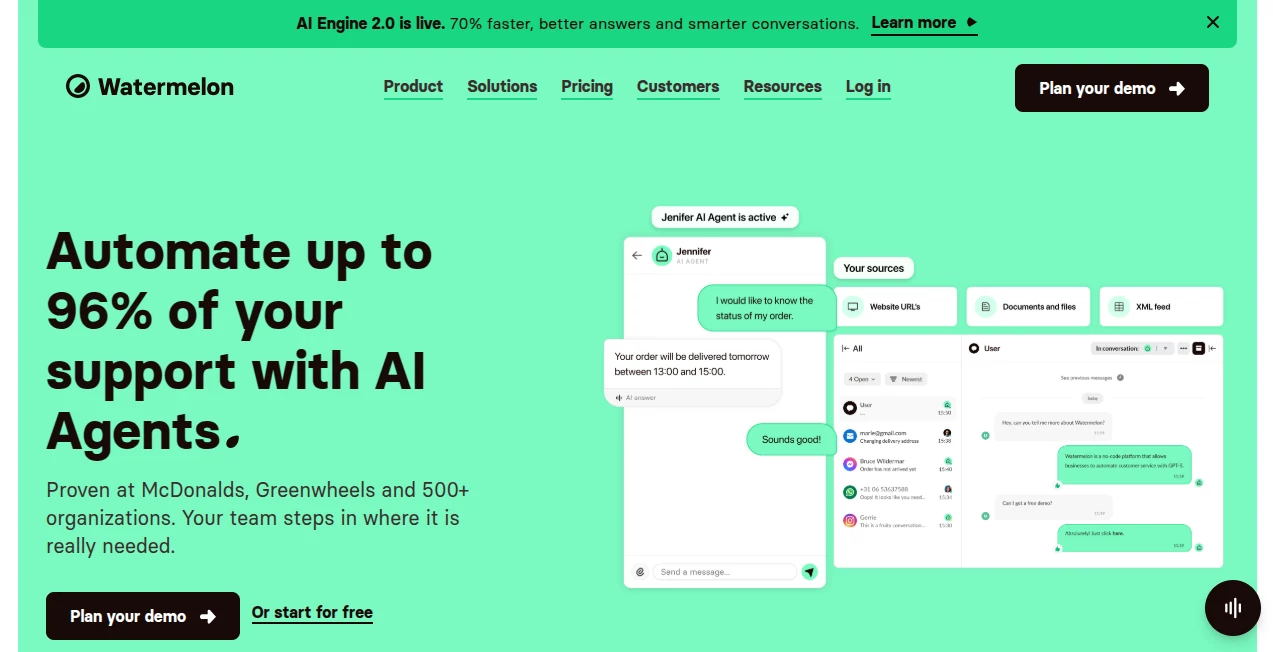
What is Watermelon.ai?
Customer expectations have changed dramatically in recent years. Businesses are no longer judged only by the quality of their products, but also by how quickly and intelligently they respond to customer needs. This is where modern AI-driven support platforms come into play.
This tool is designed to help companies automate and enhance customer conversations across multiple channels. Instead of relying solely on large support teams, it introduces intelligent automation that can understand requests, respond naturally, and escalate complex issues when needed. The result is a smoother experience for both customers and support teams.
What makes it especially interesting is the balance between automation and human touch. It doesn’t feel robotic or rigid—instead, it aims to replicate real conversational flow while still keeping businesses in control of their support operations.
Key Features
User Interface
The dashboard is designed with simplicity in mind. Even users without technical background can set up automated flows, manage conversations, and monitor performance without feeling overwhelmed. Everything is structured logically, making navigation smooth and intuitive.
Accuracy & Performance
The AI system is built to understand intent rather than just keywords. This allows it to handle real customer questions more effectively, reducing misunderstandings and improving response relevance. Over time, it learns from interactions and becomes more refined in its replies.
Capabilities
- Automated customer support across chat and messaging channels
- Smart response generation based on user intent
- Seamless escalation to human agents when necessary
- Workflow automation for repetitive support tasks
- Integration with common business tools and platforms
Security & Privacy
Security is a critical part of any customer-facing system. The platform is designed to handle user data responsibly, ensuring conversations remain secure and compliant with modern data protection expectations. Businesses can maintain control over what data is stored and how it is used.
Use Cases
- E-commerce stores handling order and refund inquiries
- SaaS companies providing 24/7 technical support
- Startups reducing customer service workload
- Agencies managing multiple client support channels
Pros and Cons
Pros
- Reduces customer support workload significantly
- Improves response time and availability
- Easy to set up and manage
- Adapts and improves with usage
Cons
- May require initial training for optimal performance
- Complex edge cases still need human intervention
Pricing Plans
The platform typically follows a flexible pricing model designed for different business sizes. Smaller teams can start with basic features, while larger organizations can unlock advanced automation, integrations, and analytics. This tiered approach allows companies to scale as their needs grow.
How to Use This Tool
Getting started is straightforward. After signing up, users can configure their support channels and define basic conversation flows. From there, the system begins handling incoming requests automatically.
Businesses can gradually refine responses, add custom rules, and connect additional tools such as CRM systems or helpdesk software. Over time, the AI becomes more aligned with brand tone and customer expectations.
Comparison with Similar Tools
Compared to traditional chatbots that rely heavily on scripted responses, this platform focuses more on natural language understanding and adaptive learning. While many tools in the market offer basic automation, this solution emphasizes deeper conversational intelligence and smoother escalation to human agents.
In practice, this means fewer frustrating interactions for customers and less manual workload for support teams.
Conclusion
For businesses looking to modernize their customer support experience, this platform offers a compelling balance between automation and human-like interaction. It is not just about replacing support agents, but about enhancing their efficiency and giving customers faster, more accurate responses.
Frequently Asked Questions (FAQ)
Is this tool suitable for small businesses?
Yes, it is designed to scale from small startups to larger enterprises with growing support needs.
Does it fully replace human support agents?
No, it works alongside human teams and escalates complex issues when necessary.
Can it integrate with existing tools?
Yes, it supports integration with common business and customer support platforms.
Is coding required to set it up?
No coding knowledge is needed for basic setup and operation.
Does it improve over time?
Yes, it learns from interactions and becomes more accurate with continued use.
AI Chatbot , AI Sales Assistant , AI CRM Assistant , AI Customer Service Assistant .
These classifications represent its core capabilities and areas of application. For related tools, explore the linked categories above.

Watermelon.ai Alternatives Product

gpt-plus.ai
Sauci.ai

Patches Answ…

Recruit CRM

Chatzy AI

Xvibe

Supawazap

ZynfoAI
AILeadz.io
