BanProof AI
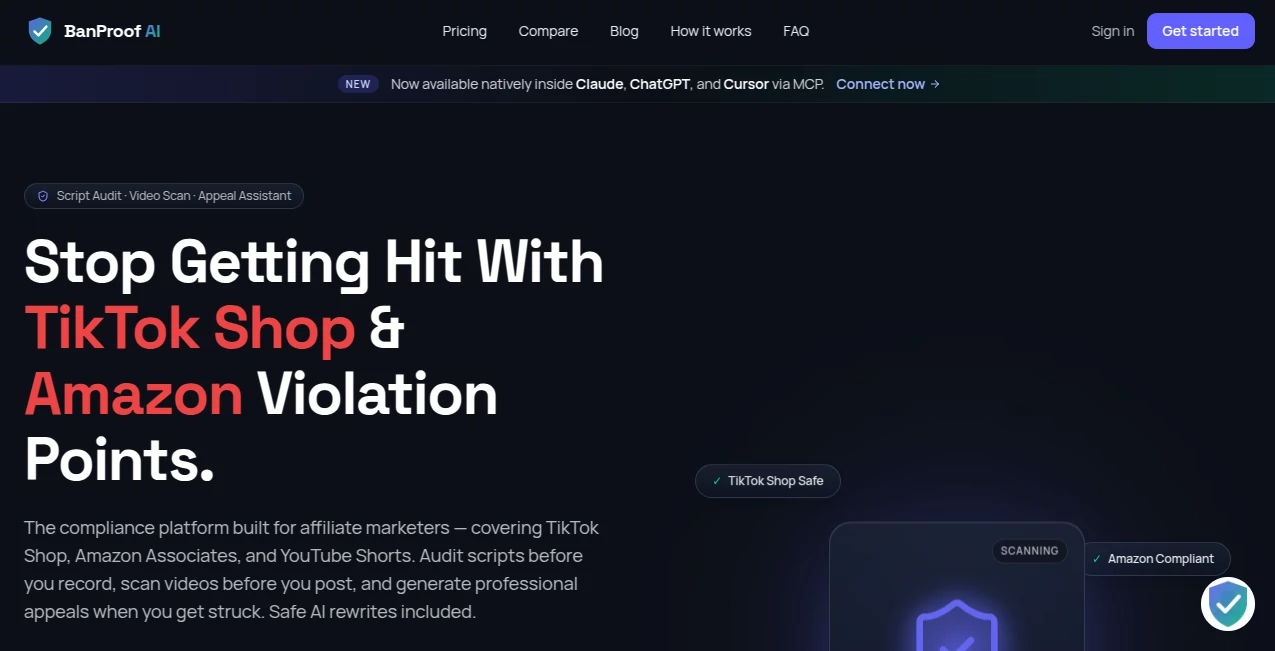
What is BanProof AI?
BanProof is a compliance-focused platform built for creators, sellers, affiliates, and businesses working with TikTok Shop and Amazon affiliate programs. When an account starts collecting violation points, the problem can quickly become more than an annoying warning. It can affect visibility, selling activity, and the ability to keep operating normally.
The platform takes aim at that particular headache by helping users stay more aware of compliance risks before they turn into costly account problems. Instead of treating violations as something to deal with after the fact, it puts compliance closer to the center of the workflow.
For anyone building a business around short-form content, affiliate marketing, or social commerce, that approach can be especially useful. A single campaign may take hours to plan and produce, so protecting the account behind it matters just as much as creating the content itself.
Key Features
- Compliance-focused support for TikTok Shop activities
- Tools and guidance designed around violation-point prevention
- Support for creators and businesses involved in Amazon affiliate activities
- A practical approach to reducing avoidable compliance problems
- Designed around the realities of social commerce and affiliate workflows
User Interface
The platform presents a focused experience rather than trying to become an all-purpose marketing suite. That is a sensible direction for a compliance product. Users coming to the service generally have one main concern: understanding how to avoid problems that could put an account or revenue stream at risk.
A focused interface can also make the learning curve easier for creators who are not compliance specialists. Instead of having to navigate a large collection of unrelated marketing features, the experience is centered around account safety and platform requirements.
Accuracy & Performance
Compliance tools are only useful when their guidance is relevant to the platforms and workflows people actually use. This service specifically targets TikTok Shop and Amazon affiliate environments, giving it a much narrower and more practical focus than generic business compliance software.
It is worth remembering that no third-party platform can guarantee that an account will never receive a violation. Platform policies can change, enforcement decisions can vary, and individual cases may depend on circumstances outside a user's control. The real value here is helping users become more proactive instead of discovering compliance issues only after an account has already been affected.
Capabilities
The strongest part of the platform is its specialization. Rather than attempting to solve every marketing problem, it addresses a concern that can have a direct financial impact on creators and affiliate marketers.
Consider a creator preparing a series of TikTok Shop videos for a product launch. The content itself may look harmless, but small mistakes in promotional practices or platform requirements can create problems later. Having a dedicated compliance-oriented resource gives that creator another layer of awareness before publishing.
The same principle applies to Amazon affiliates. When affiliate activity becomes a meaningful source of revenue, maintaining a compliant workflow becomes part of running the business rather than an optional extra.
Security & Privacy
Because compliance work can involve business and account-related information, users should always review the platform's current privacy policy and terms before submitting sensitive information. It is also good practice to avoid sharing passwords, authentication codes, or other credentials unless a service explicitly requires them through a secure and appropriate authentication process.
For businesses using third-party compliance software, privacy should be evaluated alongside convenience. The safest workflow is one that gives users useful compliance guidance while limiting unnecessary exposure of sensitive account information.
Use Cases
TikTok Shop creators: Creators can use the platform as part of their publishing and promotional workflow, particularly when they want to reduce the chance of overlooking rules that could lead to violation points.
Amazon affiliates: Affiliate marketers can use a dedicated compliance resource to keep platform requirements in mind while building promotional content and campaigns.
Social commerce businesses: Small businesses that rely heavily on TikTok Shop can benefit from treating compliance as an ongoing operational task rather than something addressed only after a warning appears.
Content teams: Teams producing large volumes of promotional videos can incorporate compliance checks into their production process before content goes live.
New sellers and creators: Beginners may find a specialized compliance platform useful because platform policies can be difficult to interpret when they are just starting to monetize their content.
Pros and Cons
Pros
- Focused specifically on TikTok Shop and Amazon affiliate compliance
- Addresses a problem that can have a direct impact on revenue
- Encourages a proactive approach to violation prevention
- Relevant to creators, affiliates, sellers, and social commerce businesses
- More specialized than a general-purpose marketing platform
Cons
- Its narrow focus may make it less useful for businesses outside TikTok Shop and Amazon affiliate marketing
- Platform policies can change, so users should still verify current official requirements
- No compliance service can guarantee that an account will never receive a violation
- Users looking for a complete marketing suite will need additional tools for other tasks
Pricing Plans
Pricing information was not available in the publicly accessible page content reviewed for this article. Because compliance products can change their plans, features, and billing structure over time, users should check the current offering directly before making a purchasing decision.
For businesses, the right question is not simply whether a subscription is inexpensive. It is whether the cost makes sense compared with the potential impact of losing selling capabilities, affiliate income, or valuable account activity because of preventable compliance issues.
How to Use It
Start by identifying the platform and activity that creates the greatest compliance concern for your business. If TikTok Shop is your main sales channel, focus on the requirements surrounding your promotional and selling workflow. If affiliate marketing is your primary activity, review the relevant practices before publishing campaigns.
Use the available compliance resources before launching new campaigns rather than waiting until an account receives a warning. This small change in routine can make compliance part of the publishing process instead of an emergency response.
For teams, it can also be useful to turn the guidance into an internal checklist. A creator prepares the content, the team reviews the promotional elements, and compliance is considered before publication. That simple process can help prevent avoidable mistakes as content volume grows.
Comparison with Similar Tools
Many marketing platforms concentrate on content creation, scheduling, analytics, advertising, or audience growth. This service takes a different route by focusing on the compliance side of social commerce and affiliate marketing.
That distinction is important. A content generator might help you produce ten promotional videos faster, while an analytics platform might tell you which video performed best. Neither necessarily addresses the question of whether your promotional activity could create a platform violation.
For that reason, this type of solution is best viewed as a specialized layer within a broader marketing stack. It does not need to replace your content, analytics, or advertising software to be useful. Its role is to help reduce compliance-related risk around the channels where you already operate.
Conclusion
For creators and businesses that depend on TikTok Shop or Amazon affiliate activity, compliance deserves more attention than it often receives. A violation can interrupt momentum at exactly the wrong time, especially when a creator has invested heavily in content production or a business is relying on a particular sales channel.
The platform stands out because it addresses that specific problem rather than attempting to cover every aspect of digital marketing. Its compliance-first positioning makes it particularly relevant to sellers, affiliates, and creators who want to build a more careful publishing workflow.
It should not be treated as a guarantee against enforcement, but as a practical resource for becoming more proactive about platform requirements. For businesses where social commerce is an important source of revenue, that extra layer of awareness can be worth incorporating into the everyday workflow.
Frequently Asked Questions (FAQ)
What is BanProof designed for?
It is designed around compliance for TikTok Shop and Amazon affiliate activities, with a particular focus on helping users avoid violation points and related account problems.
Who can benefit from this platform?
TikTok Shop creators, Amazon affiliates, social commerce businesses, sellers, and content teams can all potentially benefit from a compliance-focused workflow.
Can it guarantee that an account will never be banned?
No. No third-party service can guarantee immunity from platform enforcement. Policies and enforcement decisions can change, and users remain responsible for following the current rules of the platforms they use.
Is it a replacement for marketing software?
Not necessarily. Its role is more specialized. Businesses can continue using separate tools for content creation, analytics, advertising, scheduling, and other marketing activities while using a compliance-focused solution as an additional layer.
Does it support TikTok Shop?
Yes. TikTok Shop is one of the two primary environments specifically highlighted by the platform, alongside Amazon affiliate activities.
Does it support Amazon affiliates?
Yes. The platform specifically positions itself for users involved with Amazon affiliate activities as well as TikTok Shop.
Should I still read the official platform policies?
Absolutely. A third-party compliance resource can make the process easier to understand, but the official policies of the platforms you use should remain the final reference, especially when rules or enforcement practices change.
AI Social Media Assistant , AI Tiktok Assistant , AI Advertising Assistant .
These classifications represent its core capabilities and areas of application. For related tools, explore the linked categories above.

BanProof AI Alternatives Product

Lebesgue: AI…
Distro

KarmaGuy

RichlyAI
Apify

Quso AI

Omnigen Stud…

Shutterstock

Overlap