
















broop
What is broop?
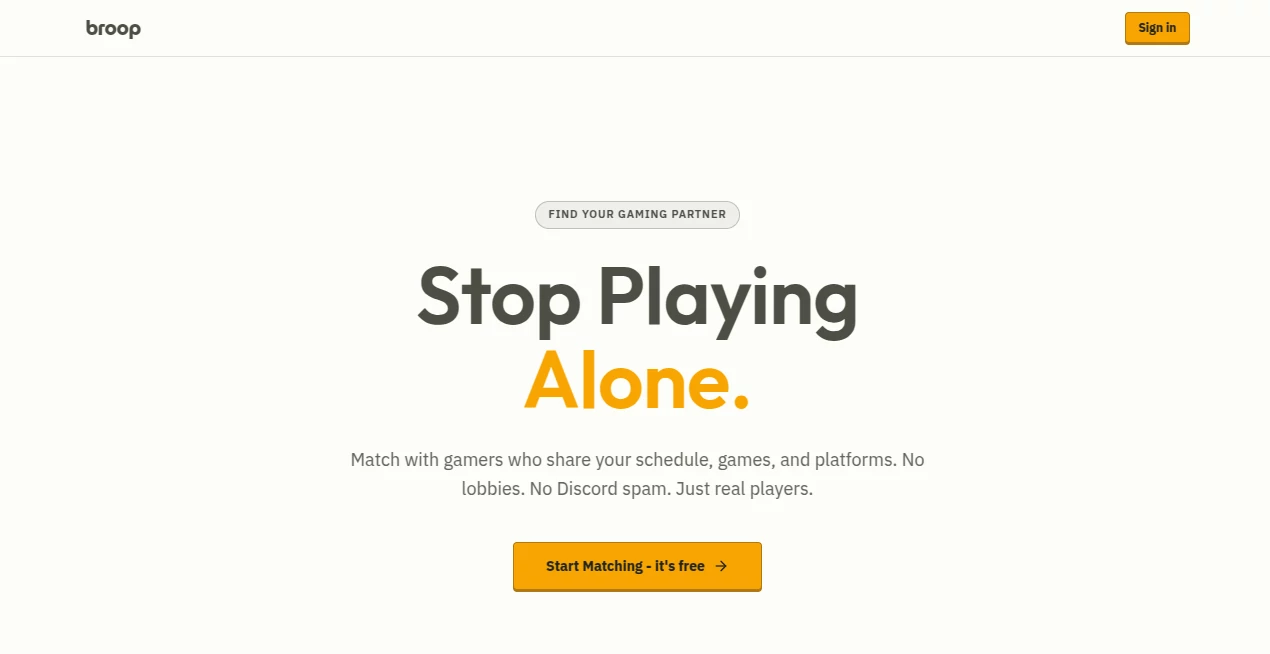
Tired of jumping into game after game with random teammates who don't talk, don't listen, or just disappear after five minutes? You're not alone. Most of us have been there—staring at a "waiting for players" screen or dealing with Discord servers that are either dead silent or way too chaotic to actually find someone decent to play with. That's where this platform steps in. It's not another generic social network. It's built specifically to solve the one problem every solo gamer hates: finding reliable people to play with, on your schedule, without all the noise. The idea here is refreshingly simple—connect based on the games you actually play, the platform you're on, and most importantly, when you're available. No more begging for teammates or sifting through endless LFG posts.
Key Features
This tool strips away everything unnecessary and focuses purely on what actually matters for gamers. You're not getting bombarded with ads, irrelevant suggestions, or social media fluff. The entire experience revolves around smart matching and real availability. Let's break down what makes this work so well.
User Interface
From the moment you land on the platform, it feels clean—almost minimalistic in the best way. There's no clutter, no pop-ups begging for attention, and no confusing menus to figure out. You set up your profile, pick your favorite games, add your platforms (PC, PlayStation, Xbox, or mobile), and then do something surprisingly simple: mark when you actually play. The design avoids flashy distractions. Instead, you get straightforward cards showing potential teammates, what games they're into, their skill range, and when they're online. It genuinely feels like someone sat down and said, "What would a gamer actually want to see first?"
Accuracy & Performance
The matching logic is surprisingly sharp. It's not just about throwing people together because they both play Call of Duty or Valorant. The system digs deeper. It checks play styles—are you a casual weekend player or someone who grinds ranked matches every night? It looks at timezone differences automatically, so you're not stuck trying to play with someone who's three hours ahead and logging off right when you get on. One user mentioned how they were constantly struggling to find Apex Legends teammates for late-night sessions, and within a day, they were connected with two others in the exact same situation. That kind of precision makes a real difference.
Capabilities
Beyond just matchmaking, this tool handles scheduling in a way that doesn't feel like work. You set your availability once—maybe Monday and Wednesday evenings, plus weekend afternoons—and the system quietly works in the background. It does all the timezone math for you, so you don't have to ask, "Wait, what time is that for me?" every single time. Notifications are smart, not spammy. You get a ping when someone compatible is found, along with their gaming habits and preferred communication style (voice chat, text, or both). There's also no endless scrolling through hundreds of random profiles. The platform brings matches to you.
Security & Privacy
Nobody wants their gaming handle shared everywhere or random people sliding into DMs without context. The platform handles this well. You control exactly what gets shown. Your actual contact info or social handles stay private until you decide to share them with a teammate you trust. The reporting system is straightforward too—if someone's toxic or just wasting time, reporting them takes maybe two clicks. It's clear the people behind this understand that gamers want safety without feeling like they're being watched. No overbearing verification processes, just sensible boundaries.
Use Cases
This isn't just for one type of gamer. It works across the board. Competitive players who are tired of solo queue chaos will appreciate finding teammates who actually communicate and care about winning. Casual gamers who just want someone to explore open worlds with—think Valheim, Minecraft, or Palworld—can find like-minded people who won't rush them. Even content creators benefit. Streamers looking for regular teammates to create entertaining content without the randomness of public lobbies? This solves that. There's also a growing group of parents who game late at night after the kids are asleep. Finding others on that same weird schedule used to be impossible. Now it isn't.
Pros and Cons
Pros: The biggest win here is how focused the experience is. No social media noise, no ads, just matching based on real preferences. The timezone-aware scheduling is a lifesaver for anyone who's ever been burned by time differences. It's also incredibly quick to get started—you can create a profile and get matches within minutes. The platform respects your attention. You're not constantly bombarded with notifications or "engagement" tricks.
Cons: It's still growing, which means the user base isn't massive yet. Depending on what you play, you might wait a bit for matches if you're into very niche titles. The platform also currently focuses more on finding consistent teammates rather than quick one-off sessions, so if you just want someone for a single match right this second, it's not quite as snappy as some traditional LFG systems. But for building real, lasting squads? That's where it shines.
Pricing Plans
Getting started won't cost you a thing. The basic tier gives you full access to matchmaking, profile creation, and finding teammates based on games and platforms. There's no paywall hiding core features. For those who want a little extra, premium options unlock advanced filters (like skill-based matchmaking or preferred communication style) and priority notifications when matches are found. But here's the honest truth: most people will do just fine with the free version. The paid extras are nice to have, not necessities.
How to Use broop
Getting rolling takes maybe five minutes, if that. First, head to the website and create an account—just a username and your gaming handles is plenty. Next, list the games you actually play regularly. Be honest here; adding every game you own just clutters the system. Then, select your platforms: PC, PlayStation, Xbox, or mobile. The key step comes next: set your availability. Pick the days and times you're most likely to play. The platform uses this to do all the heavy lifting. Finally, wait for matches. You'll get notified when compatible players are found, usually within a day or two depending on your game choices. From there, connect, chat, and start playing together.
Comparison with Similar Tools
Most "find a teammate" solutions are either Discord servers turned into chaotic shouting matches or LFG boards full of spam and ghosted messages. Discord technically works, but you're fighting against hundreds of people all shouting at once, plus you have to do all the legwork yourself. Traditional LFG sites? They dump a list of usernames and expect you to figure everything out on your own. This platform flips that model. Instead of you searching endlessly, it brings matches to you based on actual compatibility—not just who posted most recently. The automated timezone handling alone sets it apart. No other mainstream option does that without you manually calculating every single time.
Other AI-driven matchmaking tools often try to do too much—adding social feeds, content sharing, or unnecessary gamification. This one keeps its promise simple: find you people to play with, then get out of the way. That restraint is surprisingly rare and genuinely valuable.
Conclusion
If you've ever felt that frustration of wanting to play but having no one reliable to join you, this tool is worth your attention. It's not flashy, it doesn't promise the world, but it solves a real problem that countless gamers deal with every single day. The focus on compatibility—actual games, actual platforms, actual availability—makes all the difference. No more wasting time in dead lobbies or toxic random queues. The platform respects your time, your preferences, and your desire to just play with good people. Give it a shot. The worst that happens is you find a few new teammates. The best? You finally have a squad that actually shows up.
Frequently Asked Questions (FAQ)
Is this only for competitive games? Not at all. It works for any multiplayer game—co-op survival, MMOs, racing games, even party games. If you can play it with others, it's supported.
How long until I find matches? Depends on your games and availability. Popular titles like Valorant, Call of Duty, or Fortnite usually match within hours. Niche games might take a day or two.
Do I need to link my actual social media? No. Keep everything private. You share only what you're comfortable sharing after you've found a teammate.
Can I block or report toxic players? Absolutely. A simple reporting system is in place, and repeat offenders get removed quickly.
What if my schedule changes week to week? You can update your availability anytime. The system adjusts automatically and finds new matches based on your new hours.