


















Buildcheck
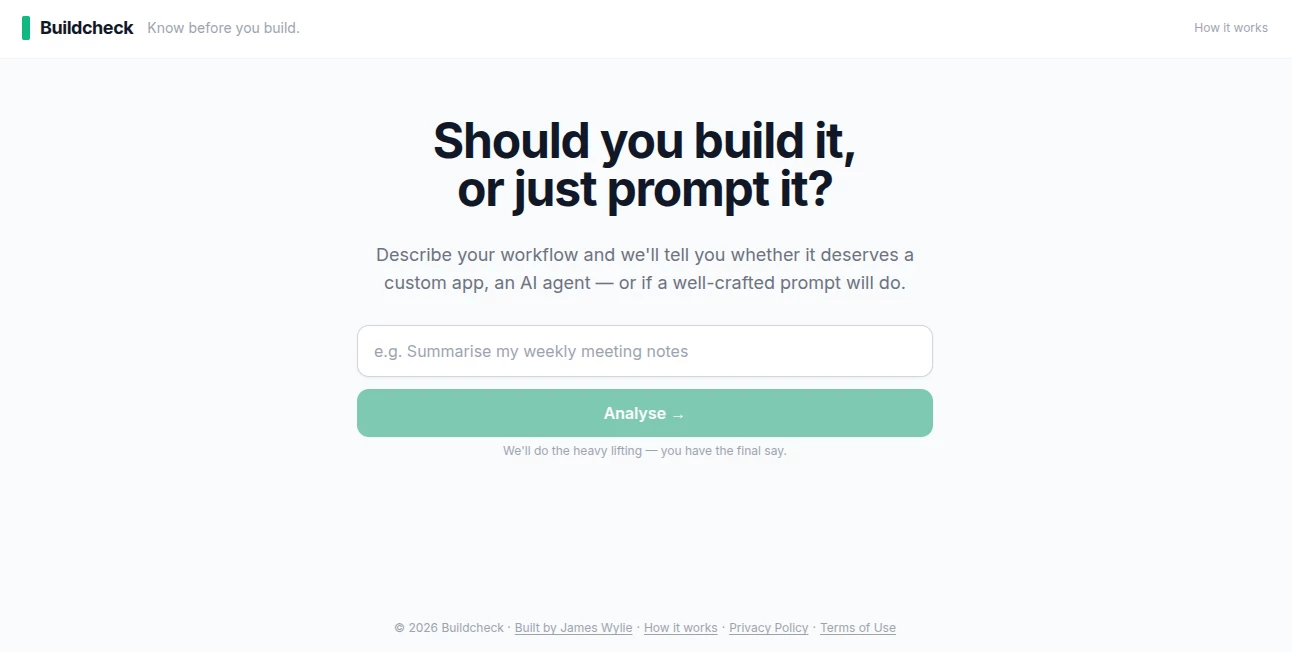
What is Buildcheck?
In modern development workflows, even a small unnoticed error can break an entire release cycle. This is where a structured build verification platform becomes essential. This tool is designed to help teams validate, monitor, and improve their software builds before they reach production.
Instead of relying on manual checks or fragmented debugging processes, it brings everything into one place, offering a smoother and more predictable release experience. Developers, QA engineers, and product teams can all work in sync without losing visibility over build quality.
Key Features
User Interface
The interface is clean and focused on simplicity. Developers can quickly navigate between build reports, logs, and validation results without unnecessary complexity. The layout is designed to reduce cognitive load, especially during high-pressure release cycles.
Accuracy & Performance
One of the strongest aspects of this platform is its consistent accuracy in detecting build issues early. It processes build data efficiently and highlights potential problems before they escalate into production failures.
Capabilities
It supports build validation, error tracking, automated checks, and performance insights. Teams can integrate it into their existing CI/CD workflows and gain real-time feedback on every deployment stage.
Security & Privacy
Security is handled with a professional approach, ensuring that build data and project information remain protected. Access controls and secure processing make it suitable for both small teams and enterprise-level environments.
Use Cases
- Continuous integration and deployment monitoring
- Pre-release build validation for web and mobile applications
- Quality assurance testing and debugging support
- DevOps workflow optimization
Pros and Cons
Pros
- Helps catch build errors early in development
- Improves deployment confidence and stability
- Easy integration with existing workflows
- Clear and actionable reporting
Cons
- May require initial setup for complex pipelines
- Advanced features might take time to fully explore
Pricing Plans
The platform typically follows a flexible pricing model that adapts to different team sizes. Smaller teams can start with basic functionality, while larger organizations can access advanced monitoring and enterprise-grade features depending on their needs.
How to Use This Tool
Getting started is straightforward. After connecting your repository or build pipeline, the system begins analyzing incoming builds automatically. Users can then review results through a centralized dashboard that highlights issues, warnings, and performance insights.
From there, teams can iterate quickly, fix detected problems, and re-run validations without disrupting the development flow.
Comparison with Similar Tools
Compared to traditional CI monitoring solutions, this platform focuses more on build quality assurance rather than just execution tracking. While many tools stop at build completion, this one extends further into validation and reliability insights.
Conclusion
For teams that prioritize stability, reliability, and faster release cycles, this tool offers a practical and well-structured approach. It reduces uncertainty in deployments and helps teams ship software with greater confidence and fewer surprises in production.
Frequently Asked Questions (FAQ)
- Is it suitable for small teams?
Yes, it works well for both small teams and large enterprises. - Does it integrate with CI/CD pipelines?
Yes, it is designed to fit into modern CI/CD workflows. - Can it detect build failures early?
Yes, it focuses on identifying issues before deployment. - Is technical knowledge required?
Basic setup knowledge is helpful, but the platform is user-friendly.
AI Monitor & Report Builder , AI Testing & QA , AI Developer Tools , Code & IT .
These classifications represent its core capabilities and areas of application. For related tools, explore the linked categories above.

Buildcheck Alternatives Product

Project Mela

AgentOne
RepoClip

Velokey

Sound Level …

Website Audi…

Claude and C…
AI Wire
JSON to TOON…