
Fluenta
What is Fluenta?
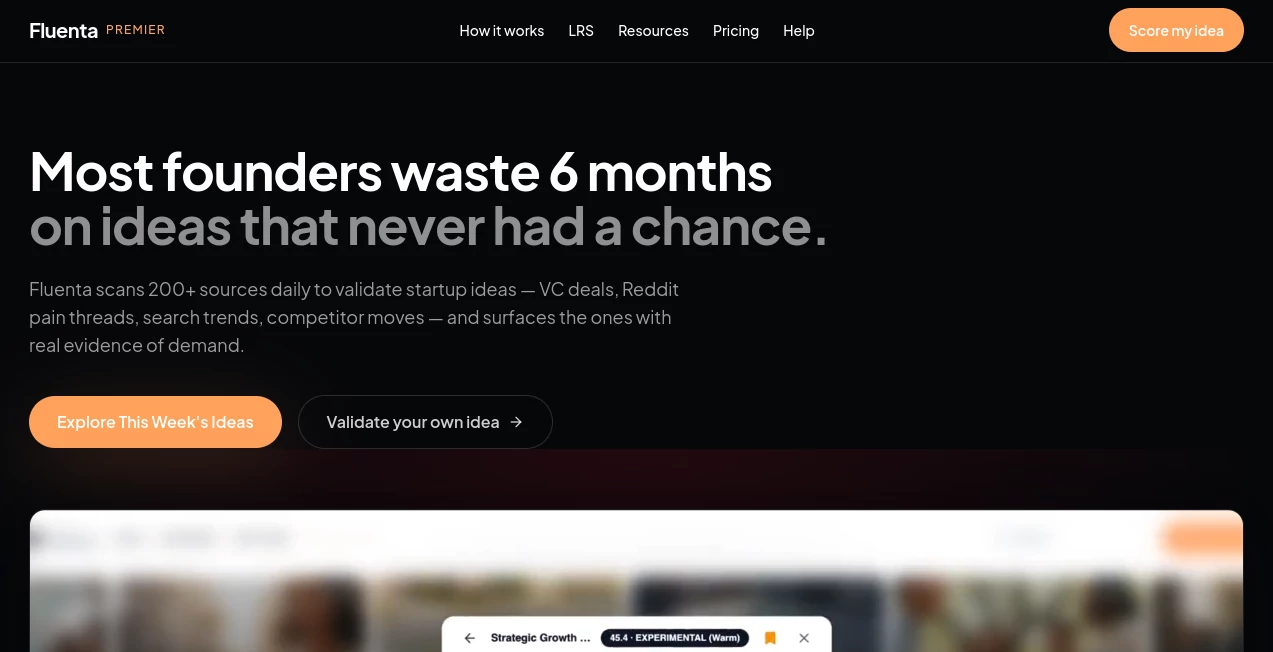
Most founders I know have poured months into ideas that quietly died because nobody actually wanted them. The worst part? They only discovered it after burning time, money, and energy. This platform changes that painful cycle. It scans hundreds of real-world sources every day — Reddit threads, search trends, VC funding moves, competitor activity — and scores business ideas with hard data instead of gut feelings or AI hallucinations. You get a clear picture of demand, pain points, competition, and timing before you write a single line of code. It’s the kind of validation tool I wish existed years ago when I was chasing shiny ideas that went nowhere.
Introduction
Launching anything is risky, but the biggest risk is building something nobody needs. Fluenta was built to fix exactly that problem. Instead of guessing or relying on hopeful surveys, it pulls live signals from across the internet and turns them into a Launch Readiness Score (LRS) out of 100. The result is honest, data-backed feedback that tells you whether an idea has real traction potential or if you should walk away early. Founders are using it to test their own concepts, explore trending opportunities, or simply avoid the classic six-month trap of building in silence. It feels less like another AI toy and more like a smart co-founder who actually reads the market every single day.
Key Features
User Interface
The dashboard is clean and purposeful. You can browse this week’s scored ideas or run your own through the X-Ray tool with a simple prompt. Everything is presented with clear scores, breakdowns, and evidence pulled from real sources. No overwhelming charts or confusing jargon — just straightforward insights with supporting data you can actually verify. I like how it shows both the numbers and the “so what” behind them, helping you make faster, smarter decisions.
Accuracy & Performance
It doesn’t rely on made-up opinions or generic AI guesses. Every score comes from live data across search volume, Reddit pain points, funding activity, and more. The system runs regular backtests against real launches, which builds confidence in the results. In practice, ideas that score high tend to show stronger early traction signals, while low-scoring ones often reveal red flags you might have missed on your own. The speed is impressive too — fresh analysis appears daily without you lifting a finger.
Capabilities
You can browse pre-scored ideas or validate your own concept in depth. It breaks down six key signals: Demand, Pain, Competition, Monetization, Funding Momentum, and Urgency. For your own ideas, the X-Ray feature delivers the same rigorous analysis with actionable founder briefs, moat suggestions, and next-step recommendations. It covers everything from niche tools to bigger marketplace plays, helping you decide whether to build, pivot, or save yourself months of wasted effort.
Security & Privacy
Your ideas and searches stay private. The platform focuses on delivering market intelligence without unnecessary data collection or sharing. For solo founders and small teams working on sensitive concepts, that discretion is reassuring — you can explore freely without worrying about someone else seeing your next big thing before you’re ready.
Use Cases
A solo founder with three different SaaS ideas runs them all through X-Ray and discovers only one has strong demand signals, saving months of scattered development. A small team exploring AI tools uses the weekly scored list to spot underserved niches before jumping in. An experienced entrepreneur validates a marketplace concept and gets concrete advice on distribution and moat-building. Even investors use it to quickly screen deal flow for real traction indicators. It’s especially powerful in the messy early stages when emotions run high and data is scarce.
Pros and Cons
Pros:
- Real data from 200+ sources instead of vague AI opinions.
- Fast, honest feedback that can save months of wasted work.
- Clear scoring system with actionable explanations and next steps.
- Works for both exploring trending ideas and validating your own.
- Regular updates keep the insights current and relevant.
Cons:
- Still early-stage, so the library of scored ideas continues growing.
- Best results come when you combine the data with your own judgment.
Pricing Plans
It keeps the barrier low with affordable access — even a single X-Ray report is priced so you can test ideas without hesitation. Plans scale for heavier users who want unlimited validations or deeper team features. Many founders say one solid report more than pays for itself by preventing a bad build or highlighting a stronger opportunity. The value is clear: better information early means smarter decisions and less painful failures.
How to Use Fluenta
Head to the site and start with the weekly ideas feed to get a feel for how scoring works. For your own concept, go to the X-Ray tool, describe your idea in plain language, and submit. Review the full breakdown — demand signals, pain points, competition landscape, and founder recommendations. Use the insights to decide next steps: build with confidence, refine the idea, or move on. Save promising concepts to your pipeline and come back as the market evolves. It’s simple enough for quick checks but deep enough for serious validation.
Comparison with Similar Tools
Many idea tools rely on surface-level trends or pure speculation. This one stands out by grounding everything in multiple live signals and real evidence instead of vibes. While some platforms generate endless brainstorm lists, Fluenta focuses on validation with numbers you can trust. It’s less about creativity support and more about de-risking the hardest part of starting — knowing whether anyone will actually care.
Conclusion
Building the wrong thing is still one of the most expensive mistakes a founder can make. Fluenta helps you avoid that by giving honest, data-backed clarity before you commit serious time or money. It won’t guarantee success, but it dramatically improves your odds by showing you which ideas have real potential and which ones don’t. For anyone serious about launching, it’s the kind of tool that turns blind hope into informed conviction — and in the startup world, that edge is priceless.
Frequently Asked Questions (FAQ)
How accurate are the scores?
They’re based on real, verifiable signals updated daily, with regular backtesting against actual launches.
Can I validate my own idea?
Yes — the X-Ray tool gives the same depth of analysis as the public ideas feed.
Is it only for tech startups?
It works best for digital and scalable ideas, but the signals apply broadly to many new ventures.
How fresh is the data?
Sources are scanned and analyzed daily, so you’re seeing current market conditions.
Do I need technical skills to use it?
Not at all — just describe your idea in plain English and let the analysis do the work.
AI Research Tool , AI Business Ideas Generator , AI Consulting Assistant , Other .
These classifications represent its core capabilities and areas of application. For related tools, explore the linked categories above.

Fluenta Alternatives Product

Mp3tag

RankPeak

MacroMicro

Creget

Skygen AI

DiRe-RAPIDS

Arobis AI Vi…

Diploria AI

UPDF AI