
Generated Gallery
What is Generated Gallery?
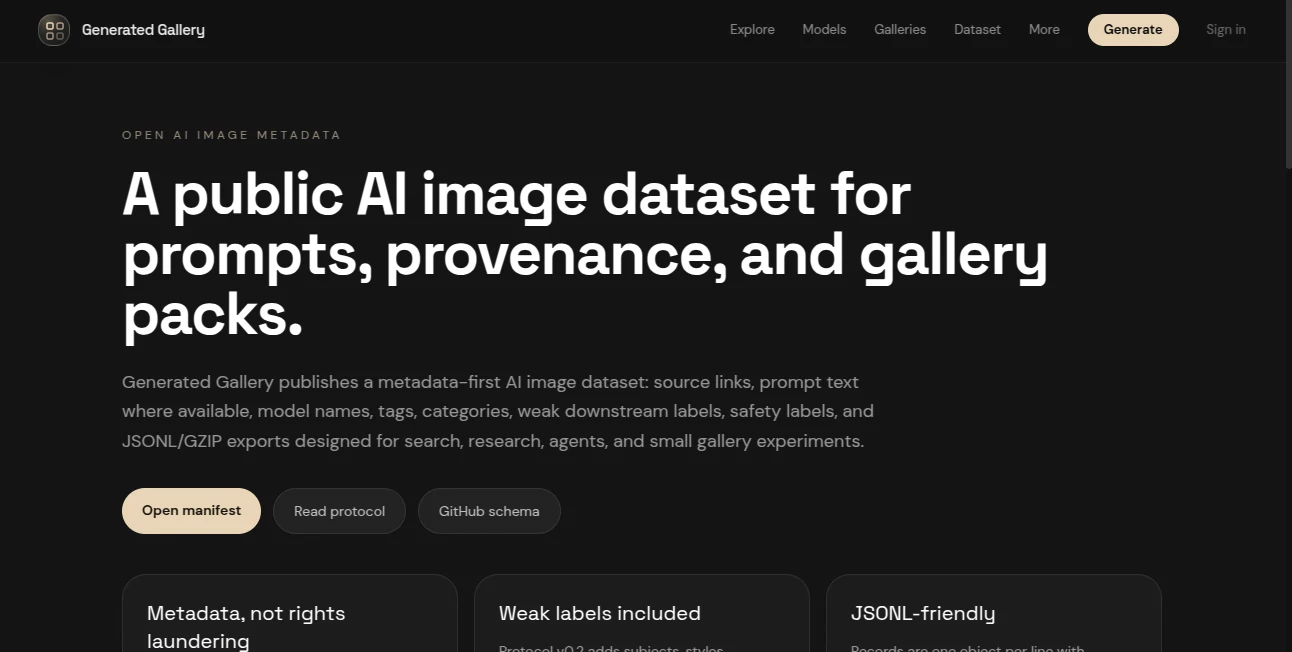
Building with AI images used to mean hunting through scattered galleries, guessing prompts, and hoping the source was legitimate. This platform changes that by offering a clean, well-structured public dataset of AI-generated images complete with prompts, model info, tags, and provenance links. It's the kind of resource that makes researchers, prompt engineers, and curious creators breathe a little easier. I’ve spent hours digging through it myself—pulling samples for experiments or just exploring how different models handle the same idea—and the transparency and organization make it feel like a proper library rather than a chaotic scrapbook.
Introduction
In the rush of new AI image generators, one big problem remains: most outputs float around without context. You see a beautiful picture but have no idea what prompt created it, which model was used, or where it originally came from. Generated Gallery tackles this head-on by publishing an open metadata-first dataset. Every record points back to its source, includes the prompt when available, and adds useful labels for subjects, styles, composition, and more. It’s not just another image dump—it’s a thoughtful index designed for real use: research, prompt study, building search tools, or simply finding inspiration with full context. The best part? It’s all free and openly accessible.
Key Features
User Interface
The dataset page is refreshingly straightforward. You can browse example packs, download the full JSONL feed or compressed versions, and explore a clean manifest with sample records. Everything is clearly labeled—prompt-only exports, full metadata, schema definitions—so you know exactly what you’re getting before downloading gigabytes of data. No confusing portals or broken links; just practical files and documentation that respect your time.
Accuracy & Performance
The metadata is diligent: source links, model names, tags, weak labels for subjects and styles, and avoidance flags for common issues. Because it’s metadata-first and points back to originals, you can verify provenance yourself. The JSONL format makes it streamable and easy to filter or import into your own tools. Updates keep coming as new images are indexed, so the dataset stays alive and relevant rather than becoming stale.
Capabilities
You get full JSONL/GZIP exports, prompt-only versions, a public schema, and labeled fields covering subjects (person, landscape, product), styles (anime, photorealistic, cinematic), mediums, composition types, and use cases. It’s built for downstream applications—training, retrieval demos, prompt analysis, or building your own gallery experiments. The protocol is openly documented so developers can build on top of it confidently.
Security & Privacy
The dataset focuses on metadata and links rather than claiming ownership or laundering rights. It explicitly points back to source pages, making clear it’s for discovery and study, not unrestricted commercial reuse. No user accounts are forced for downloading public feeds, keeping the barrier low while maintaining transparency about what the data represents.
Use Cases
A prompt engineer downloads the dataset to study what makes certain models excel at specific aesthetics. A researcher filters for high-quality landscape images to build a training subset. A developer builds a small search demo using the JSONL feed and schema. An artist explores trending styles and compositions to spark new ideas. Even educators use it to show students real examples of how prompts translate into visuals with full context. It’s flexible enough for serious work and approachable enough for casual exploration.
Pros and Cons
Pros:
- Transparent provenance and source links build real trust in the data.
- Well-structured JSONL format is perfect for developers and researchers.
- Regularly updated with new images and improved labeling.
- Completely free and open—no paywalls for core dataset access.
- Useful weak labels help with filtering and analysis right away.
Cons:
- It’s metadata and links rather than a massive hosted image repository (you still click through for full-res originals in many cases).
- Labels are currently weak/deterministic, though still very useful.
Pricing Plans
The entire dataset and all exports are freely available. There are no paid tiers for accessing the core data. The project focuses on openness and utility rather than monetization, which makes it especially refreshing in the current AI ecosystem.
How to Use Generated Gallery Dataset
Start at the dataset page and explore the manifest or sample records to understand the format. Download the compressed JSONL if you want the full set, or the prompt-only version for lighter use. Load it into your favorite tool (Python, jq, spreadsheet apps all work well), filter by tags or models, and start building. For quick inspiration, browse the example packs or linked galleries. The documentation and schema make integration straightforward even for smaller projects.
Comparison with Similar Tools
Many AI image collections are either closed, poorly documented, or focused purely on pretty pictures without context. This one stands out by prioritizing metadata, provenance, and usability for builders and researchers. It’s less about consuming art and more about understanding and building upon it—which is exactly what the next wave of AI work needs.
Conclusion
In a space flooded with generated images, having a clean, well-labeled, openly available dataset feels like a breath of fresh air. It respects creators by linking back to sources, helps researchers by providing structure, and gives everyday users a better way to study and explore. Whether you’re building something new, studying prompt patterns, or just curious about how AI sees the world, this resource quietly delivers real value without the usual noise or restrictions. It’s the kind of thoughtful project the community needs more of.
Frequently Asked Questions (FAQ)
Is the dataset completely free?
Yes—full exports, samples, and documentation are all public and free to use.
What format is the data in?
Primary format is JSONL (one object per line), with GZIP compressed versions for easier downloading.
Can I use this for commercial projects?
The dataset itself is open for study and building, but always check individual image sources for usage rights—the metadata helps you do exactly that.
How often is the dataset updated?
It receives ongoing additions as new images are indexed across the gallery.
Do I need to know programming to use it?
Not necessarily—casual users can browse example packs and galleries, while developers benefit most from the structured JSONL feeds.
These classifications represent its core capabilities and areas of application. For related tools, explore the linked categories above.
Generated Gallery details
Website unavailable — View Alternatives
Pricing
- Free
Apps
- Web App
Categories

Generated Gallery Alternatives Product

Max Studio AI

Image to Ima…

Noir Prompt

Sourcetable

Vibe Code Pi…

meigen ai

PromptBuilder

PromptZerk

MidJourney