
Pancake
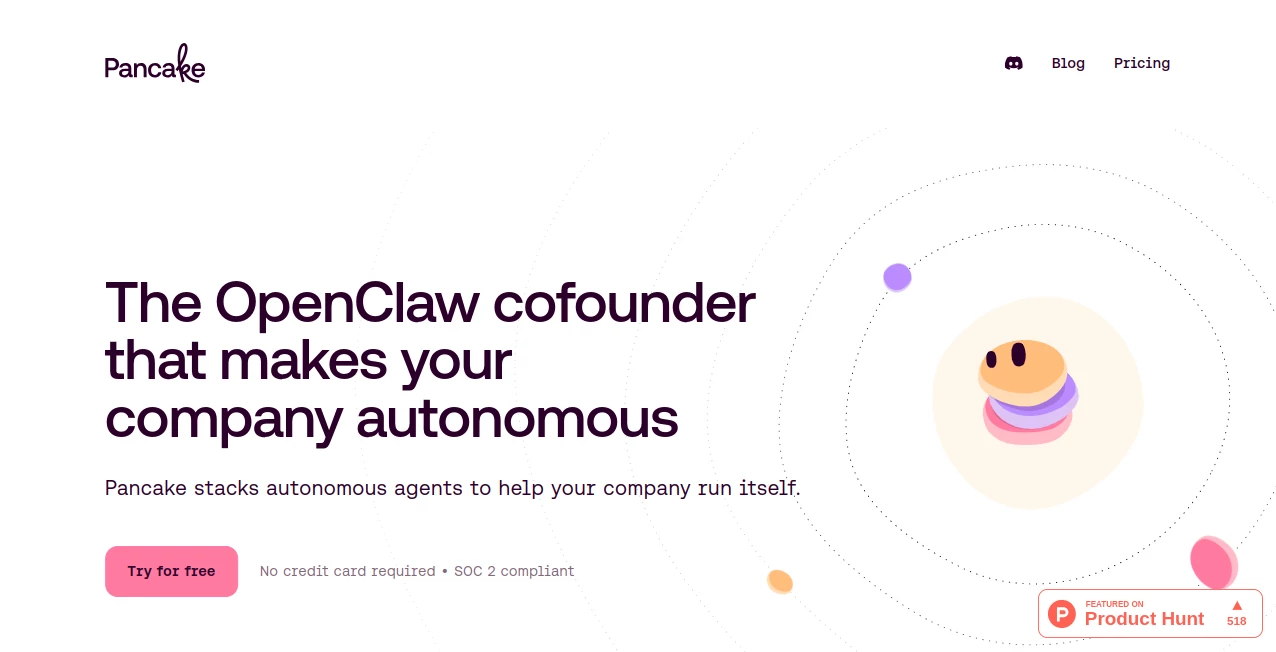
What is Pancake?
Running a company alone is exhausting. You wear every hat, chase every task, and still feel like you’re falling behind. I’ve talked to founders who joke that they need a clone just to keep up. This platform comes close. It builds an entire team of autonomous AI agents that handle growth, engineering, operations, and more — all while living in your Slack, connected to the tools you already use. One founder told me his “AI cofounder” booked demos, shipped code, and even sent invoices while he was on vacation. It’s not science fiction anymore — it’s here, and it works.
Introduction
Most AI tools help with one thing at a time. This one builds a whole virtual organization that works alongside you. You define roles in simple markdown files, connect your existing tools, set boundaries, and let the agents run. They don’t just answer questions — they take initiative, send updates every morning, ask for approval when needed, and keep things moving 24/7. It’s designed for founders and small teams who want to scale without immediately hiring a full staff. The best part? You stay in full control with clear audit logs, approval workflows, and the ability to jump in anytime.
Key Features
User Interface
Everything happens where you already live — mostly in Slack. Agents post morning briefings, flag issues, and ask for quick approvals directly in channels. The web dashboard is clean and simple for setting up agents, reviewing logs, and adjusting permissions. No steep learning curve. You define each agent’s role in plain markdown files, which makes customization feel natural instead of technical. It’s built so you spend time on strategy, not babysitting software.
Accuracy & Performance
The agents are surprisingly reliable. They read your docs, Notion pages, and meeting notes to understand context, then act accordingly. Morning briefings show real metrics like MRR changes, outbound progress, or production deployments. When something needs human input, they flag it clearly instead of guessing. Founders report they handle repetitive work accurately while escalating the important decisions, giving that rare feeling of having trustworthy help.
Capabilities
It stacks specialized agents for Growth (copywriting, ads, social), Engineering (full-stack, DevOps, QA), and Operations (invoicing, support, recruiting, compliance). They integrate deeply with your existing stack — reading and writing where needed. Agents can draft content, send emails, open PRs, book meetings, and more. Everything is auditable, with clear approval thresholds and the ability to replay or roll back actions. It feels like a real team that never sleeps.
Security & Privacy
Strong focus on control and compliance. SOC 2 compliant, encrypted secrets, sandboxed agents with limited permissions, and immutable logs of every action. You decide what each agent can access and set spend/scope limits. Sensitive data stays protected, and you always have the final say. It’s built for real businesses that can’t afford loose security.
Use Cases
A solo founder uses it to run outbound outreach and content while focusing on product. A small SaaS team lets agents handle support tickets and invoicing, freeing engineers for core work. A growing startup deploys it as their first “marketing team,” generating posts and running ads with human approval. Even established companies test it for 24/7 monitoring and routine operations. The common win is consistent execution without constant oversight.
Pros and Cons
Pros:
- Feels like a real cofounder/team that works while you sleep.
- Deep integration with tools you already use — no new platforms to learn.
- Clear audit trails and approval flows keep you in control.
- Markdown-based configuration makes customization accessible.
- Strong security and compliance for real business use.
Cons:
- Still needs human direction for strategy and big decisions.
- Setup time to properly configure agents and connections.
- Best results come after feeding it good context about your business.
Pricing Plans
It starts with a free trial including meaningful credits so you can experience the difference. Paid plans are straightforward, centered around always-on compute and agent capacity. Many founders say the cost is easily justified by the hours saved and progress made — essentially paying for a capable teammate that never asks for vacation.
How to Use Pancake
Sign up and connect your key tools (Slack, Notion, GitHub, etc.). Define agents by creating simple markdown role files. Set approval thresholds and permissions. Watch your first morning briefing appear. Review what the agents did overnight, approve or adjust as needed, and gradually expand their responsibilities. The more context you give them, the better they perform. It’s an ongoing relationship — you guide, they execute.
Comparison with Similar Tools
Many AI assistants wait for commands. This one builds a proactive organization that takes initiative within boundaries. Where other tools focus on single tasks, it coordinates multiple specialized agents across departments. The combination of Slack-native workflow, strong integrations, and real autonomy makes it feel more like a team than a chatbot.
Conclusion
Building and running a company shouldn’t mean doing everything yourself. This platform gives founders and small teams a genuine force multiplier — autonomous agents that handle the day-to-day while you focus on vision and growth. It’s not magic, but it gets remarkably close. If you’re tired of being the bottleneck, this could be the cofounder you’ve been wishing for.
Frequently Asked Questions (FAQ)
How autonomous are the agents really?
They take initiative within the rules you set, but you always have final approval on important actions.
Do I need technical skills to set it up?
No — roles are defined in simple markdown files, and the team helps with onboarding.
Is my data secure?
Yes — SOC 2 compliant with encrypted secrets and strict permission controls.
Can it work with my existing tools?
Absolutely — deep integrations with Slack, Notion, GitHub, email, and more.
What if an agent makes a mistake?
Everything is logged and auditable. You can review, replay, and roll back actions easily.
AI Team Collaboration , AI Productivity Tools , AI Business Ideas Generator , AI Workflow Management .
These classifications represent its core capabilities and areas of application. For related tools, explore the linked categories above.

Pancake Alternatives Product

Hands Off

AI Wire

Fina Money

Block Poster…

LorePanic

Debate Tello…

ChatFlowchart

Treeova

Lime Social