
GPT Image 2 Status
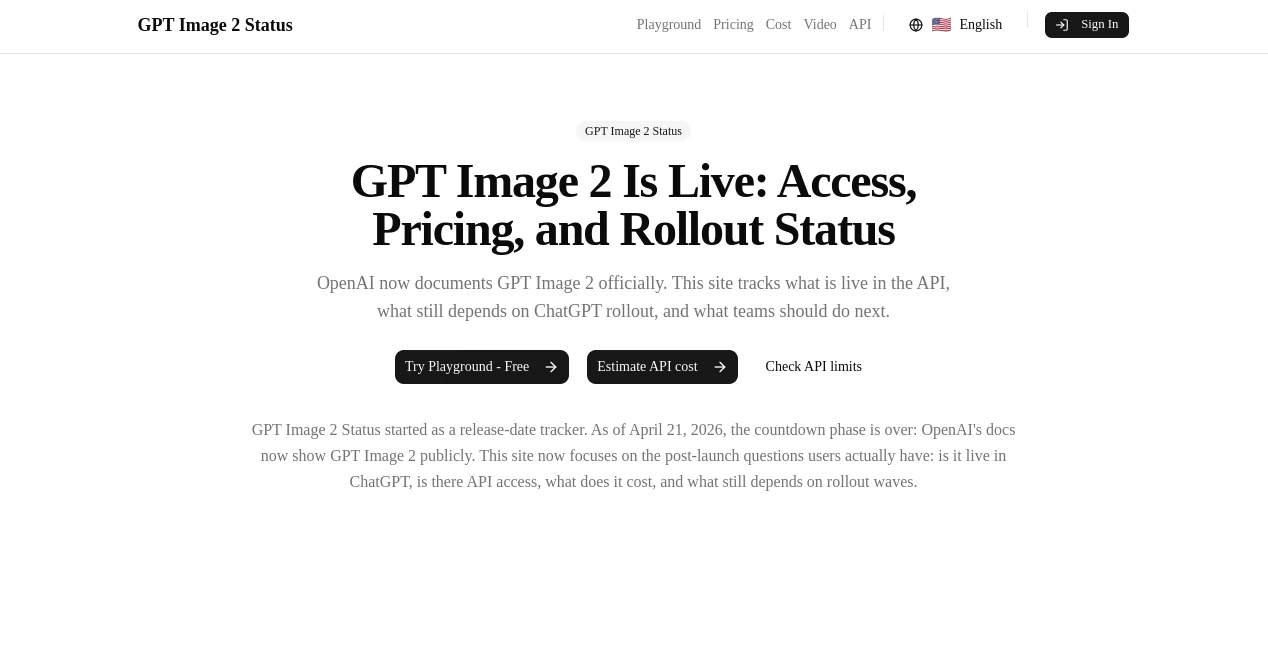
What is GPT Image 2 Status?
There’s nothing more frustrating than hearing about a major new model release and then spending hours trying to figure out if you can actually use it today. This site solves that exact headache for GPT Image 2. It tells you in plain English whether the model is live in ChatGPT, available through the API, what it costs, and what rollout wave you might still be waiting on. No hype countdowns, no outdated rumors—just clear, updated answers that save developers and power users a lot of wasted time. I’ve bookmarked it myself because every time OpenAI drops something big, this is the first place I check.
Introduction
When OpenAI releases a powerful new image model like GPT Image 2, the real questions aren’t about hype—they’re practical: Is it in ChatGPT Plus yet? When does the API open? How much does it actually cost? This platform was built specifically to answer those questions clearly and stay current. What started as a simple countdown tracker evolved into a focused status hub the moment the model went public. It cuts through the noise of social media threads and conflicting forum posts, giving you one reliable place to check rollout status, pricing details, and practical next steps. For teams and solo creators trying to stay on top of fast-moving AI releases, that clarity is genuinely valuable.
Key Features
User Interface
The design is refreshingly straightforward—no flashy animations or unnecessary clutter. You land on a clean dashboard that immediately shows the current status in plain language. Sections for ChatGPT access, API availability, pricing breakdowns, and rollout timelines are clearly labeled and easy to scan. It feels like a tool built by someone who actually uses these models daily and got tired of hunting for answers.
Accuracy & Performance
Updates happen quickly when OpenAI changes anything official. The site pulls from real documentation and verified sources rather than speculation, so you can trust what you read. Pages load fast, information is well-organized, and every major update includes clear dates so you know exactly when something changed. In a space full of rumors and outdated posts, that reliability stands out.
Capabilities
It covers everything practical: current availability in ChatGPT plans, API access timeline, detailed pricing context, comparison tables, rollout maps, and practical guides for developers. You’ll find benchmark-style examples generated by the model itself, clear explanations of what’s live versus what’s still rolling out, and direct links to official docs. It even includes useful side resources like cost calculators and prompt testing ideas.
Security & Privacy
No accounts are forced for basic reading. The site doesn’t collect unnecessary personal data or push logins unless you want optional email updates for meaningful changes. It’s a clean, low-friction resource that respects your time and privacy while delivering the information you actually need.
Use Cases
A product team checks the site the morning after a rumored release to decide whether to start testing GPT Image 2 in their workflow. An indie developer uses the pricing breakdown to forecast monthly costs before integrating the API. A content creator verifies ChatGPT availability before promising clients new image capabilities. Marketing leads use the rollout timeline to plan campaign assets around confirmed access dates. Whenever the AI image space moves fast, this becomes the quiet reference point many professionals rely on.
Pros and Cons
Pros:
- Clear, no-nonsense answers instead of hype or speculation.
- Stays updated with official sources and real rollout timing.
- Helpful practical sections like cost estimates and prompt examples.
- Fast-loading and easy to navigate even on mobile.
- Optional, low-volume email updates only when something important changes.
Cons:
- Still focused mainly on GPT Image 2 (though that’s exactly what many people need right now).
- Some advanced developer features are still growing as the model matures.
Pricing Plans
The core status information and basic guides are completely free. Optional email updates for significant changes are also free. The site doesn’t push paid tiers aggressively because its main value is clear, timely information rather than locked features. It’s one of those rare resources that delivers real utility without trying to turn every visitor into a paying customer.
How to Use GPT Image 2 Tracker
Visit the homepage to see the current official status at a glance. Click into ChatGPT access or API sections for detailed explanations. Use the pricing context page to estimate real costs. Subscribe to the low-volume email if you want notifications only when rollout or pricing changes meaningfully. Bookmark it—when OpenAI moves fast, you’ll thank yourself for having one reliable place to check.
Comparison with Similar Tools
Most launch trackers become outdated the day after release or drown you in speculation. This one pivoted cleanly to post-launch status tracking and focuses on practical questions most people actually ask. It’s less noisy than social media threads and more current than static blog posts. For anyone tired of hunting scattered information across forums and Twitter, it’s a much cleaner solution.
Conclusion
In the fast-moving world of AI image models, good information is just as valuable as the models themselves. This platform delivers exactly that—clear, trustworthy answers about GPT Image 2 access, pricing, and rollout without the usual hype or confusion. Whether you’re a developer planning integration, a creator timing content, or just someone curious about new capabilities, it saves time and reduces frustration. Sometimes the most useful tools are the ones that quietly help you understand what’s actually possible right now.
Frequently Asked Questions (FAQ)
Is GPT Image 2 available in ChatGPT right now?
The site shows the exact current status and any rollout differences between plans.
When did the API become available?
Check the dated status section—it’s updated as soon as official information changes.
Is there a cost calculator?
Yes, practical pricing context and estimation tools are available.
Do I need to create an account to read the status?
No—everything important is publicly available without login.
How often does the information update?
Whenever there’s a meaningful change in official availability or pricing.
Image .
These classifications represent its core capabilities and areas of application. For related tools, explore the linked categories above.
GPT Image 2 Status details
Website unavailable — View Alternatives
Pricing
- Free
Apps
- Web App
Categories