


















HydraDB
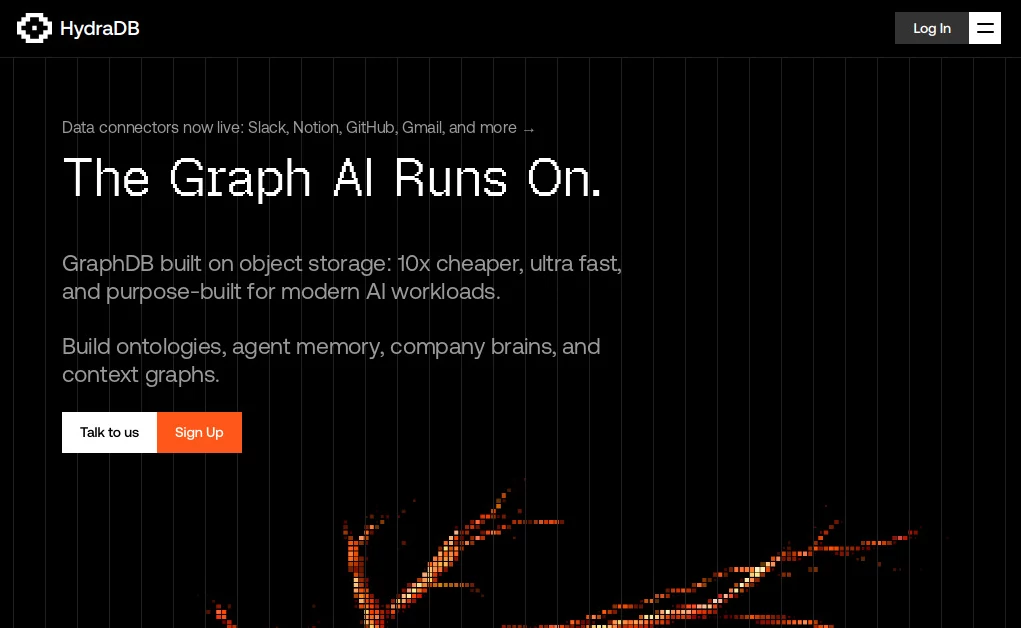
What is HydraDB?
Building reliable AI agents requires more than storing documents. Modern applications need long-term memory, structured knowledge, and fast retrieval. This platform introduces a graph-first approach that connects data, relationships, and context into a single retrieval layer. Instead of returning content that is merely similar, it focuses on delivering information that is actually relevant, making AI assistants more consistent and useful in real-world production environments.
Key Features
User Interface
The dashboard is clean and developer-focused, allowing teams to create workspaces, manage data, monitor retrieval activity, and integrate applications without unnecessary complexity. Documentation is well organized, making onboarding surprisingly quick.
Accuracy & Performance
Designed for demanding AI workloads, the platform combines graph retrieval, semantic search, and temporal awareness. This approach improves recall quality while keeping response times low, making it suitable for applications where context changes frequently.
Capabilities
- Graph-based knowledge storage
- Persistent AI agent memory
- Hybrid retrieval with semantic and relational search
- Support for company knowledge bases
- Multi-tenant architecture
- Developer SDKs and API integration
- Context-aware reasoning for AI applications
Security & Privacy
Enterprise-ready security features include workspace isolation, compliance support, and deployment options for organizations with strict privacy requirements. The architecture is built to keep business data separated while maintaining high performance.
Use Cases
- AI customer support agents
- Enterprise knowledge management
- Research assistants
- Coding assistants with persistent memory
- Context-aware business automation
- Long-term conversational AI
Pros and Cons
Pros
- Excellent context retrieval accuracy
- Fast performance for production systems
- Combines graph and semantic search
- Developer-friendly APIs and SDKs
- Scales well for growing datasets
Cons
- Primarily designed for technical users
- Advanced features may require some learning
- Enterprise capabilities can exceed the needs of small personal projects
Pricing Plans
A free plan is available for getting started. Paid plans begin with affordable monthly pricing for production workloads, while larger organizations can choose enterprise options with dedicated infrastructure and self-hosting.
How to Use HydraDB
Create a workspace, connect your data sources, ingest documents and user interactions, then integrate the API with your AI application. Once the knowledge graph is built, your agents can retrieve structured context and maintain memory across conversations.
Comparison with Similar Tools
Unlike traditional vector databases that mainly rely on similarity search, this solution combines graph relationships, temporal memory, metadata, and semantic retrieval in one platform. The result is more meaningful context for AI agents, especially in applications that require long-term memory and evolving knowledge.
Conclusion
For developers building next-generation AI applications, this platform offers a practical way to manage context beyond conventional retrieval systems. Its combination of graph technology, persistent memory, and high-speed retrieval makes it an impressive foundation for intelligent assistants, enterprise knowledge systems, and autonomous AI workflows.
Frequently Asked Questions (FAQ)
What is this platform mainly used for?
It provides a graph-based context layer that helps AI agents remember, retrieve, and reason over structured information.
Is it suitable for enterprise applications?
Yes. It includes multi-tenant architecture, security features, and deployment options for production environments.
Can it replace a traditional vector database?
For many AI workloads, it can simplify infrastructure by combining graph storage, memory, and retrieval into a unified system.
Is there a free plan?
Yes. Developers can start with a free plan before upgrading as storage and usage increase.
AI Research Tool , AI API Design , Large Language Models (LLMs) , AI Developer Tools .
These classifications represent its core capabilities and areas of application. For related tools, explore the linked categories above.

HydraDB Alternatives Product

Manus

Sellerview.ai

AIQualityHQ

Simple Dev T…

AI Agent Ski…
Kimi K2.5

PromptZerk

Metal
Kimi K2.5
