


















Nommer
What is Nommer?
Cooking for two sounds simple until both people are standing in the same kitchen trying to figure out who should chop the onions, watch the pan, prepare the sauce, or start the next step. Nommer takes a different approach by turning ordinary recipes into a two-player cooking experience, giving each person their own set of tasks while keeping both cooks synchronized.
The idea is particularly appealing for couples, friends, roommates, and parents cooking with children. Instead of one person becoming the main cook while the other waits for instructions, both people get meaningful work to do. A recipe can be added through a link, a photo of a cookbook page, or plain text, and the service converts it into a structured plan for two cooks.
For example, one person might handle the pasta and beef while the other prepares herbs, sauce, and toppings. When a handoff is needed, the other cook is notified at the right moment. The result is less kitchen coordination and more actual cooking together.
Key Features
- Two-player recipe splitting: Recipes are divided into two synchronized roles so both cooks can work at the same time.
- Recipe import: Users can add recipes using a web link, a photo of a cookbook page, or plain text.
- Live synchronization: Completing a step on one phone updates the cooking session for the other person.
- Shared shopping list: Ingredients can be managed through a common checklist before cooking begins.
- Handoff cues: The experience can indicate when one cook needs to pass an ingredient or action to the other.
- Shared timing: Cooking steps are arranged so different parts of the meal can progress together and reach the finishing stage at approximately the right time.
- Two-device experience: Each cook can follow their own tasks from their own phone while remaining connected to the same session.
User Interface
The interface is centered around checklists and clear cooking stages rather than complicated menus. A recipe can be viewed as separate tracks for the two cooks, making it easier to understand exactly what needs to happen next.
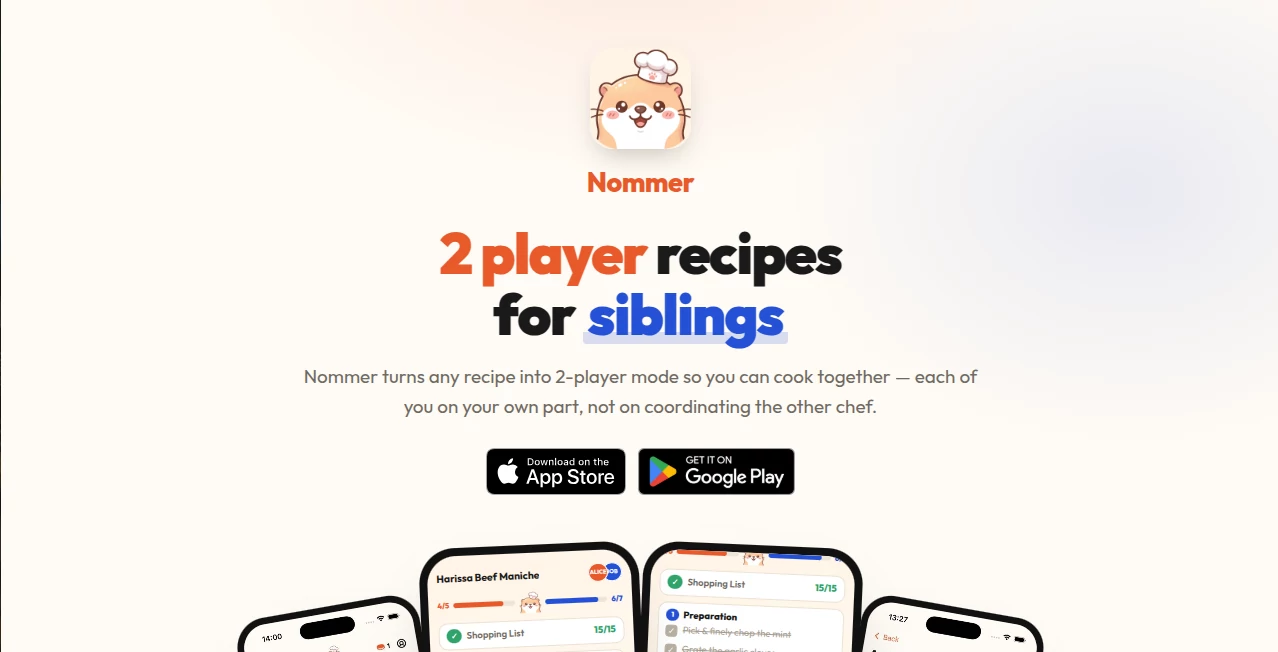
The visual examples on the website show practical details such as preparation stages, ingredient checklists, progress indicators, and messages explaining when the other cook is working on a particular task. That approach makes sense in a kitchen, where nobody wants to stop cooking just to decode a complicated interface.
Accuracy & Performance
The service is designed to interpret an existing recipe and reorganize its instructions into a two-person workflow. This is useful because the original recipe does not need to have been written specifically for collaborative cooking.
Its real strength is not simply reproducing instructions. The useful part is deciding which jobs can happen in parallel and where one cook needs to wait for another. Timing cues and live progress updates help reduce the back-and-forth that normally happens when two people share a kitchen.
As with any automated recipe interpretation system, users should still use normal cooking judgment, especially when working with raw meat, high heat, allergies, cooking temperatures, or instructions that appear unclear.
Capabilities
The platform focuses on one specific problem and handles it in several practical ways. A recipe can be transformed into two separate cooking tracks, with each person seeing the work assigned to them.
The experience also supports shared preparation before cooking. Users can work from a common shopping list, invite another person into the cooking session, and then follow synchronized checklists during the meal. Handoff instructions are another useful touch because they turn moments such as passing prepared ingredients from an improvised conversation into part of the cooking flow.
This makes the tool more than a digital recipe reader. It acts as a lightweight coordination layer between two people who are preparing the same meal.
Security & Privacy
The public website does not provide enough detailed technical information to make broad claims about data storage, encryption, or the internal handling of imported recipes. Users who are particularly concerned about privacy should review the service's privacy documentation before uploading personal recipe notes or other information they consider sensitive.
For ordinary cooking use, the more important consideration is that users understand what information they are importing and sharing with a cooking partner. As with any connected application, checking the current privacy policy is recommended before using personal data or private content.
Use Cases
Couples: A weeknight dinner can become a shared activity instead of one person cooking while the other waits. The recipe can be divided into two genuine roles, making both people part of the process.
Friends and roommates: Preparing dinner together becomes easier when nobody has to constantly ask what should happen next. One person can manage the stove while the other handles preparation, sides, or ingredients.
Parents and children: The two-track approach can give a child their own manageable tasks while the parent handles activities involving knives, hot pans, or other equipment that require supervision.
Date nights: Cooking can become the activity rather than simply something that has to happen before dinner. Fresh pasta, pizza, gyoza, steak dinners, and other hands-on meals can naturally be divided between two people.
Learning new recipes: Someone trying an unfamiliar dish can follow their own assigned steps without constantly reading ahead or interrupting their cooking partner.
Pros and Cons
Pros
- Designed specifically around two people cooking together.
- Turns ordinary recipes into collaborative cooking sessions.
- Supports recipe links, photos, and plain text.
- Provides synchronized progress across two phones.
- Includes a shared shopping list.
- Useful for couples, families, friends, and roommates.
- Simple concept that addresses a very specific kitchen problem.
- Available for both iPhone and Android users.
Cons
- The experience is primarily designed for two cooks rather than larger groups.
- Users should still verify recipe instructions and apply normal food-safety judgment.
- The public website does not provide extensive technical information about the underlying recipe-processing system.
- Advanced users looking for a traditional recipe-management platform may find the two-person focus narrower than broader cooking applications.
Pricing Plans
The application is free to download and use, with an optional Pro upgrade available. The website does not prominently publish a detailed breakdown of the Pro pricing structure, so users should check the current in-app offering for the latest subscription or upgrade details.
The free entry point is useful for people who simply want to test the two-person cooking concept before deciding whether they need additional features.
How to Use It
Start by choosing a recipe you want to cook together. You can provide a recipe link, photograph a cookbook page, or enter the recipe as text.
The system then turns the recipe into a two-cook plan, separating the work into two synchronized tracks. Each person can join the same cooking session through a shared link and follow their own checklist from their phone.
During cooking, complete your assigned steps as you go. Progress is synchronized so the other cook can see what has been completed. When a handoff is required, the cooking flow provides a cue so both people know when to coordinate.
For the best experience, choose a recipe with several parallel tasks. Meals such as fresh pasta, gyoza, pizza, stir-fries, or a multi-component dinner are particularly well suited to the format because there is enough preparation for both people to stay involved.
Comparison with Similar Tools
Traditional recipe websites are excellent for finding recipes, but they are generally written around one person following a single sequence of instructions. That can leave a second cook without a clear role.
Digital shopping-list applications solve another part of the process by helping people organize ingredients, but they usually stop before the actual cooking workflow begins. Recipe-management applications can offer detailed instructions and collections, yet collaborative two-person execution is not always their central focus.
The distinctive idea here is the combination of recipe interpretation, task division, shared progress, timing, and handoffs. Instead of simply asking two people to follow the same recipe, the experience gives each person a different part of the meal to own.
Conclusion
Nommer takes a refreshingly focused approach to cooking technology. Rather than trying to become another massive recipe database, it concentrates on a simple question: how can two people actually cook together without constantly coordinating every little step?
The answer is a two-player workflow with individual task lists, synchronized progress, shared shopping, timing, and handoff cues. For couples looking for a more engaging dinner routine, friends sharing a kitchen, or parents who want children to participate more actively, the concept has plenty of practical appeal.
Its strongest quality is its focus. If your biggest cooking problem is not finding recipes but figuring out how two people can prepare one meal at the same time, this is an interesting tool worth trying.
Frequently Asked Questions (FAQ)
Can two people cook the same recipe together?
Yes. A recipe can be converted into two synchronized cooking roles, allowing each person to follow their own tasks while remaining connected to the same session.
Can I use my own recipes?
Yes. You can provide a recipe through a link, a photograph of a cookbook page, or plain text, allowing the system to turn it into a two-person cooking plan.
Does each cook need a phone?
The service is designed around two phones, with each cook following their own synchronized checklist. This helps both people see their responsibilities without sharing a single screen.
Is it useful for couples?
Couples are one of the main audiences. Instead of one person preparing dinner while the other waits, both people can take meaningful roles and finish the meal together.
Can families use it?
Yes. The two-role format can also work for parents and children, with the adult choosing appropriate tasks and keeping safety-sensitive activities under supervision.
Is it available on mobile?
Yes. The service is available for both iPhone and Android devices.
Is it free?
It is free to download and use, with an optional Pro upgrade.
AI Recipe Assistant , AI Life Assistant , AI Cooking Assistant .
These classifications represent its core capabilities and areas of application. For related tools, explore the linked categories above.
Nommer details
Website unavailable — View Alternatives
Pricing
- Freemium
Apps
- Web App
- iOS App
- Android App
Categories

Nommer Alternatives Product

Smart Chicke…

AI Dream Ana…

Schengen Cal…

Olabiba

Rizzwords

Une Amie à P…

Traveleon

Ask Bishop

Craft Food R…
