
















Ovulation Calendar
What is Ovulation Calendar?
Understanding your menstrual cycle can make family planning much easier. Whether you are actively trying to conceive or simply want to learn more about your reproductive health, having access to reliable cycle predictions can provide valuable guidance. This ovulation calculator is designed to estimate your ovulation date, fertile window, upcoming period, and the days when conception is most likely.
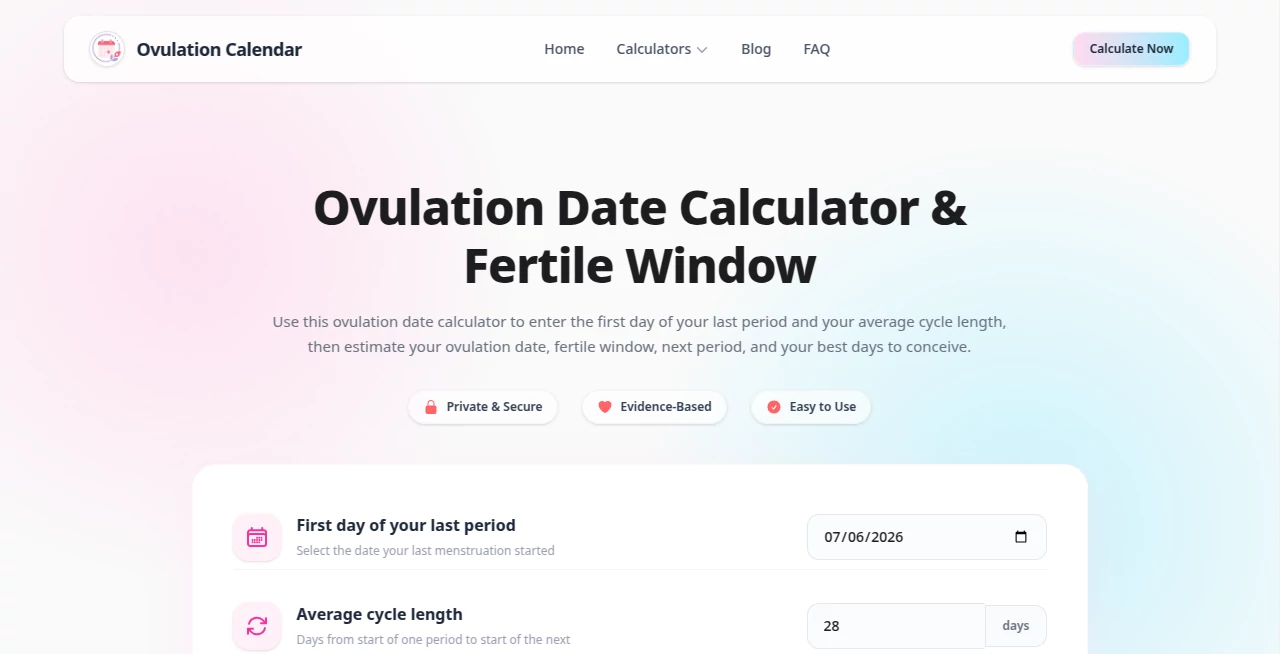
Built with an evidence-based approach, the calculator only requires two simple details: the first day of your last menstrual period and your average cycle length. Within seconds, it generates clear predictions that help users better understand the natural rhythm of their cycle without unnecessary complexity.
Another standout benefit is its commitment to privacy. Personal information remains secure, allowing users to calculate important fertility dates without worrying about sensitive health data. The clean interface, fast calculations, and easy-to-understand results make it an excellent companion for anyone tracking fertility or menstrual health.
Key Features
User Interface
The calculator offers a minimal and intuitive experience. Users simply enter the first day of their last period and the average length of their menstrual cycle. The results are displayed in an organized format that is easy to understand, even for first-time users.
- Simple two-step input process.
- Instant fertility predictions.
- Mobile-friendly design.
- No complicated medical terminology.
- Clear presentation of important fertility dates.
Accuracy & Performance
The predictions are generated using evidence-based fertility calculations that follow commonly accepted medical guidelines regarding ovulation timing and menstrual cycle patterns. While every woman's cycle is unique, the estimates provide a practical starting point for planning conception or monitoring reproductive health.
The calculator provides estimated dates for:
- Ovulation day.
- Most fertile days.
- Complete fertile window.
- Expected next menstrual period.
- Best days to maximize conception chances.
Users with regular menstrual cycles will generally receive more accurate predictions. Those with irregular cycles should use the results as general guidance and consult healthcare professionals when needed.
Capabilities
- Estimate ovulation date.
- Identify fertile window.
- Predict next menstrual period.
- Highlight peak fertility days.
- Support natural family planning.
- Assist pregnancy planning.
- Provide quick cycle calculations.
- Require only minimal information.
Security & Privacy
Privacy is an important part of any health-related tool. The calculator emphasizes secure usage and allows users to perform fertility calculations without unnecessary personal data collection. This approach makes it suitable for individuals who value confidentiality while tracking reproductive health.
- Private and secure experience.
- No unnecessary personal information required.
- Health-focused design.
- Simple and confidential fertility tracking.
Use Cases
- Planning pregnancy naturally.
- Tracking monthly fertility cycles.
- Understanding menstrual cycle timing.
- Estimating the next menstrual period.
- Learning about ovulation patterns.
- Supporting conversations with healthcare providers.
- Educational use for reproductive health awareness.
Pros and Cons
Pros
- Easy to use for beginners.
- Evidence-based fertility calculations.
- Fast results within seconds.
- Private and secure experience.
- Works on desktop and mobile devices.
- No complicated setup process.
- Useful for pregnancy planning.
Cons
- Provides estimates rather than medical diagnoses.
- Accuracy depends on regular menstrual cycles.
- Cannot replace professional medical advice.
- Does not account for certain medical conditions affecting ovulation.
Pricing Plans
The calculator is available as a free online resource. Users can estimate their ovulation date, fertile window, and upcoming period without purchasing a subscription or creating a complicated account, making it accessible to anyone interested in fertility tracking.
How to Use the Calculator
Using the calculator is straightforward and only takes a minute.
- Enter the first day of your last menstrual period.
- Select or enter your average menstrual cycle length.
- Submit the information.
- Review the estimated ovulation date.
- Check your fertile window.
- View your predicted next period.
- Use the highlighted conception days for pregnancy planning.
Comparison with Similar Tools
Many fertility calculators provide basic ovulation predictions, but some overwhelm users with complicated charts or excessive medical information. This calculator focuses on clarity and simplicity while still delivering evidence-based estimates. The emphasis on privacy, quick calculations, and an intuitive interface makes it especially suitable for users who want reliable information without unnecessary complexity.
Unlike many general health calculators, it concentrates specifically on fertility timing, helping users quickly identify the most important dates for conception planning while maintaining a secure and user-friendly experience.
Conclusion
For anyone looking to better understand their menstrual cycle or improve pregnancy planning, this ovulation calculator offers a practical and dependable solution. Its evidence-based calculations, clean interface, and strong focus on privacy create an experience that is both informative and reassuring.
Whether you are beginning your fertility journey or simply tracking your monthly cycle, the calculator provides clear estimates that are easy to interpret. While no online calculator can replace personalized medical advice, it serves as an excellent everyday companion for understanding fertility patterns and making informed reproductive health decisions.
Frequently Asked Questions (FAQ)
How is the ovulation date estimated?
The estimate is calculated using the first day of your last menstrual period together with your average cycle length following established fertility calculation methods.
Can I rely on the fertile window prediction?
The prediction provides a helpful estimate based on average menstrual cycle patterns. Actual ovulation may vary between individuals and even from month to month.
Is the calculator suitable for irregular cycles?
It can still provide general guidance, although predictions are usually more accurate for individuals with regular menstrual cycles.
Do I need to create an account?
No. The calculator is designed to be quick, accessible, and easy to use without unnecessary registration.
Can this replace medical advice?
No. The calculator is intended for educational and planning purposes. Medical concerns regarding fertility or reproductive health should always be discussed with a qualified healthcare professional.