
Paravo
What is Paravo?
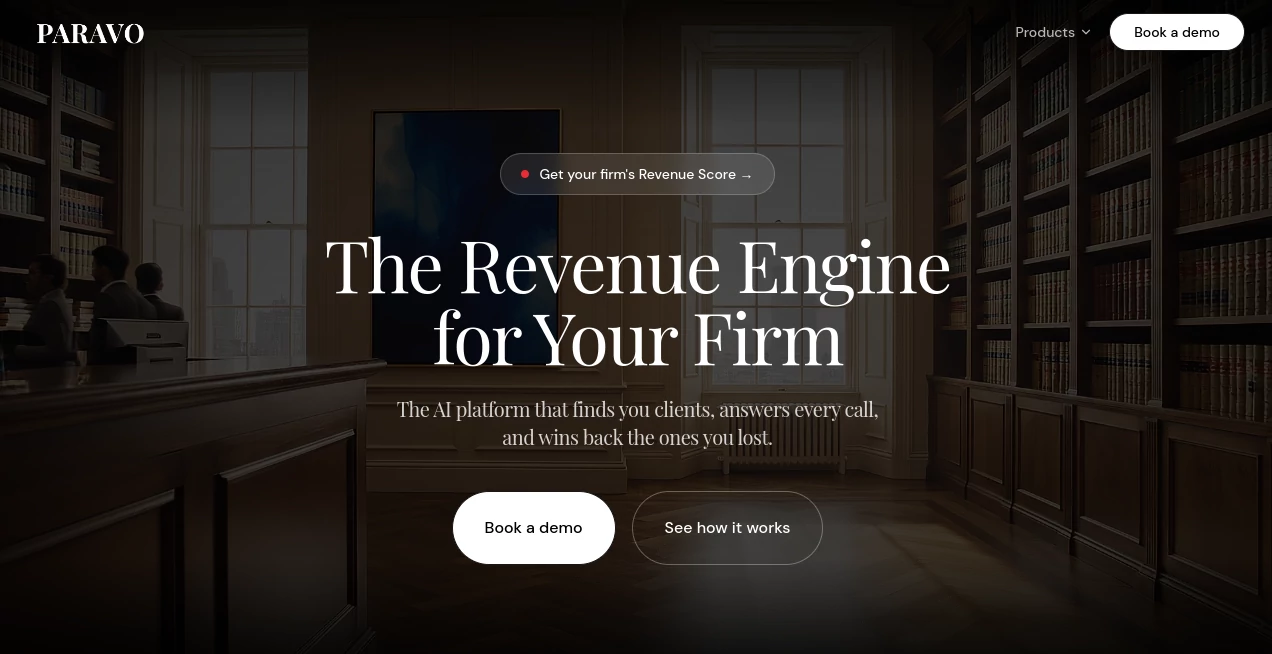
Paravo is a revenue-focused AI platform built for modern law firms that want to turn more inquiries into paying clients while spending less time on repetitive intake and follow-up work. Instead of treating lead generation, client intake, and reactivation as separate tasks, the platform brings them together into one connected revenue engine.
The idea is straightforward: reach the right prospects, respond quickly when they show interest, and stay connected with previous relationships when a new opportunity appears. For firms where a missed call or delayed response can mean a lost consultation, that approach can make a meaningful difference.
The platform is designed particularly around consumer-facing and flat-fee legal practices, where managing prospective clients can take a surprising amount of time. By automating parts of that process, legal teams can spend more attention on the work that actually requires their expertise.
Key Features
- Lead generation designed to help firms reach qualified prospects before competitors do.
- AI-powered intake for capturing and handling inbound inquiries.
- Speed-to-lead workflows that help firms respond quickly to new prospects.
- Automated campaigns for ongoing outreach and relationship reactivation.
- Insights that help firms understand what is working across their revenue activities.
- Support for connecting lead and client workflows with existing business software.
User Interface
The product is organized around a simple revenue workflow rather than a collection of disconnected AI features. Its core areas focus on leads, intake, speed-to-lead, campaigns, and insights, making the overall purpose easy to understand even for teams that do not want to become experts in another complicated software system.
For a busy legal practice, that practical structure is important. A partner or intake manager should be able to understand where a new inquiry sits, what happens next, and how follow-up is being handled without digging through multiple unrelated tools.
Accuracy & Performance
Performance in lead management is not only about generating a large number of contacts. The real test is what happens after someone expresses interest. The platform puts particular emphasis on response speed and consistent intake, helping firms avoid situations where promising inquiries sit unanswered.
The company has reported an example in which an early customer tripled consultations over a 90-day period without adding new marketing spend or hiring additional staff. Results naturally vary from firm to firm, but the example illustrates the type of operational improvement the platform is designed to pursue.
Capabilities
The system combines three important parts of the client acquisition process. First, it helps firms generate or reach qualified leads. Second, it focuses on converting inbound interest through rapid response and structured intake. Third, it supports campaigns intended to reactivate existing relationships and identify future opportunities.
This connected approach is particularly useful when a firm already receives leads from multiple sources. Instead of viewing every inquiry as an isolated event, the platform is designed to turn those interactions into part of a longer revenue process.
Integrations are another practical advantage. The platform can connect with practice-management and other software through Zapier, and it supports connections with tools and services used by legal teams, including calendars and Clio.
Security & Privacy
Because the platform is intended for professional firms and handles information related to prospective clients, privacy and responsible data handling are important considerations. Businesses should review the provider's current privacy policy, terms, and data-handling documentation before deploying the system with sensitive client information.
Firms should also configure integrations carefully and make sure access to lead and client information is limited to the people and systems that genuinely need it. As with any platform connected to business applications, good internal access practices remain an important part of maintaining security.
Use Cases
One of the strongest use cases is handling new legal inquiries. Imagine a potential client submitting an inquiry after seeing a firm's advertising. Rather than waiting for someone on the team to notice the message, the platform can help initiate the response and intake process quickly.
It can also be useful for firms running paid acquisition campaigns. Marketing brings visitors and leads into the funnel, while the revenue engine focuses on what happens afterward. This creates a clearer connection between marketing activity and actual consultations.
Another useful scenario is reactivating older relationships. A person who contacted a firm months ago may eventually have another legal need. Automated campaigns can help firms remain present instead of relying entirely on someone remembering to follow up manually.
For growing firms, the platform can also reduce the amount of repetitive administrative work surrounding lead management. That can be especially valuable when a team is generating more inquiries but does not want to expand headcount at the same pace.
Pros and Cons
- Pros: Combines lead generation, intake, rapid follow-up, campaigns, and insights in one revenue-focused platform.
- Pros: Built specifically around the needs of modern law firms rather than being a generic business automation product.
- Pros: Can integrate with existing software and workflows through supported integrations.
- Pros: Strong focus on reducing missed opportunities caused by slow responses or forgotten follow-ups.
- Cons: Its specialized focus means it may not be a natural fit for businesses outside the legal sector.
- Cons: Pricing is customized, so prospective customers need to speak with the provider to understand their expected cost.
- Cons: Firms with highly unusual intake processes may need additional setup before the workflow fits perfectly.
Pricing Plans
Pricing is customized according to the firm's requirements rather than presented as a simple fixed-price plan. The subscription model is based on factors such as call volume for intake and the number of contacts for outreach.
This approach makes sense for a platform serving firms of different sizes because a small practice and a high-volume legal operation can have very different requirements. Businesses interested in using the system should request a demonstration and discuss their expected lead, intake, and outreach volume to determine the appropriate package.
How to Use the Platform
- Book a demonstration: Start by discussing the firm's current lead-generation and intake process with the provider.
- Identify the main bottlenecks: Determine whether the biggest problem is lead generation, slow responses, intake, follow-up, or client reactivation.
- Connect existing workflows: Integrate relevant calendars, practice-management systems, and other supported business tools.
- Configure intake: Set up the information and workflow needed to handle incoming prospects efficiently.
- Launch campaigns: Create appropriate outreach and reactivation campaigns for existing contacts.
- Review insights: Monitor results and use the available insights to understand which activities are generating meaningful opportunities.
Comparison with Similar Tools
Many legal technology products concentrate on a single part of the firm's workflow. Some focus on case management, others on advertising, CRM functionality, or substantive legal work. This platform takes a different route by concentrating on the commercial side of the client journey.
Its main distinction is the connection between acquiring a prospect and turning that prospect into a client. Lead generation, speed-to-lead, AI intake, outreach, and revenue insights are treated as parts of the same process. For a firm that already has legal software but struggles to consistently manage incoming opportunities, that focus can be more useful than adding another general-purpose productivity application.
Conclusion
For law firms, growth is not always about finding more leads. Sometimes the bigger opportunity is making sure the leads already being generated do not disappear because of a missed call, a slow response, or an incomplete follow-up process.
This platform addresses that gap with a focused combination of lead generation, AI-assisted intake, rapid response, campaigns, and revenue insights. Its specialized approach makes it particularly interesting for firms that want a more systematic way to manage the journey from first inquiry to consultation and beyond.
If your firm is already investing in marketing but feels that too many opportunities are slipping through the cracks, this type of revenue-focused automation is worth evaluating.
Frequently Asked Questions (FAQ)
Who is this platform designed for?
It is primarily designed for modern law firms, with a particular focus on firms that handle consumer-facing and flat-fee legal services.
What problem does it solve?
It helps firms manage the gap between generating a lead and converting that lead into a paying client by combining lead generation, rapid response, AI-assisted intake, and follow-up campaigns.
Does it provide AI-powered intake?
Yes. AI intake is one of the central components of the platform and is designed to help firms capture inbound opportunities more consistently.
Can it work with existing software?
Yes. The platform supports integrations with existing business and practice-management software, including connections through Zapier.
Is pricing fixed?
No. Pricing is customized according to factors such as intake call volume and the number of contacts used for outreach.
Can it help reactivate previous contacts?
Yes. Automated campaigns are designed to help firms stay connected with previous relationships and identify potential future matters.
Is it suitable for every type of business?
The product is specifically built around law firms, so businesses outside the legal sector may find more suitable options in general-purpose CRM, sales, or marketing automation platforms.
AI Lead Generation , AI Sales Assistant , AI CRM Assistant .
These classifications represent its core capabilities and areas of application. For related tools, explore the linked categories above.

Paravo Alternatives Product

AthenaChat

Tinylawn

Sales Prospe…
Apify

ZynfoAI

Needle

Sourcetable

Distro

UPDF AI