
PromptlessPress
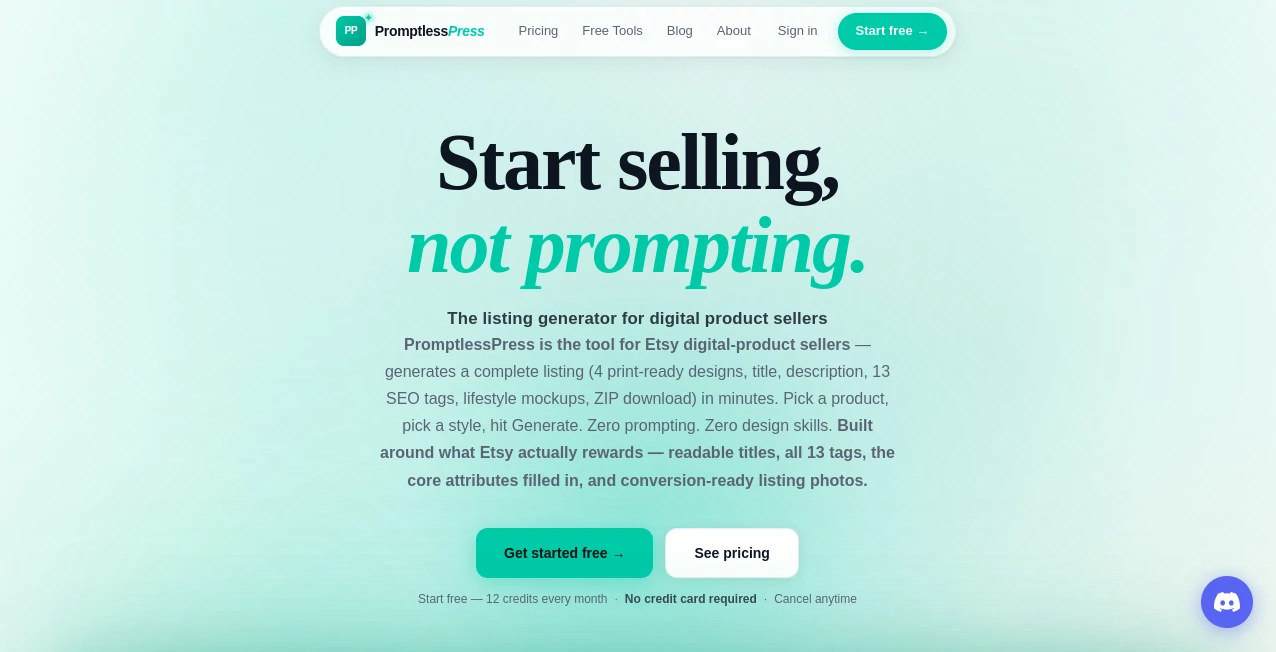
What is PromptlessPress?
Creating digital products for Etsy sounds simple until the work starts piling up. You need an attractive product, a strong title, a useful description, search-friendly tags, mockups, pricing ideas, and a listing that looks ready for real customers. Doing all of that manually can turn one product idea into an afternoon of work.
PromptlessPress takes a different approach. Built specifically for digital-product sellers, it brings product creation and Etsy listing preparation into one workflow. Instead of writing prompts, designing every asset from scratch, and then preparing the listing separately, sellers can choose a product, select a visual style and generate a complete listing package. The platform is designed to get from an idea to something ready to list in under a minute.
The concept is particularly appealing for Etsy sellers who want to spend more time thinking about their shop and less time jumping between design, writing, SEO and mockup tools. Whether you are testing a new printable, creating wall art, preparing cards or experimenting with patterns, the workflow keeps the process straightforward.
Key Features
- Generates four print-ready design variations from a single product setup.
- Creates Etsy-ready titles, descriptions and 13 search tags.
- Supports more than 100 digital product types and 24 visual styles.
- Automatically creates lifestyle mockups for presenting products.
- Provides suggested pricing and estimated earnings.
- Includes an Etsy listing preview before publishing.
- Provides an SEO score for listings.
- Offers different description tones for rewriting listing copy.
- Provides market information such as search volume and competition.
- Supports downloadable ZIP packages for generated assets.
- Includes seasonal product intelligence for events such as Christmas, Halloween and Valentine's Day.
- Provides generation history so sellers can return to previous creations.
User Interface
The interface is built around a simple three-part decision process: choose a product, choose a style and generate. This is a welcome approach for sellers who are not comfortable with complicated design software or AI prompting.
Product options cover areas such as planners, wall art, cards, stickers and patterns. After choosing a product, sellers can select from a collection of visual styles and optionally add a theme keyword or listing angle. The result is a workflow that feels closer to filling out a short product brief than operating a traditional AI design application.
The generated results are presented as a listing kit, making it easier to see the designs, listing copy and supporting information together rather than assembling each part separately.
Accuracy & Performance
Speed is one of the strongest parts of the experience. The platform is built around a sub-minute workflow, while individual generations can appear even faster. A typical generation produces four design variations alongside the written listing elements and supporting assets.
Its performance is also designed around Etsy rather than generic content creation. Titles, descriptions and tags are generated specifically for the selected product and style, while market information can help sellers understand search demand and competition before deciding what to create.
For someone testing several product ideas, this can make experimentation much more practical. Instead of spending hours developing one concept before knowing whether it is worth listing, sellers can explore multiple directions much more quickly.
Capabilities
The platform goes beyond generating images. Its main strength is combining several normally separate tasks into one workflow. A seller can start with a product idea and receive designs, listing copy, search tags, mockups, pricing suggestions and a downloadable package.
Different listing angles can also be selected to target particular buyer intentions. For example, a product can be positioned around gifting, home décor, beginners or homeschooling. This gives sellers more control over how a product is presented without requiring them to write every variation manually.
Higher-tier plans add features such as competitor keyword intelligence, listing refresh tools, additional mockup scenes, listing videos and expanded creation history. The result is a tool that can be useful both for experimenting with a first Etsy product and for managing a larger digital-product catalog.
Security & Privacy
For sellers, licensing and marketplace compliance are just as important as the generated artwork. The service states that generated designs can be sold commercially under its applicable licensing terms, while listing packages include licensing language and resale restrictions.
It also addresses Etsy's requirements around AI-assisted products by providing disclosure text and guidance intended to help sellers present AI-generated work appropriately. Sellers should still review Etsy's current policies and make sure their own products and shop practices comply with marketplace rules.
Use Cases
- Etsy digital product shops: Build complete listing packages without combining several separate tools.
- Printable sellers: Create planners, trackers, cards and other downloadable products quickly.
- Wall art creators: Generate artwork variations and lifestyle presentation images for listings.
- New Etsy sellers: Start creating products without needing professional design or prompt-writing skills.
- Product testing: Explore multiple product ideas before investing significant time into a single concept.
- Seasonal shops: Discover and prepare products around major shopping occasions.
- Growing product catalogs: Produce consistent listing assets across a larger collection of digital products.
- Design beginners: Create presentable products without learning complex design applications.
Pros and Cons
Pros
- Very simple workflow with no AI prompting required.
- Combines product creation and Etsy listing preparation.
- Generates multiple design variations in one generation.
- Includes listing titles, descriptions and search tags.
- Provides mockups and downloadable product packages.
- Useful market and SEO information is built into the workflow.
- Free plan available without requiring a credit card.
- Designed specifically around digital-product sellers.
Cons
- The service is primarily focused on Etsy and digital-product sellers.
- Advanced features and higher-resolution outputs require paid plans.
- Sellers who want detailed manual control over every design element may still prefer dedicated design software.
- Generated content should still be reviewed before publication.
Pricing Plans
The platform offers a free entry point with three listing packs and no credit card requirement. The free tier includes access to the available product types and visual styles, four designs per generation, listing copy, search tags, pricing suggestions, ZIP downloads and a limited creation history.
The Seed plan starts at $15 per month and expands usage to eight listing packs per month, while adding a commercial licence, additional mockup styles, creation history and email support.
The Starter plan costs $39 per month and provides 25 listing packs, higher-resolution unwatermarked designs, improved design quality, automatic mockup generation, market intelligence and additional shop-management features.
The Pro plan is $79 per month and is aimed at heavier users, offering 60 listing packs each month, up to 16 mockups per pack, premium scenes, listing scores, competitor keyword intelligence, listing refresh features, Etsy listing videos and unlimited creation history.
How to Use It
Start by selecting the type of digital product you want to create. The available catalog covers a broad range of products, including planners, wall art, cards, patterns and stickers.
Next, choose a visual style that fits the product and add an optional theme keyword. You can also select a listing angle if you want the resulting copy to appeal to a particular type of buyer.
Click Generate and let the system prepare the product package. You receive multiple design variations along with the title, description and Etsy search tags. Depending on the plan, lifestyle mockups and additional listing intelligence are also included.
Review the generated listing, check the SEO information and make any changes you want. Once everything looks right, download the ZIP package or use the available Etsy publishing workflow to move the product toward your shop.
Comparison with Similar Tools
Many AI design platforms concentrate on generating an image, while separate writing and SEO tools are often needed to finish the Etsy listing. That approach can work well for experienced creators who enjoy controlling every stage, but it also means more tabs, more decisions and more manual work.
This platform focuses on the complete selling workflow instead. The product design, listing copy, tags, mockups, pricing suggestions and presentation are connected. That makes it especially attractive to sellers who care more about getting a product ready for the marketplace than spending time mastering individual creative tools.
It also stands out through its marketplace-oriented features. Search information, listing scores, seasonal suggestions and competitor keyword insights are designed around the practical question that matters to an Etsy seller: is this product positioned well enough to attract buyers?
Conclusion
For digital-product sellers, the hardest part is often not having ideas. It is turning those ideas into finished products that look professional and are ready for customers to discover. This platform addresses that gap by bringing creation, listing preparation, mockups and Etsy-focused optimization into a single workflow.
The biggest advantage is simplicity. There is no complicated prompt engineering and no need to assemble a listing piece by piece across several services. Choose what you want to make, choose how you want it to look, and let the system handle the repetitive work.
It is a particularly strong option for beginners and Etsy sellers who want to test products quickly. More experienced shop owners may also find value in the market intelligence, listing optimization and batch-oriented workflow. For anyone building a digital-product catalog, it offers a practical way to move from an idea to a marketplace-ready listing with considerably less friction.
Frequently Asked Questions (FAQ)
Do I need design skills to use the platform?
No. The workflow is designed for people who do not have professional design skills. You select a product and style rather than creating detailed AI prompts or designing every element manually.
Can I sell the generated products commercially?
Paid plans include a commercial licence according to the service's published pricing information. Sellers should review the applicable licence terms before using generated assets commercially.
Can AI-generated products be sold on Etsy?
Etsy allows certain AI-assisted creations when sellers follow its applicable marketplace rules, including disclosure requirements. Sellers should review Etsy's latest Creativity Standards before publishing AI-assisted products.
Does it create Etsy listing text?
Yes. The generated listing package can include a product title, a 200-plus-word description and 13 search tags, helping sellers prepare the written side of a listing alongside the product itself.
Is there a free plan?
Yes. The free plan includes three listing packs and does not require a credit card to get started. It provides access to the core workflow with limitations compared with the paid plans.
Can I create mockups for my products?
Yes. Lifestyle mockups are generated automatically, with the number and quality of available mockups depending on the selected plan.
AI Photo & Image Generator , AI SEO Assistant , AI E-commerce Assistant , AI Product Description Generator .
These classifications represent its core capabilities and areas of application. For related tools, explore the linked categories above.
PromptlessPress details
Website unavailable — View Alternatives
Pricing
- Free
Apps
- Web App
Categories

PromptlessPress Alternatives Product

Vmake AI

Nano Banana …

Sourcetable

Banana Promp…

GPT Image 1.5

StyleCut

X Grok Imagi…

GPT Image 2 …

Crawlly AI