
ReciBites
What is ReciBites?
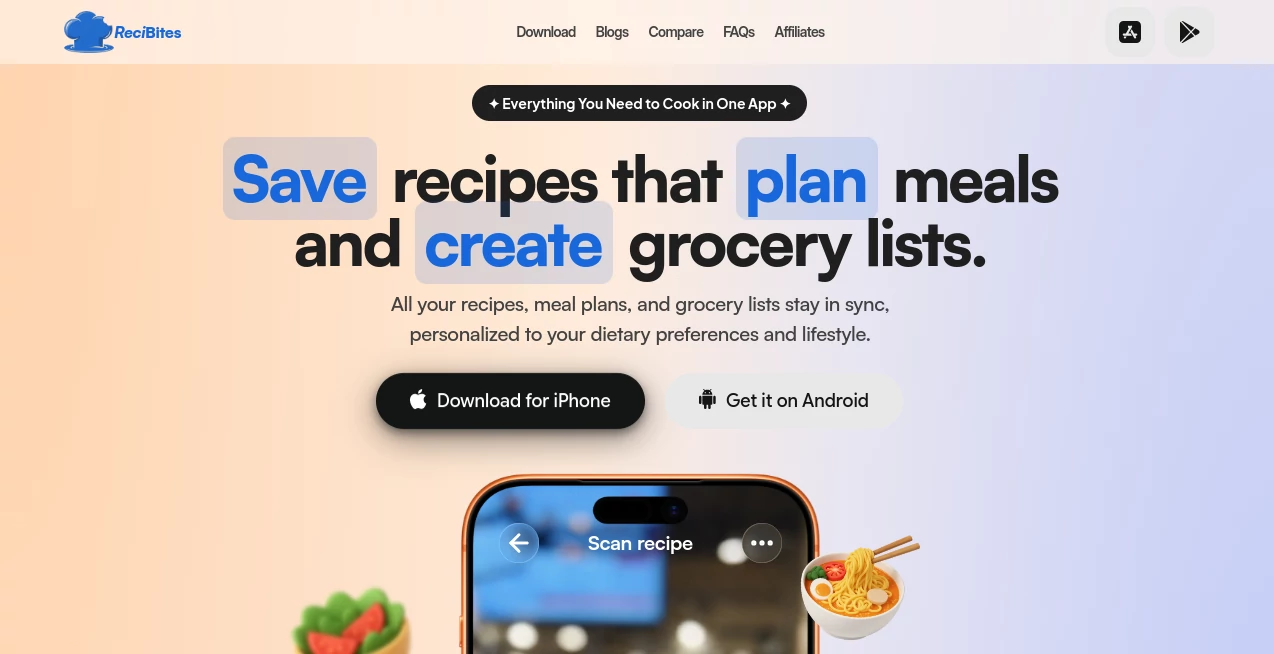
ReciBites is an AI-powered cooking assistant designed to make everyday meal planning less complicated. Instead of keeping recipes scattered across social media, screenshots, notes, and cookbook pages, users can bring them together in one place and turn them into practical meals, nutrition information, and grocery lists.
The idea is refreshingly simple: save the food you already want to cook, understand what is actually in it, then make adjustments based on your diet, goals, and preferences. A recipe discovered on Instagram or TikTok can become part of a weekly meal plan rather than another post that gets lost in a crowded feed.
The platform also looks beyond the recipe itself. It can break down ingredients, calories, macronutrients, and key nutrients, while suggesting substitutions when certain ingredients do not match a user's dietary preferences. For someone who enjoys experimenting with food but still wants some structure, that combination can make cooking feel considerably easier.
Key Features
- Save recipes from Instagram, Facebook, YouTube, TikTok, and Pinterest.
- Import recipes from screenshots, images, notes, handwritten recipes, and cookbook pages.
- Analyze recipes to provide calories, macros, ingredients, and key nutritional information.
- Create personalized weekly meal plans around dietary preferences and lifestyle.
- Generate grocery lists directly from saved recipes.
- Organize shopping lists by aisle or by recipe.
- Suggest ingredient substitutions when a recipe does not fit dietary preferences.
- Track calorie intake and compare meals with personal daily goals.
- Use AI assistance to explore meal ideas based on calorie and protein requirements.
- Search individual food items and view nutritional information.
User Interface
The experience is built around the way people actually discover and cook recipes. Rather than forcing users to manually recreate every recipe they find online, the app focuses on saving content from places they already use. The visual presentation also puts useful information such as calories, protein, carbohydrates, and ingredients close to the recipe itself.
Meal planning and grocery shopping are kept in the same workflow, which reduces the need to jump between a recipe app, notes application, and shopping list. For a busy home cook, that small difference can be surprisingly valuable.
Accuracy & Performance
The platform is designed to turn recipe information into a clearer nutritional picture. Saved recipes can be analyzed for calories, macronutrients, ingredients, and other key nutrients, giving users a quicker way to understand what they are preparing.
As with any automated nutritional analysis, results should be treated as useful estimates rather than a substitute for professional dietary advice. Still, having nutritional information available directly alongside a recipe can make everyday food decisions much more informed.
Capabilities
Its strongest capability is the connection between recipe saving, nutrition, meal planning, and shopping. A user can save a recipe, check whether it fits their preferences, adjust ingredients when necessary, place it into a meal plan, and generate the ingredients needed for shopping.
The AI cooking assistant can also work with specific requests. For example, a user might ask for a dish containing around 30 grams of protein while staying below 300 calories. That kind of goal-based interaction is particularly useful when the challenge is not finding another recipe, but finding one that actually fits today's requirements.
Security & Privacy
The service provides links to its terms and privacy policy, but its public homepage does not provide extensive technical details about data storage, encryption, or specific AI data-handling practices. Users who plan to upload personal notes, screenshots, or other private recipe material should review the current privacy documentation before sharing sensitive information.
Use Cases
Weekly meal planning: Users can turn saved recipes into organized breakfast, lunch, and dinner plans for the week while keeping calorie and dietary preferences in mind.
Healthy recipe adjustments: When an ingredient does not fit a particular diet, suggested substitutions can provide a practical way to modify the dish without abandoning it completely.
Nutrition tracking: Calorie and macro information helps users understand how individual meals contribute to their daily targets.
Social media recipe saving: People who frequently discover recipes on TikTok, Instagram, YouTube, or Pinterest can save those ideas instead of relying on screenshots and bookmarks.
Grocery shopping: Recipes can be converted into grocery lists, with organization options designed to make shopping more straightforward.
Diet-conscious cooking: Users with specific dietary preferences can check recipes for ingredients that may not fit their requirements and explore alternatives.
Pros and Cons
Pros
- Combines recipe management, meal planning, nutrition, and grocery lists.
- Supports recipe saving from several popular platforms.
- Can work with screenshots, images, notes, and handwritten recipes.
- Provides nutritional information alongside saved recipes.
- Personalizes meal planning around dietary preferences and lifestyle.
- Ingredient substitution suggestions make recipe adjustments easier.
- Available for both iOS and Android.
Cons
- Some advanced platform access is still being developed.
- The public website does not provide detailed pricing information.
- Nutritional values generated from recipes should be considered estimates.
- Users looking for a full desktop experience may need to wait for upcoming web and computer support.
Pricing Plans
The public product website does not currently provide a detailed breakdown of subscription tiers or pricing plans. The application is available through the Apple App Store and Google Play, while additional access for Windows, Mac, and the web is described as being in development.
Because pricing and availability can change, users should check the current app-store listing for the latest purchasing information before subscribing.
How to Use It
- Download the mobile application on an iOS or Android device.
- Save a recipe from a supported social platform using the share function, or upload a screenshot, image, note, or photo of a recipe.
- Review the extracted recipe information and nutritional breakdown.
- Check ingredients against your dietary preferences and make substitutions when needed.
- Add suitable recipes to a personalized meal plan.
- Use the meal plan to create a grocery list organized around your shopping needs.
- Track meals and compare calorie or macro intake with your personal goals.
Comparison with Similar Tools
Traditional recipe managers are generally excellent at storing recipes, while calorie trackers tend to focus primarily on nutrition logging. Meal-planning applications often sit somewhere between the two. This product takes a broader approach by connecting those activities in one workflow.
The biggest distinction is the emphasis on recipes discovered outside traditional recipe websites. Being able to save a recipe from social media, analyze it, adjust it, include it in a meal plan, and turn it into a shopping list creates a more continuous experience than simply bookmarking a page.
It may therefore be a particularly good fit for people whose recipe collections have grown across several apps and social networks and who want one place to bring everything together.
Conclusion
For anyone who regularly saves recipes online and then struggles to turn those ideas into actual meals, this AI cooking assistant offers a practical solution. Its value comes less from any single feature and more from how the pieces work together: recipe discovery, nutritional analysis, dietary adjustments, meal planning, and grocery preparation.
The approach feels especially relevant to modern home cooking, where a recipe might begin as a short video on TikTok, a screenshot from Instagram, or a handwritten family favorite. Bringing those sources into one organized system can save time and make cooking decisions easier.
With mobile apps already available and additional desktop and web access in development, it has the foundations of a useful all-in-one kitchen companion for people who want more structure without giving up the fun of discovering new food.
Frequently Asked Questions (FAQ)
Where can I save recipes from?
Recipes can be saved from Instagram, Facebook, YouTube, TikTok, and Pinterest. Users can also upload screenshots, images, notes, or photos of handwritten recipes and cookbook pages.
Can recipes be adjusted for dietary preferences?
Yes. The platform can flag ingredients that do not match a user's dietary preferences and suggest substitutions that may make the recipe more suitable.
Can I create weekly meal plans?
Yes. Saved recipes can be organized into personalized meal plans for different days of the week, including breakfast, lunch, and dinner.
Can I create a grocery list from a recipe?
Yes. Recipes can be converted into grocery lists, with the option to organize items by aisle or by recipe.
Is it available on iOS and Android?
Yes. The service currently provides mobile applications for both iOS and Android. Windows, Mac, and web access are described as being in development.
Can it help with calorie and protein goals?
Yes. Recipes can be analyzed for calories and macronutrients, and the AI cooking assistant can respond to meal requests based on targets such as calories or protein.
AI Recipe Assistant , AI Life Assistant , AI Cooking Assistant .
These classifications represent its core capabilities and areas of application. For related tools, explore the linked categories above.
ReciBites details
Website unavailable — View Alternatives
Pricing
- Free
Apps
- Web App
- iOS App
- Android App
Categories

ReciBites Alternatives Product

MixBooze

Dating photos

FortuneTelle…

GetFIT App

Play Queens …
AI Meal Plan…

FeelsTheAura

MatchMyType

Smart Chicke…