


















VideoLlama
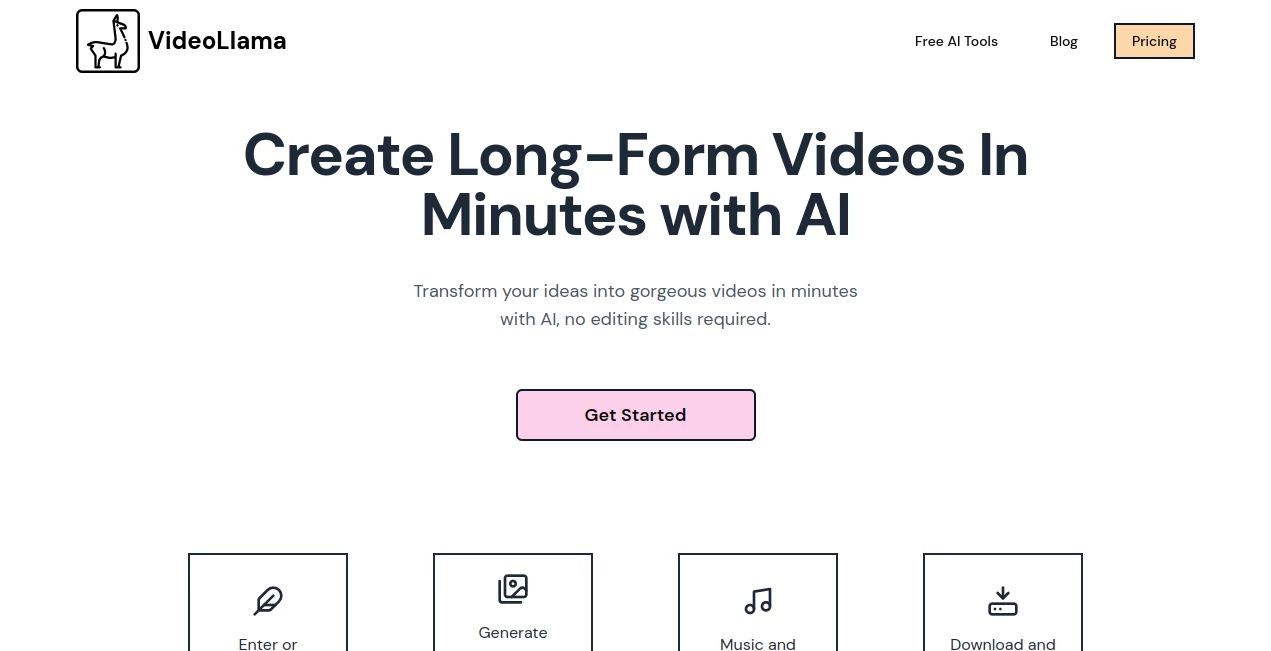
What is VideoLlama?
In today’s fast-moving digital landscape, video has become the most powerful form of communication. From education to marketing, users expect smarter tools that can interpret, analyze, and generate video content with context awareness. This platform is designed to bridge the gap between visual data and natural language understanding, offering an advanced AI-driven experience that feels intuitive and surprisingly human.
Instead of treating video as just frames or raw media, it interprets meaning, actions, and context. This allows creators, developers, and researchers to work with video in a much more intelligent and interactive way. Whether you are building applications, analyzing footage, or exploring AI-driven media workflows, it provides a strong foundation for modern video intelligence.
Key Features
User Interface
The interface is designed with simplicity in mind. Even users who are not technically advanced can quickly understand how to upload, process, and interact with video-based inputs. The layout focuses on clarity, reducing friction in experimentation and making complex AI tasks feel accessible.
Accuracy & Performance
Performance is optimized for understanding temporal sequences in video. It does not just analyze single frames but considers movement, context, and relationships between objects over time. This leads to more accurate interpretations and more meaningful outputs.
Capabilities
- Video content understanding with natural language prompts
- Multimodal reasoning combining vision and text
- Context-aware response generation based on video input
- Support for research, education, and creative workflows
- Flexible integration possibilities for developers
Security & Privacy
Data handling is designed with user safety in mind. Uploaded content is processed in a controlled environment, ensuring that sensitive information is not exposed or misused. The system focuses on maintaining confidentiality while delivering high-performance AI analysis.
Use Cases
- Educational platforms analyzing lecture videos or tutorials
- Content creators summarizing or repurposing video content
- Researchers studying human behavior or visual patterns
- Developers building AI-powered video applications
- Businesses improving video-based customer engagement tools
Pros and Cons
Pros
- Strong understanding of video context
- Combines vision and language intelligence
- Useful for both technical and non-technical users
- Flexible for multiple industries
Cons
- May require high computational resources for large videos
- Advanced features may need technical familiarity
- Performance depends on input video quality
Pricing Plans
The platform typically follows a flexible access model, which may include free usage for basic features and paid tiers for advanced capabilities. Developers and organizations can scale usage depending on workload and integration needs.
How to Use This Tool
Getting started is straightforward. Users begin by uploading a video or providing a video input source. After that, they can interact with the system using natural language prompts, asking questions about the content, requesting summaries, or exploring specific moments within the video.
For developers, integration can be achieved through available APIs or frameworks, allowing seamless embedding into applications or workflows.
Comparison with Similar Tools
Compared to traditional video analysis tools that rely heavily on manual tagging or basic computer vision, this system introduces a more advanced multimodal understanding approach. While many tools focus only on detection or transcription, it combines reasoning, interpretation, and contextual awareness in a unified model.
Conclusion
This platform represents a meaningful step forward in how machines understand and interact with video content. By combining visual perception with language intelligence, it opens new possibilities for creators, educators, and developers. It is not just a tool for processing video, but a system that helps uncover meaning inside visual data.
Frequently Asked Questions (FAQ)
What is this platform used for?
It is used for understanding, analyzing, and interacting with video content using artificial intelligence.
Can it summarize videos?
Yes, it can generate contextual summaries based on visual and temporal understanding.
Is it suitable for developers?
Yes, it can be integrated into applications for building advanced video-based AI features.
Does it work with all types of videos?
It works best with clear, structured video inputs but can handle a wide range of formats.
Is technical knowledge required?
Basic usage is simple, but advanced integration may require development experience.
AI Research Tool , Video , AI Developer Tools .
These classifications represent its core capabilities and areas of application. For related tools, explore the linked categories above.

VideoLlama Alternatives Product

Rate My Prof…

volume shade…

Scillus

AI Entity

cznull

Toonifyit
langextract.…

Grok
HostFinder
