















animearc
What is animearc?
There’s something magical about watching a single sentence spark an entire world — characters with consistent faces, scenes that flow naturally, and a story that actually feels like it belongs on screen. This platform makes that possible in minutes instead of months. You give it a simple idea, and it builds the script, designs the cast, creates storyboards, and generates connected anime video scenes that tell a coherent story. I’ve seen creators go from a vague concept like “demon hunter in a modern city” to a polished multi-scene trailer that looks and feels like real anime. It’s not just another image or clip generator — it’s built for storytelling from start to finish.
Introduction
Most AI video tools spit out random short clips that look impressive in isolation but fall apart when you try to build anything longer. AnimeArc takes a different path. It starts with your story idea and treats the whole process as one connected workflow: script, characters, storyboards, and finally video scenes that respect the narrative. The result is anime-style drama that maintains consistency across shots — the same faces, the same art direction, the same emotional tone. Whether you want short social clips or serialized episodes, it gives storytellers a practical way to bring ideas to life without needing a full animation studio.
Key Features
User Interface
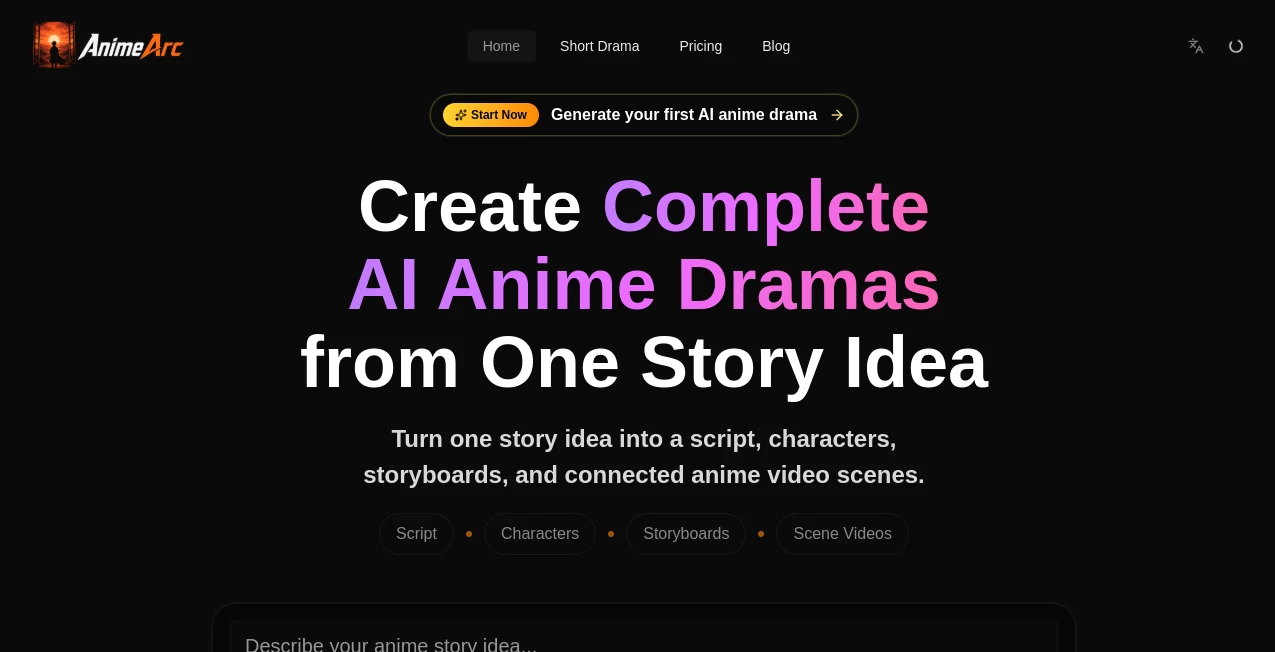
The workspace is clean and story-focused. You start with a single prompt box where you describe your idea in plain language. From there, the platform guides you through script generation, character design, storyboard creation, and video scenes — all in one flow. You can adjust tone, genre, and style at any step, and everything stays organized so you don’t lose track of your story. It feels more like collaborating with a creative partner than wrestling with technical settings.
Accuracy & Performance
Character consistency is where it really shines — the same faces and outfits appear reliably across multiple scenes. Motion feels natural for anime style, and the AI respects the script so scenes actually advance the story instead of feeling random. Generation is reasonably fast, letting you iterate quickly. The results hold emotional weight and visual coherence that most single-prompt tools simply can’t match.
Capabilities
Start with one story idea and get a full structured script, consistent character designs, comics-style storyboards for every key moment, and connected anime video scenes. It supports different genres (romance, fantasy, action, horror, comedy, etc.) and lets you build episode by episode. You can guide the visual style, adjust pacing, and maintain narrative continuity throughout. It’s designed for creators who want to tell real stories, not just generate isolated clips.
Security & Privacy
Your story ideas and generated content stay under your control. The platform focuses on delivering the creative tools without unnecessary data retention or sharing. For writers and creators pouring personal ideas into their work, that respectful approach matters.
Use Cases
An aspiring anime creator turns a late-night story idea into a complete short drama they can share on social media the same day. A YouTube Shorts creator builds serialized anime-style stories that keep viewers coming back for the next episode. A game developer prototypes character interactions and cutscenes before full production. A writing group uses it to visualize scenes and get instant feedback on how their story flows visually. The common thread is turning words on a page into moving pictures without years of traditional animation experience.
Pros and Cons
Pros:
- Full workflow from one idea to connected video scenes.
- Strong character and story consistency across multiple shots.
- Fast enough to support real creative iteration.
- Supports many genres and storytelling styles.
- Makes anime-style creation accessible without drawing skills.
Cons:
- Best results come from clear, focused prompts.
- Video length per scene is still relatively short (typical for current AI tech).
- Longer full episodes require building scene by scene.
Pricing Plans
It offers a free tier so you can test the full workflow and see the quality for yourself. Paid plans unlock higher limits, faster generation, more styles, and advanced features for serious creators. The pricing feels reasonable for the leap from static ideas to moving anime stories.
How to Use AnimeArc
Start by typing a one-line story idea in the prompt box. Choose your preferred genre and style if you want to guide it. Let the AI generate the script, then review and refine the characters. Move to storyboards to visualize key moments, and finally generate the video scenes one by one. Adjust anything along the way and watch your story come together as a cohesive anime drama. It’s simple enough for beginners yet deep enough for experienced storytellers.
Comparison with Similar Tools
Many AI video tools generate beautiful single clips but struggle with consistency when you try to build a real story. This one stands out by treating the entire process as one connected narrative — from script to final scenes. While others focus on isolated images or random animations, AnimeArc keeps characters, tone, and story intact across the whole project. It feels closer to actual anime production than most current alternatives.
Conclusion
Turning a story idea into moving anime has never been this approachable. This platform removes the biggest barriers — time, drawing skills, and technical complexity — while keeping the heart of storytelling intact. Whether you’re creating for fun, building an audience, or prototyping bigger ideas, it gives you a practical way to see your vision come to life. For anyone who’s ever dreamed of making anime, this is one of the most exciting tools available right now.
Frequently Asked Questions (FAQ)
How long does it take to create a full drama?
You can get a complete short story with multiple scenes in under an hour, though longer projects take more time as you build scene by scene.
Do characters stay consistent?
Yes — the platform is specifically designed to keep the same characters recognizable across all scenes.
Can I use it for commercial projects?
Check the terms for your plan, but many creators use it for YouTube, social media, and personal series.
Do I need drawing or animation skills?
No — the AI handles the visuals. You just need a story idea.