


















BlueNote AI
What is BlueNote AI?
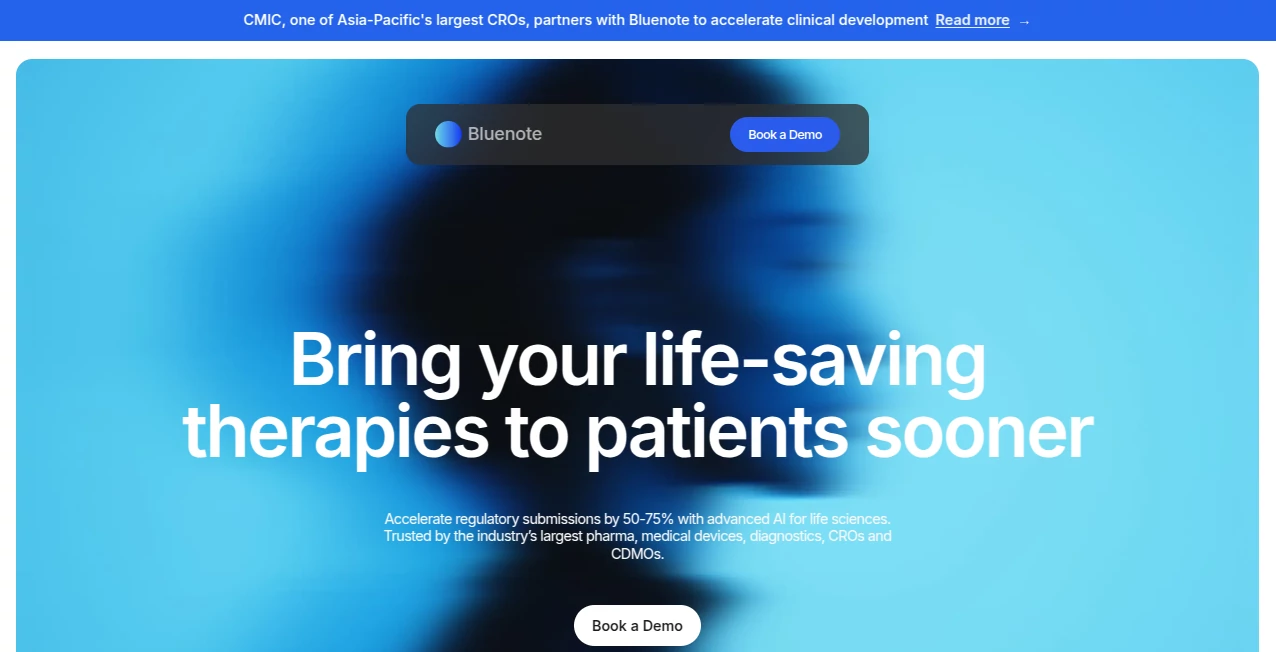
Developing new therapies, medical devices, and scientific innovations involves an enormous amount of documentation, regulatory review, and cross-functional collaboration. For many organizations, these processes consume valuable time that could otherwise be dedicated to research and innovation. This platform addresses that challenge by combining advanced artificial intelligence with life sciences expertise to streamline documentation, automate repetitive workflows, and improve operational efficiency.
Designed specifically for pharmaceutical companies, biotechnology organizations, contract research organizations, diagnostics firms, and medical device manufacturers, the solution helps teams create high-quality scientific and regulatory documents faster while maintaining traceability and compliance. By reducing administrative burden, professionals can spend more time focusing on science, strategy, and patient outcomes.
Key Features
User Interface
The platform offers a clean and intuitive workspace that minimizes the learning curve often associated with enterprise software. Users can quickly access document generation tools, AI assistants, workflow automation features, and data repositories from a centralized environment. The interface is designed to support both individual contributors and large teams working across multiple departments.
Accuracy & Performance
Accuracy is a critical requirement in regulated industries, and this solution places strong emphasis on reliable outputs. Generated content is linked to source information, allowing users to verify data and maintain confidence in documentation. Built-in traceability features help ensure that scientific and regulatory content remains grounded in validated information rather than unsupported assumptions.
Organizations managing large volumes of documentation can significantly reduce turnaround times while maintaining consistency across projects, programs, and submissions.
Capabilities
- AI-powered scientific and regulatory document generation.
- Workflow automation through customizable AI agents.
- Advanced data search across internal knowledge repositories.
- Technical and regulatory document translation.
- Gap analysis and document review assistance.
- Dataset formatting and data presentation support.
- Enterprise-wide knowledge management.
- Support for clinical, regulatory, quality, and commercial workflows.
Security & Privacy
Security is one of the strongest aspects of the platform. Enterprise-grade safeguards help organizations maintain control over sensitive information. Customer data is not used for model training, and strict data handling practices help organizations meet internal governance requirements.
Additional capabilities such as single sign-on support, deployment flexibility, access controls, and compliance-focused architecture make the platform suitable for highly regulated environments where privacy and data protection are essential.
Use Cases
- Generating first drafts of regulatory submissions and scientific reports.
- Creating clinical study documentation and investigator materials.
- Automating repetitive documentation workflows across departments.
- Managing quality and compliance-related records.
- Translating technical documents while preserving formatting.
- Searching historical datasets and organizational knowledge.
- Preparing validation reports, protocols, and briefing documents.
- Supporting cross-functional collaboration between scientific teams.
Pros and Cons
Pros
- Purpose-built for life sciences organizations.
- Strong focus on regulatory and scientific documentation.
- Advanced workflow automation capabilities.
- Enterprise-grade security and compliance features.
- Data traceability and source verification support.
- Scalable across departments and large organizations.
- Reduces manual effort and administrative workload.
Cons
- Primarily designed for enterprise and professional use.
- May offer more functionality than smaller teams require.
- Specialized focus makes it less suitable for general-purpose content creation.
- Implementation may require alignment with existing organizational processes.
Pricing Plans
The platform offers enterprise-focused solutions tailored to organizational requirements. Pricing is generally provided through customized plans based on company size, workflow complexity, deployment needs, and usage volume. Interested organizations can request a demonstration and consult with the team to determine the most suitable package.
How to Use Bluenote
Getting started is straightforward for organizations looking to modernize documentation workflows.
- Create an enterprise account and define project requirements.
- Connect internal data repositories and document sources.
- Configure workflows, templates, and organizational standards.
- Use AI-powered document generation tools to create drafts.
- Review generated outputs with traceable source references.
- Automate repetitive processes using workflow agents.
- Collaborate across departments and maintain compliance records.
- Export, refine, and finalize documentation for submission or internal use.
Comparison with Similar Tools
Many AI writing and automation platforms focus on generic business tasks such as marketing content, customer support, or productivity enhancement. In contrast, this solution concentrates on the unique requirements of life sciences organizations.
Rather than simply generating text, it supports highly specialized scientific workflows, regulatory documentation, quality management processes, and research-driven operations. The combination of domain-specific intelligence, workflow automation, traceability, and compliance-oriented design makes it particularly valuable for organizations operating in regulated environments.
Its emphasis on scientific accuracy and enterprise governance differentiates it from broader AI productivity platforms that are not built specifically for healthcare, pharmaceutical, and biotechnology applications.
Conclusion
Organizations operating in life sciences face constant pressure to deliver innovation while managing complex documentation and regulatory obligations. This platform provides a practical way to reduce administrative workload, accelerate document creation, and improve operational efficiency without compromising accuracy or compliance.
By combining AI-powered automation, enterprise-grade security, knowledge management capabilities, and scientific workflow support, it enables teams to focus on meaningful research and development activities. For companies seeking to modernize regulatory and scientific operations, it represents a compelling and highly specialized solution.
Frequently Asked Questions (FAQ)
What is this platform primarily used for?
It helps life sciences organizations automate documentation, regulatory workflows, scientific writing, and knowledge management processes.
Who can benefit from using it?
Pharmaceutical companies, biotechnology firms, medical device manufacturers, diagnostics organizations, CROs, and research teams can all benefit from its capabilities.
Does it support regulatory documentation?
Yes. The platform is designed to assist with regulatory submissions, scientific reports, quality documentation, and compliance-related workflows.
Is organizational data used to train AI models?
No. The platform emphasizes privacy and provides safeguards that help organizations maintain control over their data.
Can it integrate with existing enterprise systems?
Yes. It is designed to connect with internal data sources, repositories, and enterprise workflows to improve productivity and accessibility.
AI Research Tool , AI Knowledge Management , AI Workflow Management , AI Documents Assistant .
These classifications represent its core capabilities and areas of application. For related tools, explore the linked categories above.

BlueNote AI Alternatives Product

Duct Tape AI…

Treeova

TrySchedule

Reverse Imag…
TrueSource AI

Startup Read…

Docubix

ResumeFreePro

GEO Checker
