
















Reverse Image Location
What is Reverse Image Location?
Finding the origin of a photo can be surprisingly difficult. Traditional reverse image search engines often depend on indexed copies of an image, while metadata such as GPS coordinates may be missing, stripped, or never included in the first place. This innovative platform approaches the problem differently by analyzing the actual visual content inside an image and using advanced AI reasoning to estimate where it was taken.
Instead of simply searching for duplicate files across the web, the system examines environmental details such as road markings, vegetation, architecture, terrain, traffic signs, vehicles, and other geographical indicators. The result is a practical location estimate supported by clear reasoning, making it a valuable solution for researchers, travelers, journalists, GeoGuessr enthusiasts, and anyone curious about the story behind a photograph.
With an impressive focus on explainability, users receive more than just a guess. The platform presents evidence-based conclusions that help users understand why a location was selected, creating a much more informative experience than standard image matching tools.
Key Features
User Interface
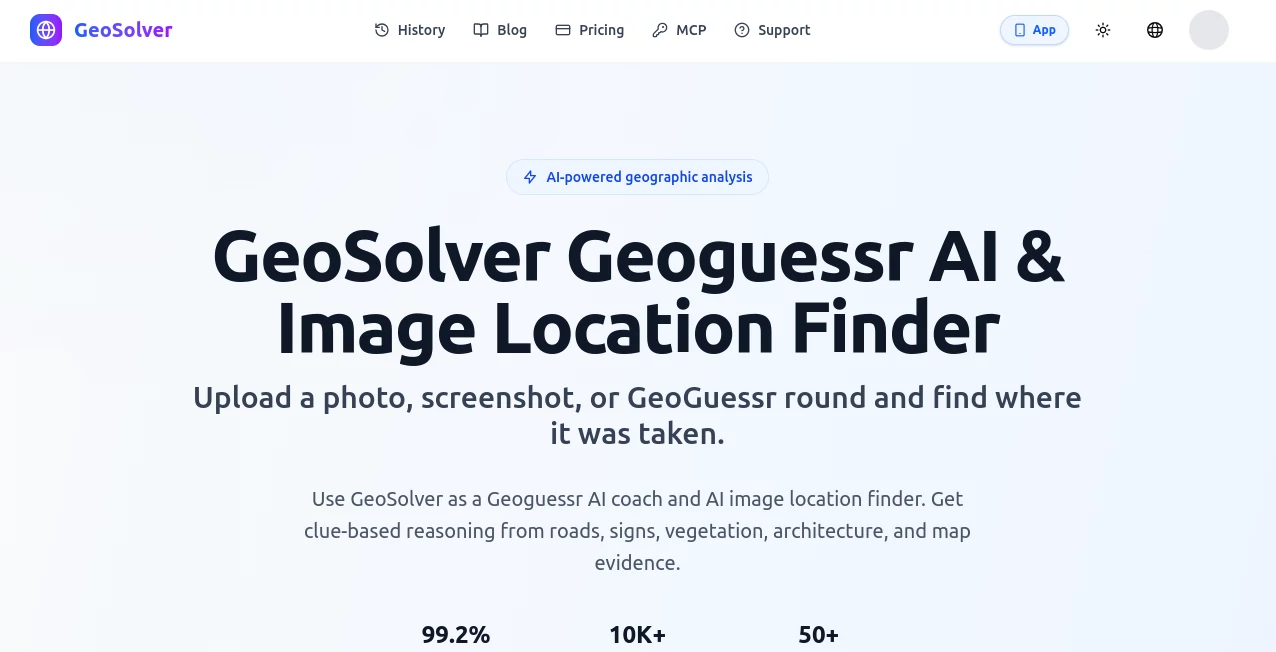
The interface is refreshingly simple. Users can upload a photo, screenshot, or downloaded image within seconds and immediately begin the analysis process. The clean layout removes unnecessary distractions and keeps the focus on the image investigation workflow.
Even first-time visitors can navigate the platform without instructions. The upload process is straightforward, and results are presented in a structured format that makes complex geographic analysis easy to understand.
Accuracy & Performance
One of the strongest aspects of the platform is its ability to work with images that have no GPS metadata and no existing online matches. Rather than relying on image databases alone, it evaluates contextual clues hidden inside the photograph.
This approach often proves effective when traditional reverse image search tools return no useful results. By combining visual recognition with geographic reasoning, the platform can narrow down possible locations and provide confidence levels alongside supporting evidence.
The ability to interpret subtle indicators such as road infrastructure, climate patterns, local architecture, and regional vegetation significantly improves the quality of location predictions.
Capabilities
The platform supports a wide variety of image types, including travel photos, screenshots, social media images, street scenes, landscapes, and GeoGuessr screenshots.
- Photo location discovery
- Image geolocation analysis
- Screenshot location identification
- Visual clue interpretation
- GeoGuessr training assistance
- OSINT investigation support
- Travel and destination verification
- Image source context analysis
Its ability to explain conclusions makes it particularly useful for users who want transparency rather than a simple automated answer.
Security & Privacy
Privacy is an important consideration when uploading personal images. The platform emphasizes secure processing while focusing on visual analysis rather than hidden file information. This makes it suitable for investigating screenshots and downloaded images where metadata may already be unavailable.
The transparent approach helps users feel more confident in the results while maintaining control over the information being analyzed.
Use Cases
- Identifying where a travel photo was taken.
- Verifying the authenticity of social media images.
- Investigating screenshots that contain no GPS data.
- Supporting OSINT and digital investigation workflows.
- Learning geographic clues for GeoGuessr practice.
- Fact-checking images used in articles and online discussions.
- Understanding the likely origin of reposted visual content.
- Researching unknown locations from historical or archived photos.
For example, imagine discovering an old screenshot with no metadata and no recognizable landmarks. Instead of reaching a dead end, users can upload the image and receive a location hypothesis based on environmental details that would otherwise go unnoticed.
Pros and Cons
Pros
- Works even when GPS metadata is unavailable.
- Can analyze screenshots and unique photos.
- Provides reasoning behind location estimates.
- Easy-to-use interface suitable for beginners.
- Useful for research, verification, and education.
- Supports a wide range of image formats and scenarios.
Cons
- Results depend on the availability of visible geographic clues.
- Indoor photos may provide limited evidence.
- Extremely low-quality images can reduce accuracy.
- Location estimates may require manual verification for critical investigations.
Pricing Plans
The platform offers access to image location analysis with options that allow users to preview clues before unlocking deeper insights. Premium access typically provides expanded reasoning, detailed location information, and additional analysis features.
Because pricing structures may change over time, users should review the latest plans directly through the platform before making a purchasing decision.
How to Use Reverse Image Search for Location
Getting started is simple:
- Upload a photo, screenshot, or image file.
- Allow the AI system to inspect visual clues.
- Review the generated location estimate.
- Study the supporting evidence and reasoning.
- Use the provided information to verify or refine your investigation.
Images containing roads, buildings, landscapes, signs, vegetation, and other environmental details typically produce the most informative results.
Comparison with Similar Tools
Many reverse image search services focus on locating identical copies of an image across the internet. While this approach is useful for finding source pages or duplicated content, it often struggles when the image has never been publicly indexed.
This platform takes a different route by concentrating on geolocation analysis. Rather than asking whether the image exists elsewhere online, it asks what the image itself can reveal about its location.
The result is a more investigative workflow that excels when dealing with unique photographs, screenshots, and images lacking metadata. For users whose primary goal is determining where a photo was taken, this methodology provides a significant advantage.
Conclusion
This platform introduces a refreshing evolution in image analysis by moving beyond traditional reverse image matching. Its ability to extract geographic insights directly from visual clues makes it exceptionally useful for modern investigations, travel research, content verification, and educational exploration.
The combination of intuitive design, transparent reasoning, and advanced geographic analysis creates a powerful experience that stands out in a crowded market. Anyone who has ever wondered where a mysterious image originated will appreciate the depth, accuracy, and practicality of this solution.
Frequently Asked Questions (FAQ)
Can it work without GPS metadata?
Yes. The platform is specifically designed to analyze visual clues even when GPS or EXIF data is unavailable.
Does it support screenshots?
Yes. Screenshots are one of the primary use cases and can often provide enough visual context for analysis.
Is it different from traditional reverse image search?
Yes. Traditional services focus on finding duplicate images online, while this platform focuses on identifying the location shown inside the image.
Who can benefit from this tool?
Researchers, journalists, travelers, GeoGuessr players, investigators, fact-checkers, and curious individuals can all benefit from its capabilities.
What types of images work best?
Outdoor photos, street scenes, landscapes, travel images, and screenshots containing visible environmental details generally provide the strongest results.