















BuildrShip
What is BuildrShip?
In today’s fast-moving digital world, speed matters just as much as creativity. Many great ideas never make it past the planning stage simply because building and launching them takes too long or requires too many tools. This platform changes that experience by giving creators, founders, and small teams a smoother path from idea to execution.
Instead of juggling multiple systems and complex setups, everything is brought together in one place. The focus is on helping users build quickly, test faster, and launch with confidence. Whether you're working on a startup idea, a landing page, or a digital product prototype, the workflow feels surprisingly light and intuitive.
Key Features
User Interface
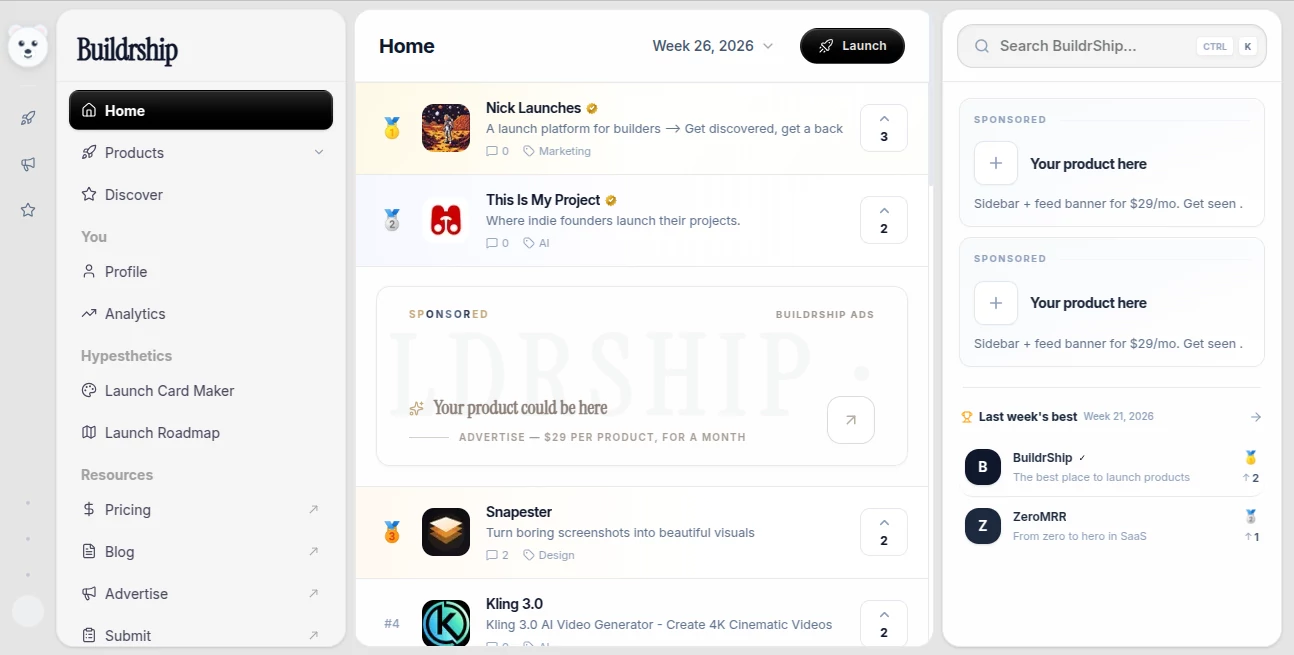
The interface is clean and distraction-free, designed for people who want to focus on building rather than learning complicated systems. Navigation feels natural, and most actions are accessible within a few clicks. Even users without technical backgrounds can get comfortable quickly.
Accuracy & Performance
Performance is smooth and responsive, allowing users to move from one task to another without delays. The system is optimized to handle multiple workflows efficiently, making it suitable for both small experiments and more structured projects.
Capabilities
The platform supports a wide range of creation workflows, from structuring ideas to shaping them into functional outputs. It is especially useful for rapid prototyping, early-stage product development, and building simple but effective digital assets.
Security & Privacy
User data is treated with care, with standard privacy practices in place to ensure a safe working environment. Projects remain private unless explicitly shared, giving creators peace of mind while they build and iterate.
Use Cases
- Launching MVPs for startup ideas
- Creating landing pages for marketing campaigns
- Testing product concepts before full development
- Building internal tools for teams
- Rapid prototyping for designers and founders
Pros and Cons
Pros:
- Fast and simple workflow for building digital products
- Accessible for both beginners and experienced users
- Reduces dependency on multiple tools
- Helps speed up idea validation
Cons:
- Advanced customization may be limited for complex projects
- Best suited for early-stage or lightweight builds rather than enterprise-scale systems
Pricing Plans
The platform typically follows a flexible pricing structure designed to accommodate different types of users. There is usually an entry-level option for individuals testing ideas, along with more advanced tiers for teams that need additional capacity and features. This makes it accessible for both solo creators and growing startups.
How to Use This Platform
Getting started is straightforward. Users begin by creating an account and selecting a starting template or workspace. From there, they can define their idea, customize structure, and gradually build out their project step by step. The process is designed to be iterative, allowing changes at any stage without friction.
Once the foundation is ready, users can refine details, test different versions, and prepare their product for launch. The emphasis is on speed and simplicity rather than technical complexity.
Comparison with Similar Tools
Compared to traditional no-code builders like Webflow or Bubble, this platform focuses more on speed and early-stage execution rather than deep customization. While other tools may offer more advanced design control, they often come with a steeper learning curve.
This solution is better suited for users who prioritize getting ideas live quickly, validating concepts, and iterating fast without getting stuck in technical details.
Conclusion
For anyone looking to move quickly from idea to execution, this platform offers a refreshing approach. It removes unnecessary complexity and replaces it with a streamlined experience focused on building and shipping. While it may not replace advanced enterprise tools, it excels in what it is designed for: helping ideas come to life faster than ever.
Frequently Asked Questions (FAQ)
Is it suitable for beginners?
Yes, the interface is designed to be beginner-friendly with minimal learning curve.
Can I build full products with it?
It is best suited for MVPs, prototypes, and early-stage digital products.
Do I need coding skills?
No, the platform is designed to work without requiring programming knowledge.
Is it better than traditional builders?
It depends on the use case. It prioritizes speed and simplicity over deep customization.