
ComicInk
What is ComicInk?
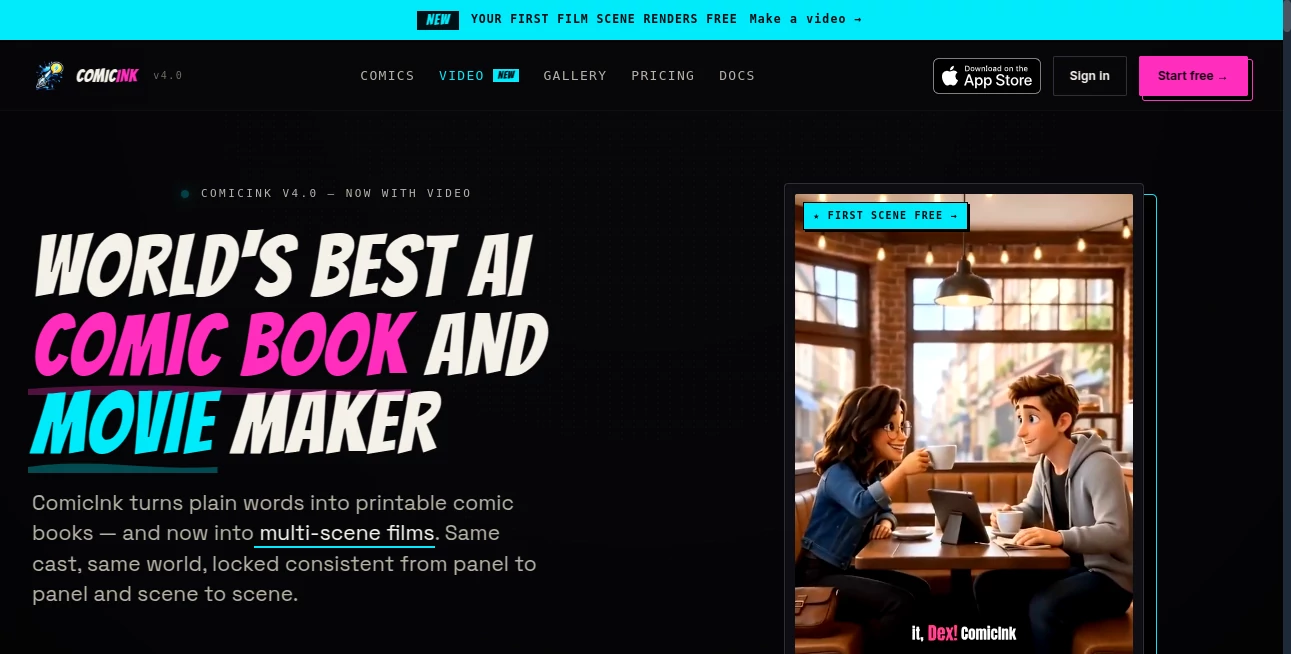
Creating a comic book has traditionally required a combination of writing skills, illustration ability, design experience, and publishing knowledge. ComicInk changes that process by helping creators transform simple ideas and written stories into complete comic books and cinematic experiences with the help of artificial intelligence.
The platform is designed for storytellers, writers, educators, artists, and anyone who wants to bring imaginative worlds to life without spending years learning professional illustration techniques. From generating characters and scenes to building full story arcs, it provides a creative workspace where ideas can move from a rough concept to a finished visual story.
What makes this platform especially appealing is its focus on consistency. Characters, locations, and visual elements can remain stable throughout multiple pages and scenes, making it much easier to create longer stories instead of isolated images. Users can also transform their comic creations into multi-scene videos, opening new possibilities for digital storytelling.
Key Features
User Interface
The interface is built around a creator-friendly workflow that feels closer to a digital studio than a complicated design application. Users can start with a story idea, develop characters, choose artistic directions, and gradually build their comic project step by step.
The organized creation process makes it suitable for beginners while still offering useful controls for experienced creators. The ability to manage characters, story arcs, assets, and publishing options in one place creates a smoother experience compared with using multiple separate creative tools.
Accuracy & Performance
One of the strongest advantages of this platform is maintaining visual consistency across different pages. AI-generated characters often struggle to look identical from one image to another, but this tool focuses on keeping character identity, props, and environments stable throughout a complete project.
The system can generate comic pages with layouts, panels, dialogue placement, and visual storytelling elements while following the user's creative direction. This approach helps creators spend more time improving their stories rather than fixing repetitive visual problems.
Capabilities
The platform offers a wide range of creative features for producing modern comic content. Users can create characters, develop worlds, generate complete comic pages, and continue building multi-issue series with connected storylines.
- Create full comic books from written ideas or scripts
- Generate consistent characters across multiple pages
- Build reusable worlds, locations, and story assets
- Choose from multiple comic and visual styles
- Create covers, panels, and complete issues
- Convert comic projects into animated video experiences
- Support storytelling in multiple languages
- Publish and share finished comic creations
Security & Privacy
The platform is designed with creator ownership in mind. Generated pages, characters, and stories remain available for creators to use in their own projects, including commercial creative activities.
Users should always review the latest service policies before publishing professional or commercial content, especially when working with AI-generated material and third-party creative technologies.
Use Cases
This tool can be useful for many different types of creators. Independent writers can turn scripts into illustrated stories without hiring a full production team. Teachers can create educational comics that make complex subjects more engaging for students. Businesses can produce branded storytelling content, marketing comics, or visual campaigns.
For example, a fantasy writer with a completed novel idea can create character designs, visualize important scenes, and develop a short comic adaptation. A content creator could also transform personal stories into shareable visual content for social media audiences.
- Independent comic creators
- Novel writers and storytellers
- Educational content creators
- Marketing teams creating visual campaigns
- Game developers designing character concepts
- Social media creators producing original stories
- Animation and video creators
Pros and Cons
Pros
- Creates complete comic projects from simple ideas
- Strong focus on character and world consistency
- Useful for beginners without drawing experience
- Supports long-form storytelling and series creation
- Combines comic creation and video generation workflows
- Includes publishing options for creators
Cons
- Advanced creative control may require learning time
- AI-generated artwork may still need human editing for specific styles
- Larger projects may require additional credits
Pricing Plans
The platform uses a credit-based pricing system instead of traditional monthly subscriptions. New users can start with free credits to explore the creative workflow before purchasing additional usage.
- Free Tier: Includes free credits for new accounts to test comic creation.
- Lite Plan: A starter credit package for creators beginning their first projects.
- Starter Plan: Designed for creating a complete comic issue.
- Creator Plan: Suitable for users developing larger comic series.
- Video Plan: Built for creators focusing on story videos and longer visual productions.
Credits do not expire, allowing creators to purchase usage and continue projects whenever inspiration returns.
How to Use ComicInk
Getting started is simple. Users begin by entering a story idea or script and then develop the main characters and world elements. After defining the creative direction, the AI generates comic pages with layouts, artwork, and storytelling elements.
- Create an account and open a new project
- Add a story idea, script, or concept
- Design characters and define their appearance
- Select an artistic style
- Generate comic pages and refine results
- Continue expanding the story into additional issues
- Publish, share, or transform the project into video content
Comparison with Similar Tools
Many AI image generators can create impressive individual illustrations, but creating an entire comic requires more than producing attractive pictures. A successful comic needs consistent characters, connected scenes, storytelling structure, and page composition.
This platform focuses specifically on the complete comic creation workflow. Instead of only generating images, it helps creators manage a full visual narrative from the first idea to the final published project.
Conclusion
For anyone who has imagined creating a comic but felt limited by artistic skills or production costs, this platform offers an exciting way to turn ideas into visual stories. Its combination of AI storytelling, character consistency, comic generation, and video capabilities makes it a powerful option for modern creators.
Whether you are building a personal graphic novel, educational content, or a commercial storytelling project, this tool provides a practical creative environment where imagination can become a finished product faster and more efficiently.
Frequently Asked Questions (FAQ)
Can beginners create comics without drawing experience?
Yes. The platform is designed to help users create comics from written ideas without requiring professional illustration skills.
Can characters stay consistent throughout a story?
Yes. One of its main features is maintaining character identity and visual elements across multiple pages and scenes.
Can I create videos from my comic projects?
Yes. Comic projects can be transformed into multi-scene video experiences using the same characters and creative assets.
Are generated comics suitable for publishing?
Creators can publish and share their projects, but they should always review usage rights and platform policies for specific commercial purposes.
Does the platform require a subscription?
No. It uses a credit-based model where users purchase credits and use them whenever they need them.
AI Photo & Image Generator , AI Manga & Comic , AI Video Generator , AI Story Writing .
These classifications represent its core capabilities and areas of application. For related tools, explore the linked categories above.
ComicInk details
Website unavailable — View Alternatives
Pricing
- Free
Apps
- Web App
- iOS App
Categories

ComicInk Alternatives Product

Seedance 2.0…

Image to Ima…
Veo 3.2 AI V…

Motion Contr…

Banana 2 Edi…

Genmi AI

sora video

Veo4

NB2 Hub