DeepBliss
What is DeepBliss?
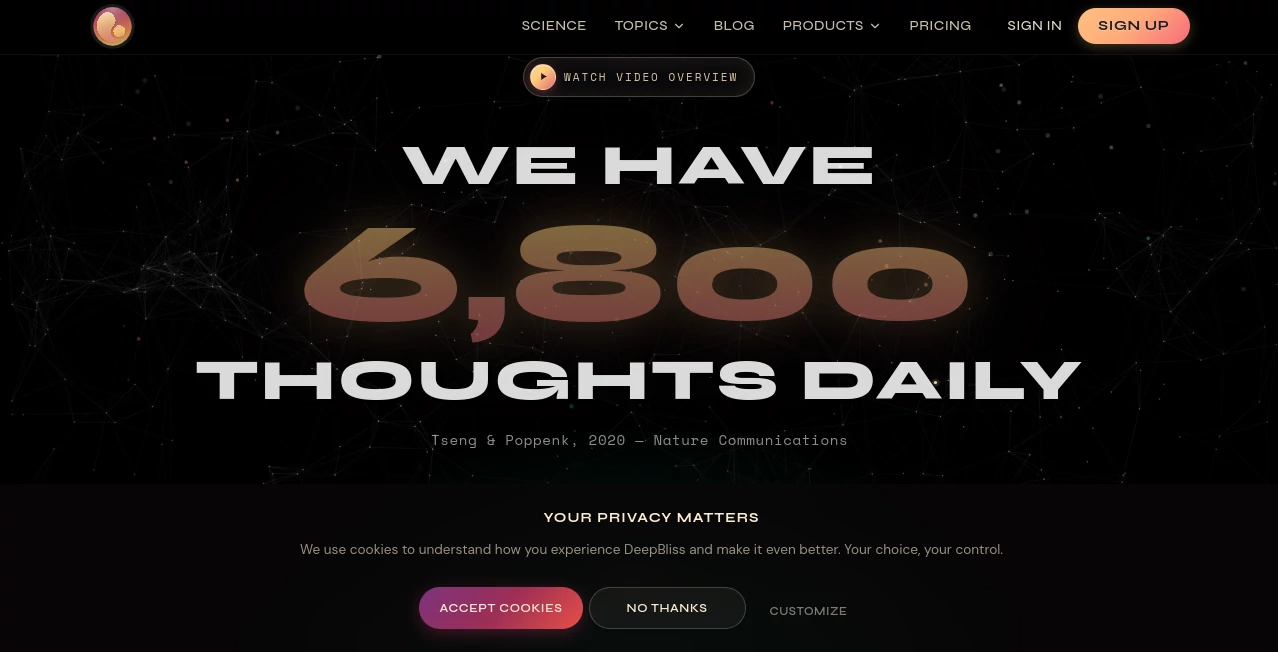
DeepBliss is a personalized audio wellness platform that combines AI voice cloning, customized affirmations, and research-informed sound techniques into one guided experience. Instead of listening to generic motivational recordings, users can create affirmations around their own goals and hear them delivered in a digital version of their own voice.
The experience starts with something surprisingly simple: describing what you want to work on in your own words. From there, personalized scripts can be created, a voice twin can be generated from a short recording, and the resulting affirmations can be paired with different audio layers such as binaural, monaural, or isochronic frequencies and colored noise.
That combination makes the platform particularly interesting for people who already use meditation, affirmations, focus audio, or sleep soundscapes but want something more personal. Someone working on confidence, concentration, calm, resilience, or a morning routine can build an experience around that specific intention rather than choosing from a fixed library.
Key Features
- AI Voice Twin: Create a personalized digital version of your voice from a short recording and use it for affirmation audio.
- Personalized Affirmation Scripts: Generate scripts around individual goals and intentions, including evidence-informed CBT-style reframing.
- Multiple Audio Engines: Combine affirmations with binaural, monaural, and isochronic sound techniques.
- Colored Noise: Choose from several noise profiles, including white, pink, brown, blue, violet, and green noise.
- Frequency Presets: The platform provides a broad collection of frequency presets spanning different target states.
- Dual-Layer Audio: Higher plans can combine two frequency layers in a single experience.
- AI Oracle: An AI-powered system helps determine an appropriate audio experience based on the user's intention.
- Visual Affirmations: Users can upload or capture a photo and create visual slideshows representing their future goals.
- Guided Breath Practices: The experience includes guided breathing sessions for users who want to add another layer to their routine.
- Bliss Streaks: A gamified progress system encourages consistent practice without requiring users to maintain a perfect daily streak.
- Professional Audio Processing: Generated experiences pass through an eight-stage audio pipeline designed for polished, studio-style output.
- Shareable Experiences: Practitioners can create private links for clients, allowing them to access personalized audio directly through a browser.
User Interface
The interface is built around a guided five-step creation process rather than presenting users with a complicated audio-production dashboard. You first explain what you want to improve, select an affirmation approach, create your personalized script, provide a voice sample, and then choose the audio experience.
This approach feels approachable even if you have never worked with audio software before. The platform also works as a web application, so there is no requirement to install a traditional desktop program. It can be accessed through a modern browser on desktop, tablet, or mobile devices.
One particularly thoughtful detail is the way progress is presented. The Bliss Streaks system focuses on sustainable consistency rather than punishing users for missing a day. For someone trying to turn short audio sessions into a routine, that is a much more realistic approach.
Accuracy & Performance
Voice personalization is one of the strongest technical aspects of the platform. The voice cloning system can work from approximately 20 seconds of recorded audio and is designed to reproduce the characteristics of the user's voice for newly generated affirmations.
Audio is processed through an eight-stage pipeline, with features such as professional voice synthesis, frequency mixing, reverb, tempo adjustment, and lossless mastering available depending on the plan. Professional subscribers can also download lossless WAV files.
The platform is careful not to present every audio technique as equally proven. Its own evidence framework separates technologies into categories such as Evidence-Supported, Emerging, and Experiential. That distinction is useful because research surrounding binaural beats and related techniques is promising in some areas but is not a universal guarantee of a particular outcome.
Capabilities
The system is designed around several different personal goals rather than a single meditation use case. Users can create experiences for areas such as focus and performance, confidence, vitality, clarity, purpose, calm, resilience, and relationships.
The personalization goes beyond simply inserting a person's name into a prerecorded script. The wording can be generated around the user's stated intention, while the audio environment can be selected according to the desired experience. The result is closer to creating a small personal audio ritual than browsing a conventional meditation library.
The visual side adds another interesting dimension. A single photograph can be used to create a visual slideshow depicting the user's future self, allowing the audio and imagery to reinforce the same personal goal.
Security & Privacy
Privacy is especially important for a service that handles voice recordings. The platform states that voice recordings are encrypted in transit and at rest, stored on secure cloud infrastructure, and isolated to the user's account. It also states that voice data is not shared with third parties and can be deleted from account settings.
Its privacy policy identifies voice recordings and related information as sensitive biometric data and explains that the service operates under applicable privacy frameworks, including Australia's Privacy Act and relevant GDPR and CCPA requirements. Users should still review the current privacy policy before uploading a voice sample, particularly when creating recordings that could personally identify them.
Use Cases
- Morning routines: Create a short personalized audio session to start the day with a specific intention.
- Focus sessions: Use personalized affirmations and selected sound layers before studying, writing, or working.
- Evening wind-down: Build calming audio experiences as part of a nighttime routine.
- Confidence building: Create personalized statements focused on self-confidence and constructive self-talk.
- Stress management: Use short sessions as a structured pause during a demanding day.
- Visualization: Combine personalized affirmations with AI-generated visual representations of future goals.
- Coaching: Coaches can create personalized experiences for clients and share them through private browser links.
- Therapeutic support: Practitioners can use the platform as a complementary tool alongside their existing work, while keeping appropriate clinical boundaries.
- Personal development: Turn a specific goal into a repeatable audio practice rather than relying on generic motivational content.
Pros and Cons
- Pros: Highly personalized voice experiences, short voice-cloning setup, customizable affirmation scripts, multiple audio technologies, visual affirmations, browser-based access, progress tracking, and dedicated practitioner features.
- Pros: The platform is unusually transparent about the strength and limitations of the research behind different audio techniques.
- Pros: A functional free tier makes it possible to test the core experience before paying.
- Cons: Some advanced features and longer sessions require a paid subscription.
- Cons: Users who are looking for a large catalog of traditional guided meditations may prefer a more conventional meditation platform.
- Cons: The benefits of binaural beats and related entrainment methods should not be treated as guaranteed medical or psychological outcomes.
- Cons: Because voice cloning is central to the experience, users who are uncomfortable providing biometric voice data may prefer a less personalized alternative.
Pricing Plans
The platform uses a freemium subscription model, allowing new users to try the service before committing to a paid plan.
- Discover – Free: Includes 3 audio experiences per month, 2 voice twins with up to 2-minute lengths, 3 visual slideshows per month, AI Oracle, Bliss Streaks, and one guided breath practice.
- Transform – $15/month: Includes 10 experiences per month, 3 slideshows, 5 voice twins with sessions up to 15 minutes, custom affirmation scripts, dual-layer audio, all frequency presets, and guided breath practices.
- Professional – $39/month: Includes 40 experiences per month, 30 slideshows, 20 voice twins with sessions up to 30 minutes, unlimited custom scripts, lossless WAV downloads, priority support, and all guided breath practices.
- Practitioner – $99/month: Designed for coaches, therapists, and educators managing up to 25 clients, with unlimited sharing, client-owned voices, and practitioner-focused tools.
Annual billing is also available and the platform states that yearly subscriptions can save up to 33 percent. The free plan does not require a credit card, making it a useful starting point for anyone who wants to evaluate the experience first.
How to Use It
- Define your intention: Start by describing what you want to work on in your own words.
- Choose an affirmation approach: Select an evidence-based or traditional style depending on the type of experience you want.
- Create your script: The system generates a personalized affirmation script based on your intention.
- Record your voice: Provide a short voice sample so the voice-twin system can create a personalized version of your voice.
- Select your audio: Choose the appropriate frequency and sound layers for your session.
- Add visuals: Upload or capture a photo if you want to create a visual representation of your future self.
- Create the experience: Generate the finished audio-visual session and add it to your personal library.
- Build a routine: Listen regularly and use the progress tracker to maintain a sustainable practice.
Comparison with Similar Tools
Traditional meditation platforms generally focus on professionally recorded meditation sessions, sleep stories, breathing exercises, or ambient sound libraries. This approach takes a different path by making personalization the central part of the experience.
The most noticeable difference is the use of AI voice cloning. Instead of repeatedly hearing a narrator you do not know, the generated affirmations can be delivered using a digital version of your own voice. That makes the experience especially appealing to people who respond well to self-directed routines.
It also sits somewhere between an affirmation application and an audio productivity tool. The combination of personalized scripts, voice cloning, frequency-based audio, colored noise, visualizations, and progress tracking gives users considerably more control than a simple collection of prerecorded tracks.
For users who want celebrity narration, extensive meditation libraries, or a broad mental wellness ecosystem, conventional platforms may still be a better fit. For someone specifically interested in hearing personalized affirmations in their own voice, however, this approach offers a distinctive alternative.
Conclusion
DeepBliss takes a thoughtful approach to personalized wellness by bringing several technologies together without making the experience feel like an audio engineering project. The voice-twin feature is the standout attraction, while personalized scripts, sound layers, visualizations, and progress tracking make the platform more useful for people who want a repeatable personal practice.
Its willingness to distinguish established findings from emerging research is another welcome quality. Users are not simply asked to believe that every frequency or sound technique will produce a particular result. Instead, the platform provides context around the evidence and encourages a more informed approach.
For anyone interested in personalized affirmations, AI voice cloning, meditation audio, focus routines, or structured self-development practices, it is worth exploring. The free tier also makes that decision relatively easy: create a few experiences, listen to them in your own voice, and see whether this style of personalized audio fits naturally into your routine.
Frequently Asked Questions (FAQ)
What is this AI wellness platform?
It is a web-based wellness platform that creates personalized affirmation and audio experiences using AI voice cloning, customized scripts, sound frequencies, colored noise, and visual elements.
How long does the voice recording need to be?
The voice-twin feature can create a personalized voice model from approximately 20 seconds of recorded audio.
Do I need headphones?
Headphones are recommended for binaural beats because the technique relies on delivering slightly different frequencies to each ear. Monaural beats, isochronic tones, and colored noise can also be used through speakers.
Is there a free plan?
Yes. The Discover plan is free and includes a limited number of audio experiences, voice twins, visual slideshows, AI personalization, progress tracking, and a guided breathing practice.
Can coaches and therapists use it with clients?
Yes. The Practitioner plan is designed for coaches, therapists, and educators and supports up to 25 clients, private sharing, client-owned voices, and client activity information.
Is voice data protected?
The platform states that voice recordings are encrypted in transit and at rest, stored on secure cloud infrastructure, isolated to individual accounts, and not shared with third parties. Users can also request deletion through their account controls.
Are the audio techniques scientifically proven?
The evidence varies by technique. The platform itself distinguishes between Evidence-Supported, Emerging, and Experiential technologies. Research on binaural beats, for example, has reported promising findings, but it does not establish that these sounds will produce the same result for every person.
AI Life Assistant , AI Voice Cloning , AI Mental Health , AI Voice & Audio Editing .
These classifications represent its core capabilities and areas of application. For related tools, explore the linked categories above.

DeepBliss Alternatives Product

Stinglo

Romantic AI
Play Queens …

Seedance 2.5

Face Symmetr…
PureMIDI

FeelsTheAura
Lyrics to So…

SomniaScope …